
Coal grants go to plants cited for pollution violations
A federal coal aid program is backing several plants with recent Clean Air Act or Clean Water Act violations, Inside Climate News found.
By James Whitfield · Staff Writer
3 min read
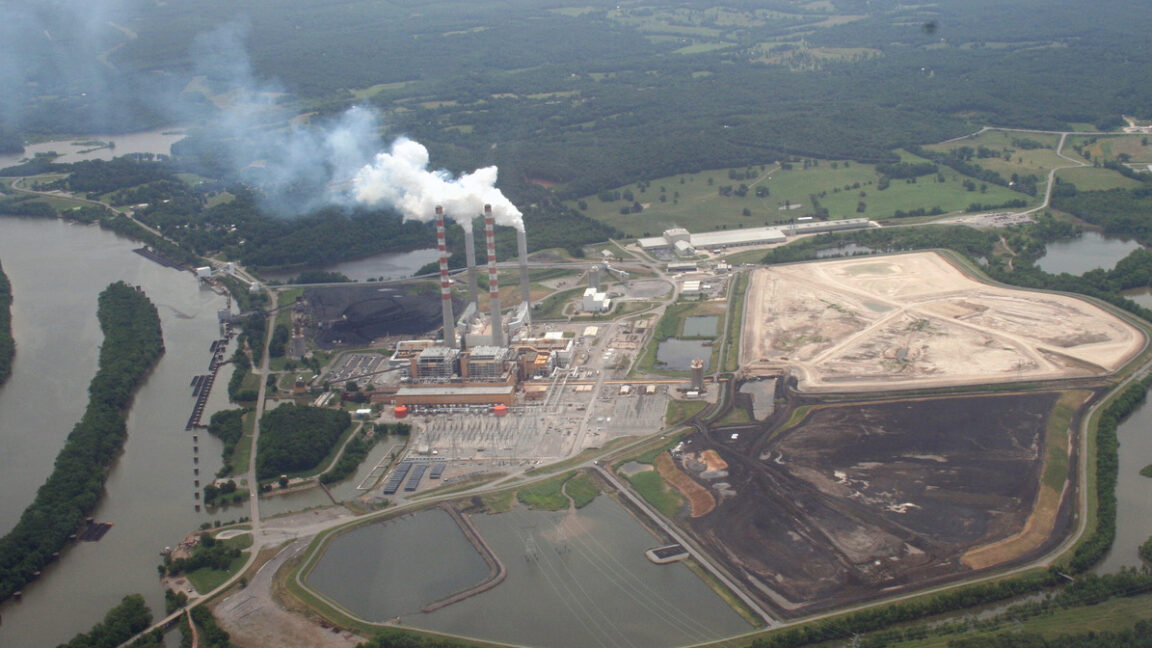
The Trump administration is steering federal money to keep coal plants operating, including facilities with repeated pollution violations. Inside Climate News reported that at least three of 12 plants selected for Department of Energy grants have been cited more than once under the Clean Air Act, the Clean Water Act or both.
The plants identified in the review are the Cumberland Fossil Plant in Tennessee, the Grand River Energy Center in Oklahoma and the Roxboro Steam Electric Plant in North Carolina. The grants are part of President Donald Trump’s effort to support older coal generation, according to Inside Climate News.
Cumberland had been scheduled for retirement after years of pollution concerns, equipment problems and regulatory scrutiny. The Tennessee Valley Authority previously said it would close the plant’s units in 2026 and 2028, but reversed that plan in February after Trump replaced four TVA board members, Inside Climate News reported.
The Energy Department has pledged $46 million toward extending Cumberland’s life. TVA was part of a 2011 Clean Air Act settlement after regulators said it had failed to install pollution controls, and the plant was later cited for additional air-pollution violations in 2017 and 2023, according to records reviewed by Inside Climate News.
An Energy Department spokesperson did not answer specific questions from Inside Climate News about the violation histories at the three plants. The spokesperson said the investments are meant to keep reliable power available, strengthen the grid, support coal supply chains and preserve generation during periods of high demand and severe weather.
TVA spokesman Scott Fiedler told Inside Climate News that rising power demand and changes in regulation led the agency to keep Cumberland open. He said TVA uses environmental reviews, operational assessments, reliability analysis and compliance reviews when making long-term decisions.
Other plants cited by regulators
In Oklahoma, the Energy Department pledged $28.5 million toward a $76.5 million project at the Grand River Energy Center. Inside Climate News reported that Oklahoma proposed an $8,100 fine in April against the plant’s operator for failing to test for particulate matter.
State officials also sent the plant five notices of air-pollution violations between 2017 and 2021 and found several wastewater pollution-limit exceedances in the past three years, according to Inside Climate News. A spokesman for operator Grand River Dam Authority sent the outlet a press release saying the grant would help update the facility and extend its operating life, but did not address the violations.
Roxboro is set to receive $28.4 million toward a $72.7 million project, according to the Energy Department. North Carolina regulators notified Duke Energy of violations at Roxboro six times in the past decade, mostly tied to reporting problems or wastewater pollution limits, Inside Climate News reported.
A 2019 settlement with North Carolina, environmental groups and Duke Energy required the company to excavate more than 80 million tons of coal ash at Roxboro after leaks contaminated groundwater on the plant property, according to Inside Climate News. Duke Energy spokesman Bill Norton told the outlet that Roxboro meets state and federal permit requirements and that the company is making progress on basin closure plans.
Environmental groups criticized the grants because they could prolong pollution from old coal facilities. Courtney Bernhardt of the Environmental Integrity Project told Inside Climate News that the administration appears to be ignoring compliance problems while weakening permitting requirements for the energy sector.
Supporters of the projects framed the spending as a reliability measure. Grand River Dam Authority President and CEO Dan Sullivan said in a statement cited by Inside Climate News that extending Unit 2 is the most cost-effective option compared with building new generation.
Critics said the grants could shift costs and health burdens onto nearby communities. Inside Climate News cited studies linking coal-plant air pollution to early death, including research estimating that fine-particle pollution from Cumberland contributed to deaths in states far from Tennessee between 1999 and 2020.
This story draws on original reporting from Ars Technica.