
Backyard sprinklers help test a classic fluid dynamics puzzle
NYU Courant researchers used playful sprinkler designs to study the reverse sprinkler problem, a question linked to Richard Feynman and Ernst Mach.
By Hana Yoshida · Markets Reporter
3 min read
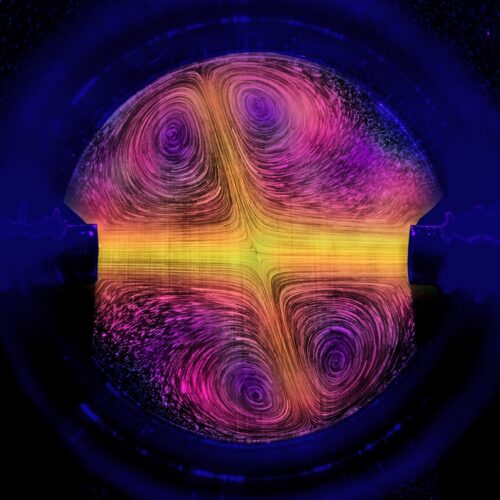
Researchers at New York University’s Courant Institute have used “silly sprinklers” to examine a long-running fluid dynamics problem tied to Richard Feynman. According to a paper published in the Proceedings of the National Academy of Sciences, the same physics behind playful looping jets of water can help address the reverse sprinkler puzzle.
The work connects an everyday summer lawn toy with a question that has drawn attention from physicists for generations. Silly sprinklers are designed to send water through loops, spirals and other comic patterns, but the NYU researchers treated those designs as test systems for how fluids drive motion.
A puzzle with a long history
The reverse sprinkler problem is often linked to Feynman because he helped make it famous, according to prior reporting by Ars Technica. Its roots go further back, to Ernst Mach’s 1883 textbook The Science of Mechanics, where Mach presented the basic thought experiment.
A regular sprinkler rotates as water shoots out of its arms. The reverse version asks what happens if the same device draws water inward instead of expelling it. A simple backward-running picture might suggest an obvious answer, but physicists found the situation harder to settle.
According to Ars Technica, the problem attracted renewed attention in the 1940s among physicists at Princeton University. Feynman, then a graduate student there, joined the debate and tried to test his idea with an experiment in the cyclotron laboratory.
Feynman later described the dispute in his 1985 book Surely You’re Joking, Mr. Feynman. He wrote that the answer seemed “perfectly clear at first sight,” while different people confidently reached opposite conclusions about which way the sprinkler should turn.
Silly sprinklers as fluid experiments
The NYU Courant team ran experiments using multiple silly sprinkler designs, according to the PNAS paper. The devices created varied water-jet shapes, giving the researchers a way to study how sprinkler geometry and fluid motion relate.
The paper frames the backyard devices as more than toys. By changing designs and observing the resulting water motion, the researchers used them to probe the same class of questions raised by the reverse sprinkler problem.
The findings, as described by the PNAS paper, show that the analysis developed for the reverse sprinkler problem can be applied to these playful sprinkler forms as well. That link gives a familiar lawn gadget a role in a broader physics question about how fluids transfer force and motion.
The study also underlines why the old thought experiment endured. A sprinkler run backward may sound like a classroom trick, but the debate around it exposed a real difficulty: intuition alone did not settle the direction or behavior of the system.
This story draws on original reporting from Ars Technica.