
Apple’s Intel Mac era heads toward its final support window
macOS 26 Tahoe is set to be the last Apple operating system for Intel Macs, with security updates continuing for select models until 2028.
By Hana Yoshida · Markets Reporter
3 min read
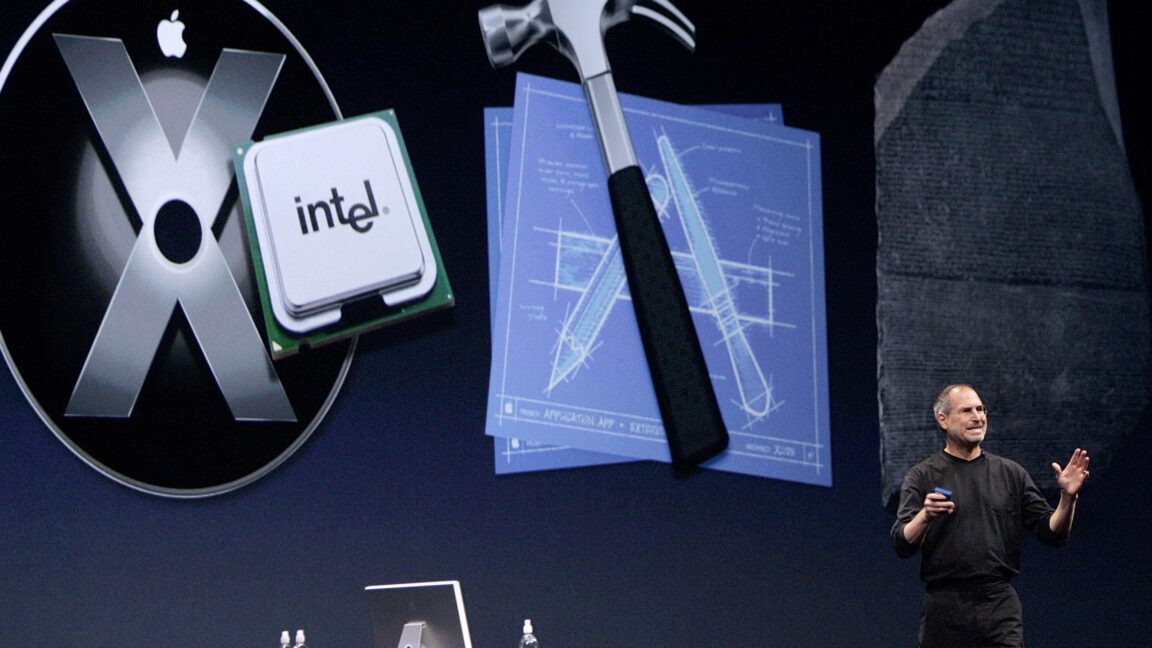
Apple is nearing the end of support for Intel-based Macs, two decades after the company began moving the Mac line away from PowerPC processors. Ars Technica’s Andrew Cunningham reported that macOS 26 Tahoe will be the final macOS release for Intel Macs, though some models will keep receiving security and Safari updates until fall 2028.
Cunningham reported that macOS 27, due later this year, will not fully end the Intel Mac story because Rosetta technology for running Intel code on Apple Silicon may remain in some form. But he described Tahoe as the last main operating-system release in the Intel Mac era.
How Apple prepared the first switch
According to Cunningham, Apple’s Intel work began years before the first Intel Macs reached customers. In 2000, Apple engineer JK Scheinberg proposed work on a version of Mac OS X that could run on Intel processors, according to an email later shared by his wife.
At the time, Macs used PowerPC chips developed by Apple, IBM and Motorola, Cunningham reported. The Intel-compatible Mac OS X effort, known internally as “Marklar,” began as a side project before becoming a contingency plan as Apple grew frustrated with the PowerPC roadmap.
Ars Technica reported that Apple’s concerns centered on performance and power use. Steve Jobs had promised a 3 GHz Power Mac G5 within a year of the chip’s 2003 launch, but that target was not met, and Apple never shipped a G5 laptop. Macworld previously reported that Tim Cook called a G5 notebook “the mother of all thermal challenges.”
Jobs publicly announced the Intel transition at WWDC in June 2005, saying every Mac OS X release had been built for both PowerPC and Intel for five years, Cunningham reported. Apple then gave developers a temporary Intel-based Developer Transition Kit before shipping the first consumer Intel Macs in January 2006: an iMac and the MacBook Pro.
Intel helped reshape the Mac
Cunningham reported that Apple completed the move from PowerPC to Intel in August 2006 with Intel-based Mac Pro and Xserve systems, ahead of the timetable Jobs had set. The change also let Apple support Windows directly on Macs through Boot Camp.
The early Intel years brought rapid product changes, according to Ars Technica. Apple moved from early 32-bit Intel chips to 64-bit Core 2 Duo processors, redesigned the iMac in aluminum and glass in 2007, and later used improving Intel graphics to support Retina displays.
Cunningham identified the MacBook Air as one of the clearest examples of what Intel enabled. For the original 2008 model, Intel produced a smaller version of its Core 2 Duo package, helping Apple build a very thin notebook that influenced later laptop designs.
Why Apple left Intel
Apple began making its own mobile processors in 2010 after buying P.A. Semi in 2008, Cunningham reported. Those chips first powered iPhones and iPads, but their steady gains eventually made a Mac transition more plausible.
At the same time, Intel’s progress slowed. Ars Technica reported that Intel struggled with its 14-nanometer manufacturing process and did not ship its 10-nanometer process in volume until late 2019. Former Intel engineer François Piednoël told PC Gamer that Apple found many bugs in Intel’s Skylake architecture.
Apple also began adding its own chips to Intel Macs. Cunningham reported that the 2016 MacBook Pro’s T1 chip powered the Touch Bar and supported Touch ID and Apple Pay, while the later T2 handled more security, storage and media functions.
Cook announced the Apple Silicon transition at WWDC 2020, saying custom chips would let Apple build better products, according to Cunningham. Apple introduced the first M1 Macs later that year and completed the Mac hardware transition in mid-2023.
Ars Technica reported that Apple supported both Intel and Apple Silicon from macOS 11 Big Sur through macOS 26 Tahoe. After the remaining Intel Macs leave security support in 2028, the Intel Mac period will have effectively closed.
This story draws on original reporting from Ars Technica.