
Aleksandr Samokutyaev, veteran Russian cosmonaut, dies at 56
Samokutyaev flew two long ISS missions, joined the station during the last shuttle visit and later served in Russia's State Duma.
By Maya Lindqvist · Senior Technology Correspondent
3 min read
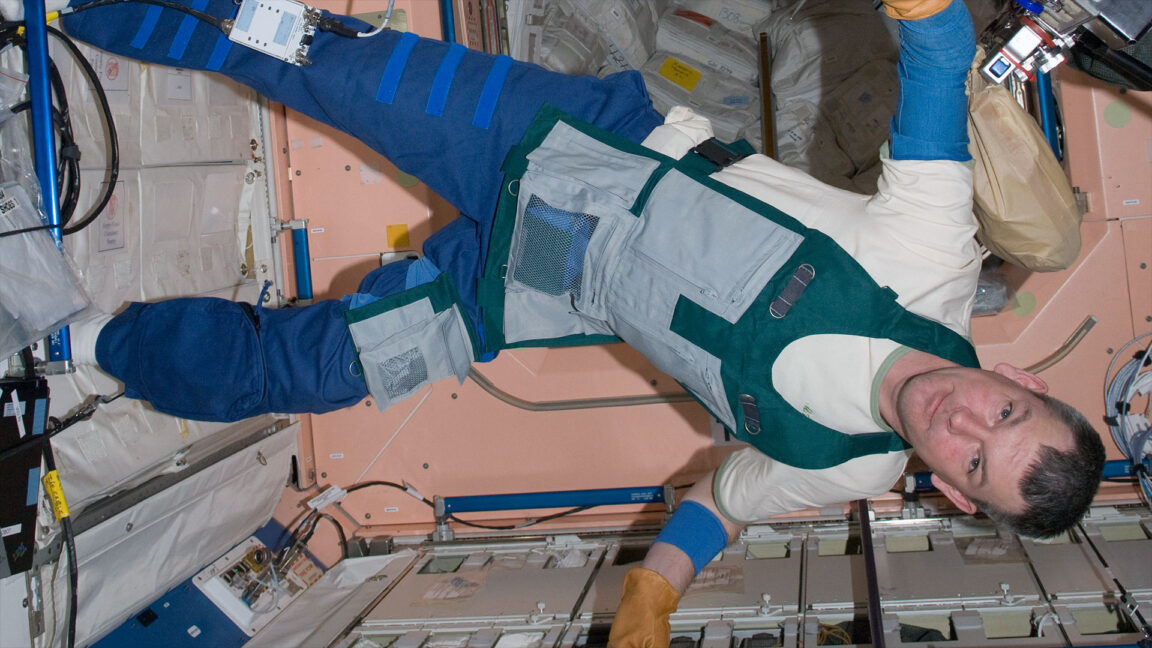
Russian cosmonaut Aleksandr Samokutyaev, who flew two long-duration missions to the International Space Station, has died at 56, Roscosmos said. His death marks a first for the ISS era: collectSPACE reported that no previous former long-duration station resident had died since the orbiting laboratory began hosting expedition crews 26 years ago.
Roscosmos did not give a cause of death. The Russian space agency said its leaders and employees offered condolences to Samokutyaev’s family and those close to him.
Samokutyaev entered Russia’s cosmonaut corps in 2003 and qualified for flight assignments after completing basic training in 2005. Before joining a prime crew, he trained as a backup for ISS Expeditions 23 and 24, Roscosmos records show.
Two missions to the space station
Samokutyaev first launched on April 4, 2011, commanding Soyuz TMA-21 with Roscosmos cosmonaut Andrey Borisenko and NASA astronaut Ron Garan. Their spacecraft carried the name “Gagarin,” a tribute to Yuri Gagarin’s first human spaceflight 50 years earlier from Baikonur Cosmodrome.
During that mission, Samokutyaev served as a flight engineer on Expeditions 27 and 28. NASA records show he worked aboard the ISS with crew members from Russia, the United States, Europe and Japan during the 164-day flight.
His first stay also coincided with the end of the U.S. space shuttle program. Atlantis docked at the station in July 2011 on STS-135, the final shuttle mission and the last shuttle visit to the ISS, bringing four NASA astronauts to the outpost for nine days.
On Aug. 3, 2011, Samokutyaev made his first spacewalk with cosmonaut Sergey Volkov. The work included moving equipment, installing a materials science experiment and deploying a small satellite by hand, according to mission summaries.
Samokutyaev returned to the ISS in September 2014 aboard Soyuz TMA-14M with cosmonaut Elena Serova and NASA astronaut Barry “Butch” Wilmore. Serova was one of two women in the Roscosmos cosmonaut corps at the time and the fourth woman cosmonaut to fly in space.
On that second mission, Samokutyaev served on Expeditions 41 and 42. He completed a second spacewalk on Oct. 22, 2014, with cosmonaut Max Surayev, during which they discarded unneeded hardware and photographed the exterior of the station’s Russian segment.
Samokutyaev returned to Earth on March 11, 2015. Across both flights, he spent 331 days, 11 hours and 23 minutes in space and logged 10 hours and one minute outside the station on two spacewalks, according to mission totals.
Military pilot and lawmaker
Aleksandr Mikhailovich Samokutyaev was born March 13, 1970, in Penza, Russia. He graduated from the Yuri Gagarin Air Force Academy in 2000 and served in the Russian Air Force as a pilot, senior pilot and deputy squadron commander before his selection as a cosmonaut.
An interdepartmental commission recommended in 2017 that he leave his role as an instructor and deputy commander of the cosmonaut corps, reportedly over medical concerns. In 2019, he graduated with honors from the Russian Presidential Academy of National Economy and Public Administration.
Samokutyaev entered politics in 2021, when he was elected as a deputy to Russia’s State Duma. The government of the Penza region said in an obituary that he had helped bring recognition to the region and worked to improve life there.
The Association of Space Explorers’ Registry of Space Travelers lists Samokutyaev as the 518th person to reach orbit and the 527th to fly above 50 miles, or 80 kilometers. Roscosmos said his honors included Hero of the Russian Federation, the Gold Star medal and the title Pilot-Cosmonaut of the Russian Federation.
He is survived by his wife, Oksana Nikolaevna, and daughter, Anastasia Aleksandrovna.
This story draws on original reporting from Ars Technica.