
AI pushes robot makers toward more autonomous workers
Robotics companies say modern AI is expanding what machines can do, but safety and training data still limit broader use in workplaces and homes.
By James Whitfield · Staff Writer
4 min read
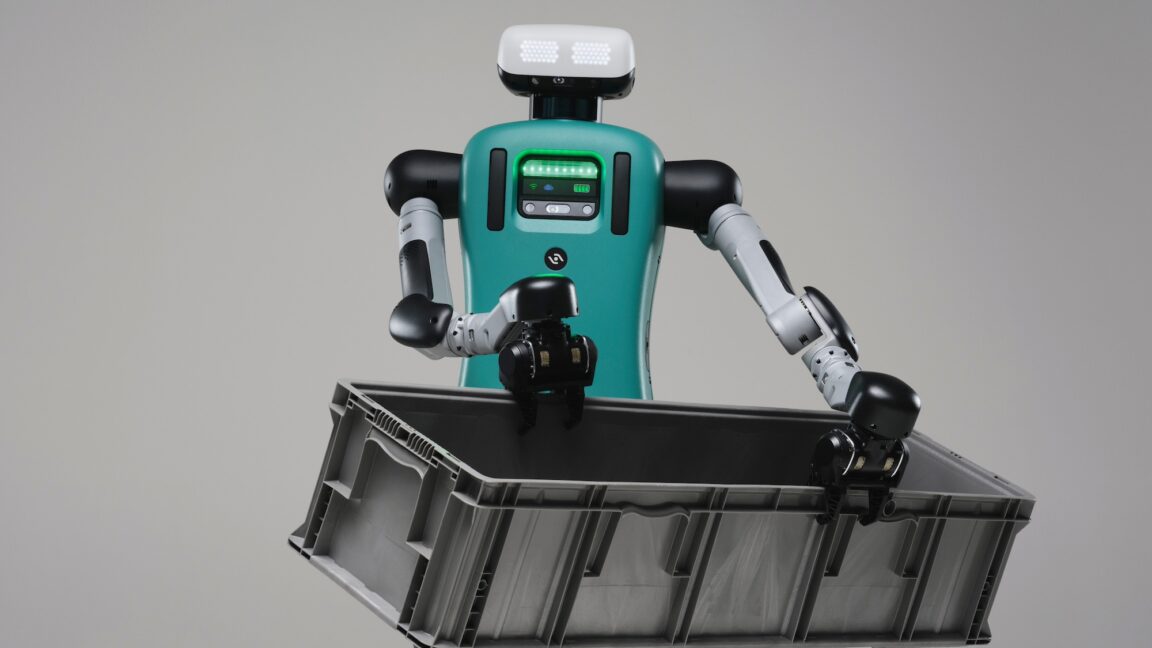
Robotics companies are using newer AI methods to make machines that can perform more tasks with less direct human control. The shift could extend robots beyond repetitive factory jobs, but researchers told Ars Technica that safety, reliability and training data remain major barriers.
Matt Malchano, vice president of software at Boston Dynamics, told Ars that the meaning of robot autonomy has changed sharply over about 15 years. Earlier work focused on getting robots to move from one place to another, he said, while current goals involve machines carrying out sequences of tasks on their own.
The International Organization for Standardization defines robot autonomy as the ability to carry out intended tasks using sensing and current state without human intervention. Malchano said advances such as reinforcement learning and large foundation models have made more complex autonomous behavior easier to imagine.
AI broadens the target
Sergey Levine, a University of California, Berkeley computer scientist and co-founder of Physical Intelligence, told Ars that today’s research frontier is reliable robot work in less structured spaces. He contrasted that with factory robots, which often repeat a fixed motion in a controlled setting.
Levine said practical robotic intelligence may come through general AI models that can run many kinds of machines, rather than one all-purpose humanoid. He gave examples ranging from a compact arm suited to a small apartment to a larger robot useful for farm work.
Researchers are combining reinforcement learning with large pre-trained models, Levine said. Reinforcement learning can train a robot through repeated attempts, while foundation models trained on large datasets can give machines background knowledge that helps them avoid some mistakes.
The training problem remains difficult. Levine said teleoperating robots, running lab trials and building physics-based simulations can all help, but each has limits. He said current systems often become very strong at one narrow task or moderately capable across many tasks, while the field still lacks robots that are highly reliable across a broad range of work.
Workplaces come before homes
Boston Dynamics already sells forms of autonomy for industrial use. Malchano said its Spot robot can inspect facilities, collect images and sensor readings, and move through hazardous areas for customers that are not robotics specialists.
Boston Dynamics has also used reinforcement learning to improve Spot’s performance on slippery floors, Malchano told Ars. The company’s Stretch robots handle boxes and packages in warehouses, including deployments with logistics company DHL.
The company is also scaling work on its all-electric Atlas humanoid robot with parent company Hyundai Motor Group. Ars reported that the goal is for trained Atlas robots to carry out tasks at Hyundai Motor Group Metaplant America in Georgia by 2028, and that the Hyundai-Boston Dynamics effort aims for capacity to make 30,000 humanoid robots a year by then.
Jonathan Hurst, co-founder of Agility Robotics and a robotics researcher at Oregon State University, told Ars that robot progress is unlikely to mirror the sudden public arrival of chatbots. He said embodied AI needs data about physical movement, contact and coordination that does not exist in the same way internet text and images do.
Agility’s Digit robots have worked at a GXO warehouse in Atlanta since 2024, moving totes from order-picking areas to conveyors, according to the company information cited by Ars. Agility has also announced work with Toyota Motor Manufacturing Canada, Schaeffler and Mercado Libre, and said its robots have logged more than 65,000 operating hours across deployments and pilots.
Safety sets the pace
Hurst said safety is the main factor limiting wider deployment. Agility has kept Digit robots in separated work cells, away from nearby human workers, and plans to commercially launch Digit v5 within 12 months as an AI-enabled humanoid designed for cooperative safety, he told Ars.
Agility and Boston Dynamics are participating in work on an international safety standard for industrial mobile robots under ISO. Ars reported that the draft standard, ISO 25785-1, is under review by an ISO technical committee before a possible vote by member nations.
Hurst said home robots are still decades away from safely handling unpredictable situations around people, including children. He told Ars that companies claiming humanoid robots are ready to work safely inside homes are “either lying or wrong.”
Surgical robots show why autonomy may be limited in high-risk settings. Bhushan Patel, an engineering leader at Intuitive, told Ars that surgical robots do not carry out operations on their own and remain mostly human-controlled, with varying levels of assistance.
This story draws on original reporting from Ars Technica.