
Small dental robot could cut crown treatment visits
University of Basel researchers built a cork-sized intraoral robot designed to mill teeth for crowns from a digital treatment plan.
By Priya Raghavan · Science Reporter
3 min read
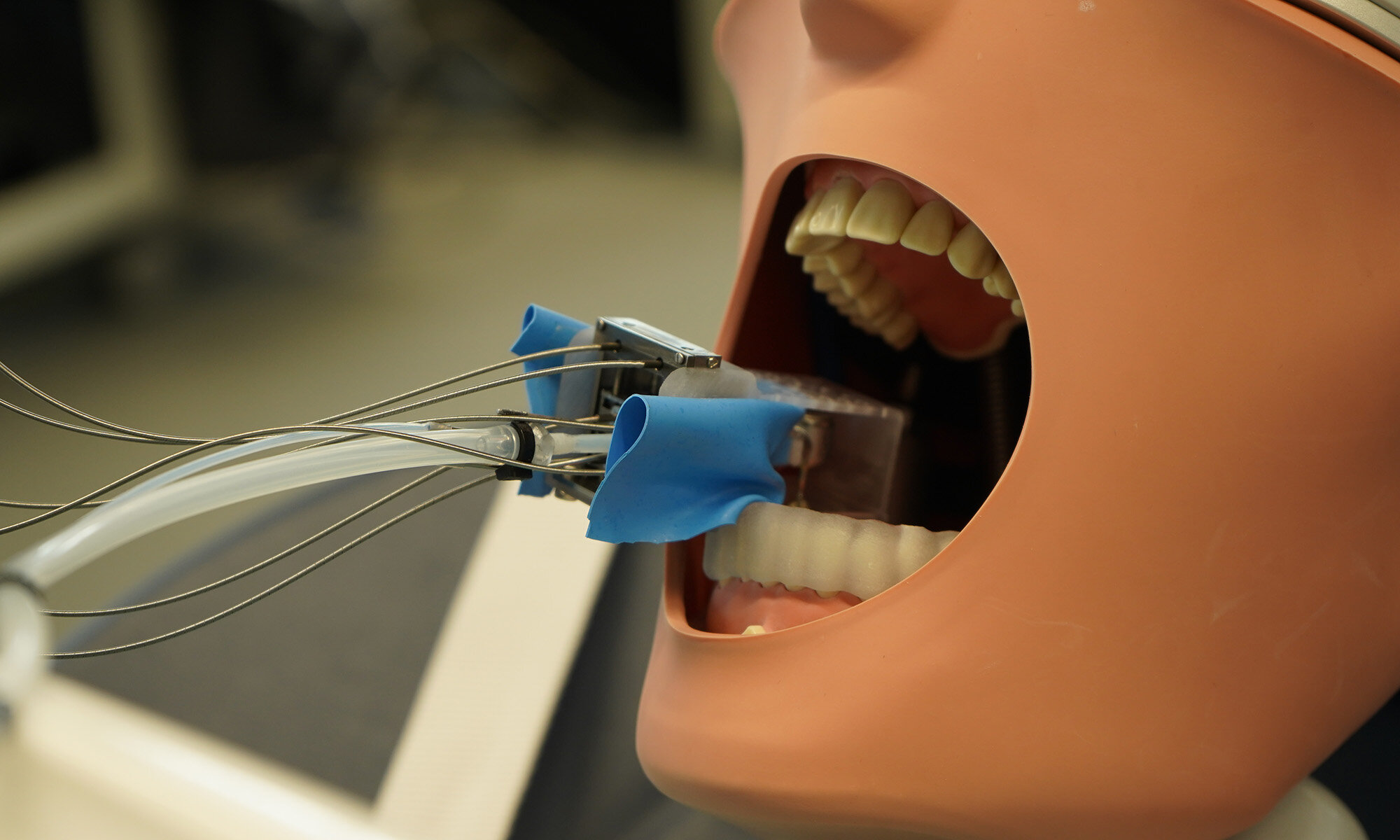
Researchers at the University of Basel have built a miniature robot designed to prepare teeth for dental crowns, a step that could shorten a common restorative procedure. The team says the device could let dentists scan, plan and begin crown production earlier, reducing the need for separate visits.
The prototype, called MIR for Miniature Intraoral Robot, was described in a paper in IEEE Transactions on Medical Robotics and Bionics by Yukiko Tomooka and colleagues. According to the University of Basel, the robot measures 43 by 26 by 28 millimeters, about the size of a wine cork, with motors and controls kept outside the mouth and linked by flexible shafts, cables and tubes.
How the crown process could change
In a conventional crown treatment, the University of Basel says a dentist removes decay, fills the cavity, shapes the tooth, takes an impression and places a temporary crown. A permanent crown is then made from the impression and fitted during a later appointment.
The Basel team’s proposed workflow would start with a scan. According to the researchers, that scan would guide both the design of the crown and the robot’s digital cutting plan, allowing the permanent crown to be ordered sooner.
The scan would also be used to make a custom dental splint that holds the robot in place, the university said. Tomooka said the device is small enough to sit inside an open mouth, and the splint means the robot moves with the patient if the patient turns their head.
Tests on model teeth
The researchers tested MIR on synthetic resin tooth models and on a ceramic material with hardness similar to dental enamel, according to the university. The robot removes material in two stages: a broader drill first reduces the top of the tooth, then a longer and narrower drill shapes the sides.
The team reported a positional error of less than 0.2 millimeters in those tests, even though the prototype does not yet include sensors that directly check and correct its location. The researchers said they expect to reduce that error after adding sensors.
The group also measured drilling forces. According to the University of Basel, the forces stayed below 5 newtons, roughly the gravitational force of a half-liter bottle of water. The team is also studying the sound produced by the device to judge whether it would be suitable in a dental clinic.
More development needed
MIR is not ready for routine dental use. The University of Basel said the next stage is to add sensors and a camera so the robot can track its own position and follow the progress of treatment.
Georg Rauter, who leads the research group, said sensor data would allow MIR to know where it is and where to resume even after a power outage. The researchers aim to add those capabilities without increasing the robot’s size.
The project involved the University of Basel’s Department of Biomedical Engineering, the Center for Dentistry at the University of Zurich, Basel-based Camlog Biotechnologies GmbH and the University of Bern, according to the university. The paper is titled “Miniature Intraoral Robot (MIR) for Minimally Invasive Tooth Preparation.”
This story draws on original reporting from Medical Xpress.