
Placebo pain relief brain pathways differ by how expectations are learned
A Nature Communications analysis of 409 participants finds verbal suggestion and learned relief use partly different brain routes.
By Priya Raghavan · Science Reporter
3 min read
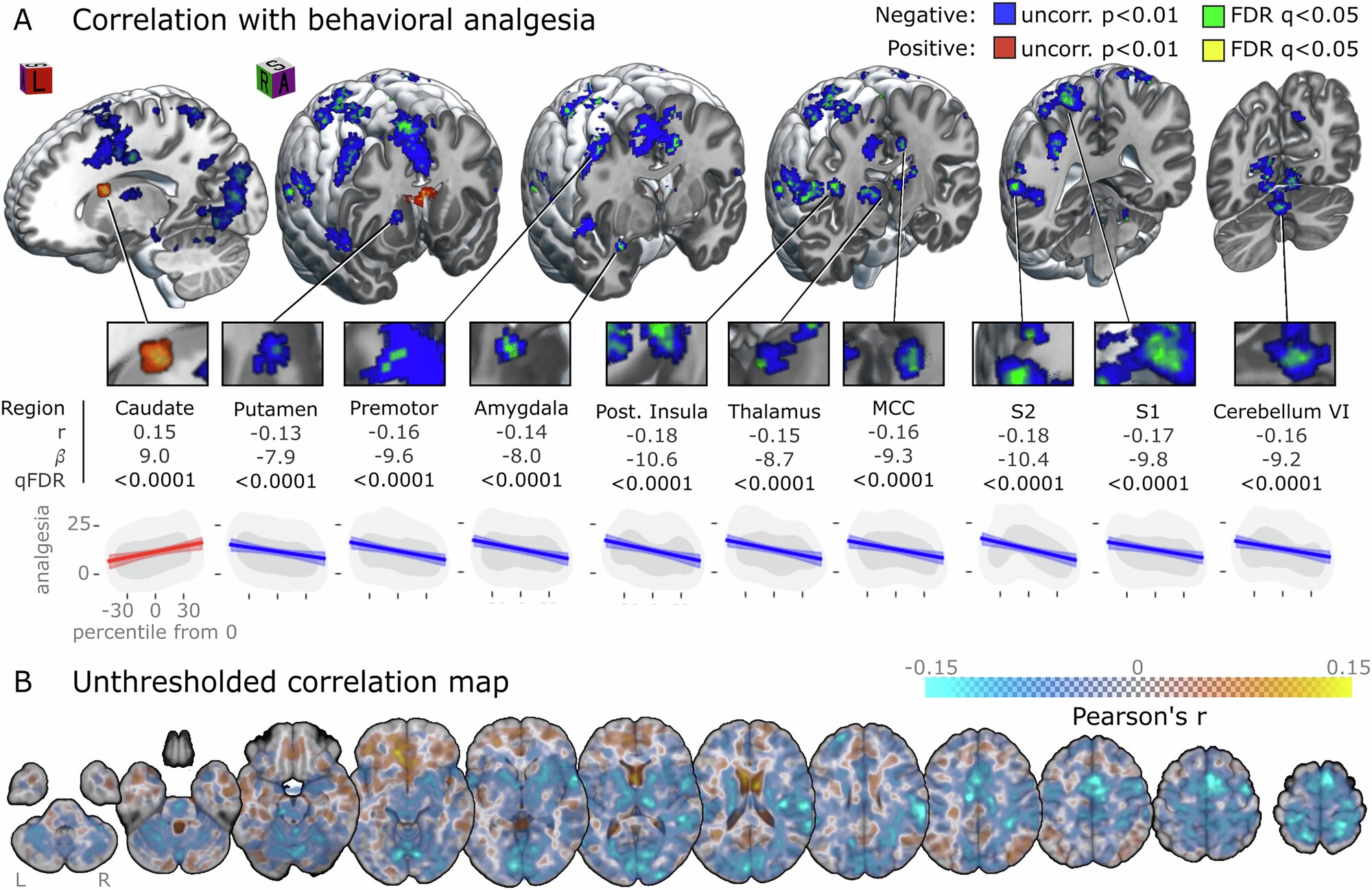
A large brain-imaging analysis has found that placebo pain relief brain pathways differ depending on how a person comes to expect relief. The finding matters for pain research because it suggests placebo analgesia does not run through one single biological mechanism.
The study, published in Nature Communications, analyzed data from 409 participants across 16 placebo pain studies, according to researchers at University Medicine Essen and the international Placebo Imaging Consortium. The work compared individual brain-imaging datasets from laboratories in Europe and North America rather than relying only on already published summary results.
How does placebo pain relief work?
Placebo pain relief occurs when a person’s expectation of improvement changes how pain is processed and experienced. According to the researchers, those expectations can be built through verbal suggestions alone or strengthened when a person also experiences reduced pain during a learning phase.
The team compared studies that used only spoken information about a treatment’s expected pain-reducing effect with studies that paired such information with conditioning. In the conditioning approach, participants had a direct experience of relief, which can reinforce the expectation that a treatment will help.
Both approaches engaged some of the same placebo-related brain networks, the researchers reported. They found increased activity in regions tied to cognitive control and attention, along with reduced activity in areas involved in pain processing.
Conditioning, however, showed additional brain signatures. The researchers said it engaged systems linked to context representation and pain modulation, and it produced stronger drops in activity in sensory and insular regions that process painful input.
The conditioned form of placebo analgesia was also linked to stronger changes in established brain markers of nociceptive pain processing, according to the study. Nociceptive processing refers to the nervous system’s handling of signals generated by harmful or potentially harmful stimuli.
Why the large dataset mattered
Tamas Spisak, first author of the study and a researcher at University Medicine Essen, said placebo experiments often differ in their design, making it hard to identify shared brain processes. He said the pooled participant-level analysis showed that some variation between studies reflects meaningful differences in how placebo effects are produced.
The Placebo Imaging Consortium made the analysis possible by bringing together neuroimaging data and research expertise from multiple labs, according to the University of Duisburg-Essen. Tor D. Wager, a co-leader of the consortium and professor at Dartmouth College, said the collaboration allowed researchers to address a question that individual laboratories would struggle to answer alone.
What it could mean for pain care
Placebo effects play a role in treatment outcomes across medicine, especially in pain management, the researchers said. Understanding which brain mechanisms are involved in different clinical situations could help researchers and clinicians design better ways to use treatment expectations and learning processes.
Ulrike Bingel, a neurologist at University Medicine Essen, spokesperson for CRC/TRR 289 Treatment Expectation and senior author of the study, said the results indicate that different ways of creating expectations rely on different underlying biology. The researchers emphasized that placebo effects are accompanied by measurable brain changes, rather than being only imagined improvements.
This story draws on original reporting from Medical Xpress.