
Study ties paid paternity leave to lower anxiety and depression risk
Northwestern-led research found Ohio fathers without paid leave reported more mental health symptoms after a child’s birth.
By Priya Raghavan · Science Reporter
3 min read
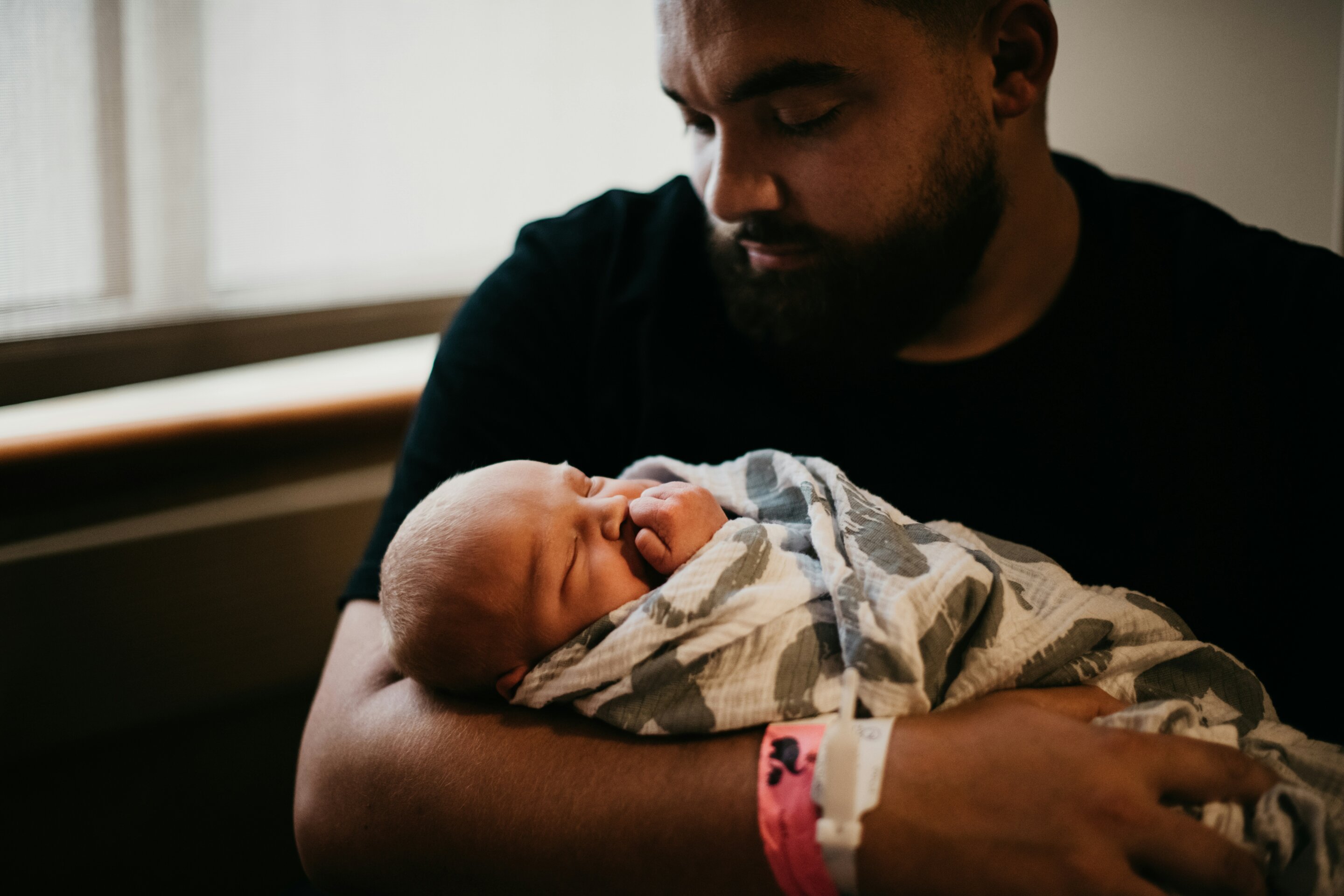
New fathers who lacked paid time off after a baby’s birth reported worse mental health than fathers who had paid leave, according to a Northwestern University-led study. The findings add evidence that paternity leave policy may affect family health, not only workplace benefits.
The study, conducted by Northwestern University and Ann & Robert H. Lurie Children’s Hospital of Chicago, was published in the American Journal of Public Health. Researchers analyzed responses from the 2022–2023 Ohio Fatherhood Survey, described by Northwestern as a large population-representative survey of fathers during the perinatal period.
Among 4,290 new fathers included in the analysis, 6.6% screened positive for depression and 11% screened positive for anxiety, according to the study. Researchers used validated screening tools to examine how leave status related to symptoms of depression and anxiety.
Leave-taking varied widely across the group. Northwestern reported that 54% of fathers took paid leave, 22% took unpaid leave, 9% used a combination of paid and unpaid leave, and 15% did not take leave.
Unpaid leave linked to higher anxiety
Fathers who took unpaid leave were 58% more likely to report anxiety symptoms than fathers who had paid leave, according to the researchers. Fathers who said they wanted leave but did not take it were more likely to show symptoms of both depression and anxiety.
Financial pressure was the most common reason cited by fathers with mental health symptoms who faced barriers to taking leave, Northwestern reported. About 75% of fathers with depressive symptoms and 71% of fathers with anxiety symptoms pointed to finances as an obstacle.
Dr. Craig Garfield, the study’s corresponding author, said Northwestern’s findings show a connection between fathers’ mental health and paternity leave. Garfield is a professor of pediatrics and medical social science at Northwestern University Feinberg School of Medicine and a pediatrician at Lurie Children’s.
Garfield said the results support treating paternal leave as a public health concern because of its potential effect on fathers, children and families. He also said paid leave can help fathers during the shift into parenthood by giving them time and resources after a child is born.
Policy implications
The researchers said the results point to possible steps for employers and policymakers, including broader paid parental leave, fewer financial barriers and greater acceptance of fathers taking leave. Northwestern said the study adds to evidence that paid parental leave may support fathers’ mental health, parent-child bonding and family well-being.
The paper, titled “Paternity Leave Status and Mental Health Symptoms Among Ohio Fathers: A Population-Representative Survey, 2022–2023,” was also conducted with the Ohio Colleges of Medicine Government Resource Center. Clarissa Simon was listed as a co-author.
The work builds on earlier research by Garfield. Northwestern said a 2025 study using data from PRAMS for Dads found that 64% of fathers reported taking less than two weeks of leave after a baby’s birth, while 36% reported taking more than two weeks.
Garfield created PRAMS for Dads and first piloted it in Georgia in 2018, according to Northwestern. The survey is expected to gather responses in 11 states, which Garfield said should help expand research on fathers’ experiences around childbirth.
This story draws on original reporting from Medical Xpress.