
Study finds motor cortex map is more mixed than textbook model
Stanford researchers say movement signals for the whole body appear across motor cortex regions, challenging the classic motor homunculus.
By Priya Raghavan · Science Reporter
3 min read
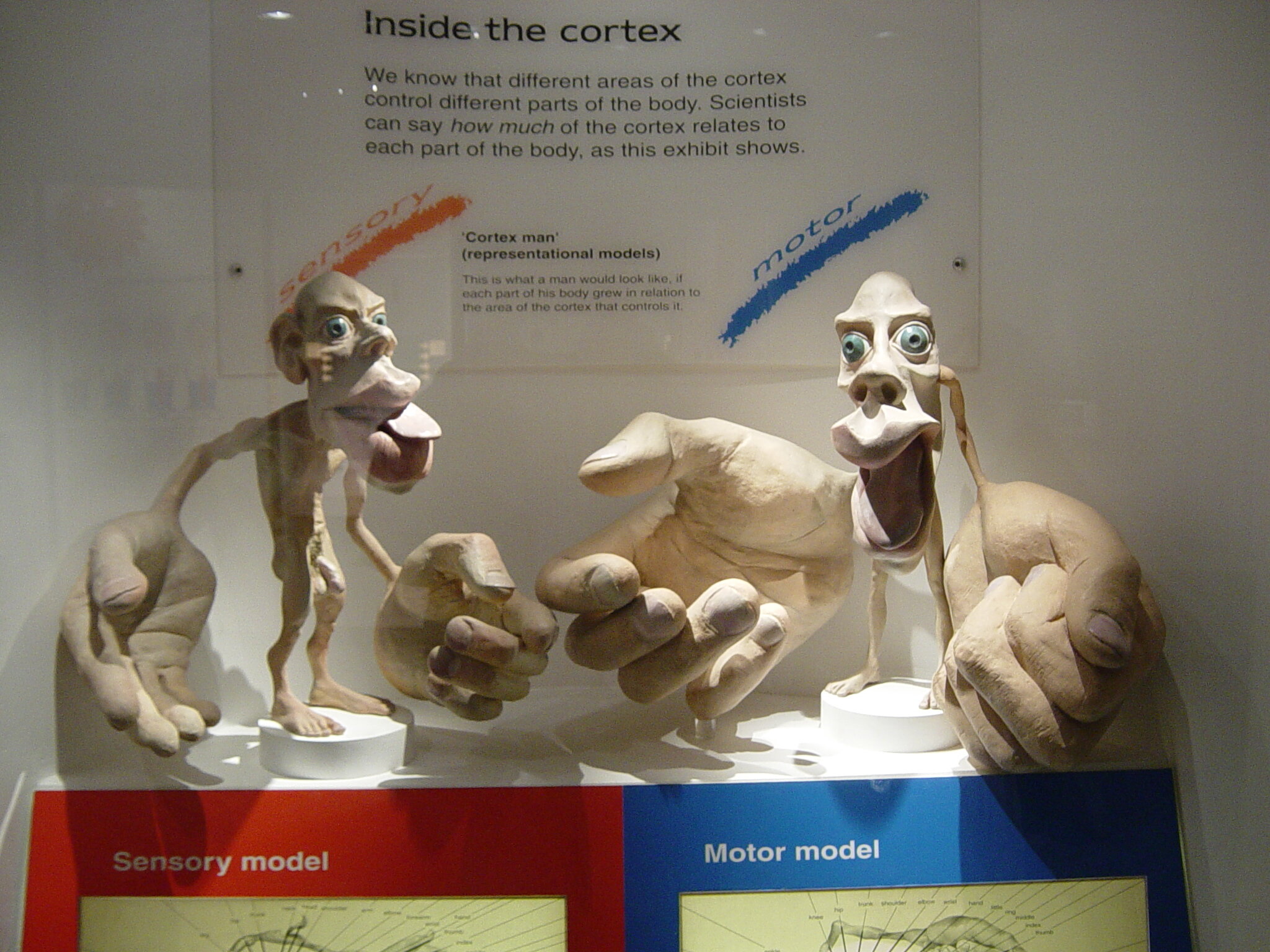
A Stanford-led study says the brain’s motor cortex is less neatly divided by body part than generations of neuroscience textbooks have suggested. The finding could affect how researchers design brain-computer interfaces for people with paralysis or neurological disease, according to the Stanford team.
The work, published June 17 in Nature, revisits the motor homunculus, the familiar map that depicts the motor cortex as an orderly sequence of regions for the feet, legs, arms, hands, face and speech muscles. Stanford University said the model has shaped teaching for nearly a century, but the new recordings show movement information is spread more widely across the strip of cortex that helps control voluntary motion.
Darrel Deo, an instructor in neurosurgery at Stanford Medicine and first author of the paper, said the researchers found representations of the whole body in motor cortex areas that had been thought to focus mainly on one body part.
Signals appeared beyond their expected zones
Deo carried out the work as a Wu Tsai Neurosciences Institute postdoctoral scholar in the lab of the late Krishna Shenoy and Jaimie Henderson, a professor of neurosurgery at Stanford Medicine. Deo and Frank Willett, an assistant professor of neurosurgery at Stanford Medicine, aimed to revisit the motor cortex using finer-scale tools than were available when the homunculus was first developed, Stanford said.
The team studied eight people who were already taking part in brain-computer interface clinical trials. Stanford said six were enrolled in the BrainGate2 trial and two were in a separate trial run through the University of Pittsburgh and the University of Chicago.
All eight participants had microelectrode arrays implanted along parts of the motor cortex. Those arrays allowed researchers to record electrical activity from individual neurons while participants made, or attempted to make, 45 different movements, including actions such as lifting a foot or turning a hand, according to Stanford.
The recordings showed that each region examined carried distinguishable information about movements across the body, Deo said. A zone most responsive to hand movement, for example, also contained signals related to the face and legs, while an area associated mainly with the face also carried information about leg movement, according to the study.
Researchers propose a revised map
The study describes the human precentral gyrus as a mosaic of whole-body representations rather than a set of sharply separated body-part zones. Stanford said the researchers also proposed an updated motor cortex map in which two speech-tuned areas sit on either side of the superior ventral precentral gyrus, a region the team found to be broadly tuned across the body.
Deo described that broadly tuned region as a “jack-of-all-trades area,” according to Stanford.
The finding may be useful for brain-computer interfaces, which translate brain activity into control signals for devices. Stanford said the results suggest that one implanted array might provide access to a wider range of movement-related signals than researchers previously expected, including signals that could help control robotic arms or communication devices.
The authors frame the work as an update to a long-standing model, rather than a rejection of all body-part specialization in the motor cortex. Stanford said the study still found areas with stronger tuning for certain movements, but those areas also carried information about other parts of the body.
The paper, “A mosaic of whole-body representations on the human precentral gyrus,” lists Darrel R. Deo and colleagues as authors. Its DOI is 10.1038/s41586-026-10653-x.
This story draws on original reporting from Medical Xpress.