
Experts advise vinegar rinse for safer strawberries
Food safety experts say a short diluted-vinegar wash can help clean strawberries, but drying and storage matter for keeping berries fresh.
By Priya Raghavan · Science Reporter
3 min read
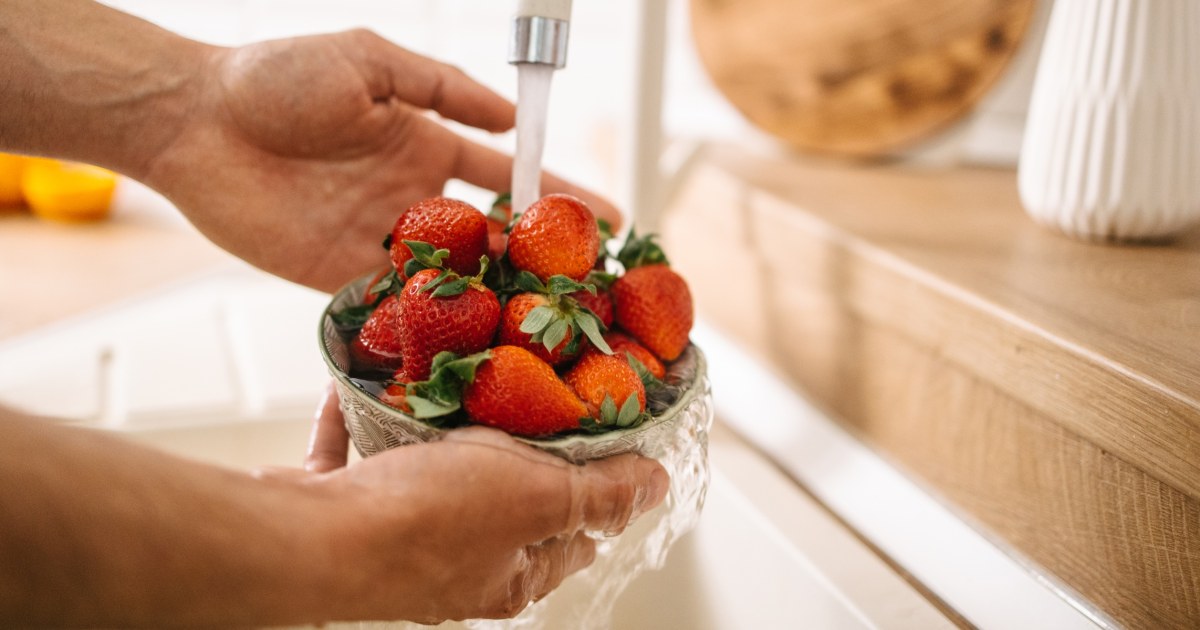
Food safety experts are urging shoppers to wash strawberries carefully before eating them as cyclosporiasis cases rise in the United States. NBC Select reported that a brief soak in diluted white vinegar, followed by thorough drying, can help remove surface debris and microbes while also slowing spoilage.
NBC Select described cyclosporiasis as an illness caused by the cyclospora parasite, which can be contracted from fecal contamination on produce including lettuce, apples and strawberries. The illness can cause severe digestive symptoms, including diarrhea, according to NBC Select.
How experts say to clean strawberries
Michael Handal, a chef and instructor at the Institute of Culinary Education in New York City, told NBC Select that strawberries and other produce can carry dirt, bacteria, fungi and other microbes even when they appear clean. Handal also said commercial produce may have trace chemicals and pesticides, and that washing should vary by type of produce.
The first step, according to NBC Select’s expert guidance, is to sort berries while they are still unwashed and discard any that look bruised, spoiled or moldy. If the strawberries will not be eaten right away, Handal recommends keeping them unwashed in the ventilated clamshell container they came in, or in a loose plastic bag.
When the berries are ready to eat or use in a recipe, NBC Select recommends placing them in a colander, sieve or similar insert set inside a large bowl. The suggested wash is one part distilled white vinegar to three parts cool water, such as 1 cup of vinegar mixed with 3 cups of water.
Handal told NBC Select to move the strawberries gently by hand, then let them soak for no more than a minute because a longer soak can affect their texture. Afterward, the berries should be drained and spread in a single layer on paper towels, then patted dry with another towel.
NBC Select reported that removing moisture is key because damp strawberries spoil faster. A salad spinner can help dry the berries further, after which they should be stored in a ventilated food container in the refrigerator if they are not eaten immediately.
What vinegar does and does not do
Dr. Sharon Nachman, chief of pediatric infectious diseases at Stony Brook University’s Renaissance School of Medicine, told NBC Select that cool water can remove some surface impurities, while vinegar can help loosen bacteria and other organisms from the surface of strawberries because of its acidity.
Nachman said vinegar does not kill pathogens, bacteria or parasites such as those associated with cyclospora. Its value, according to Nachman, is that it can help detach bacteria and parasites from fruits and vegetables so they can be rinsed away with water.
NBC Select reported that washing all strawberries immediately after purchase can make them more likely to spoil if moisture remains. Handal said spoiled or bruised berries should be removed before refrigeration because they can contribute to the rest of the batch going bad.
Tools that may help
NBC Select identified several common products that can help with the process, including distilled white vinegar, a colander or fine-mesh sieve, paper towels, a salad spinner and ventilated produce containers. The outlet said the recommended products it listed had at least a four-star average rating from 500 or more Amazon reviews.
This story draws on original reporting from NBC News.