
Dementia costs in the US projected to reach $818 billion in 2026
A USC-led study says unpaid care, quality-of-life losses and medical spending make dementia one of the nation’s costliest health burdens.
By Priya Raghavan · Science Reporter
3 min read
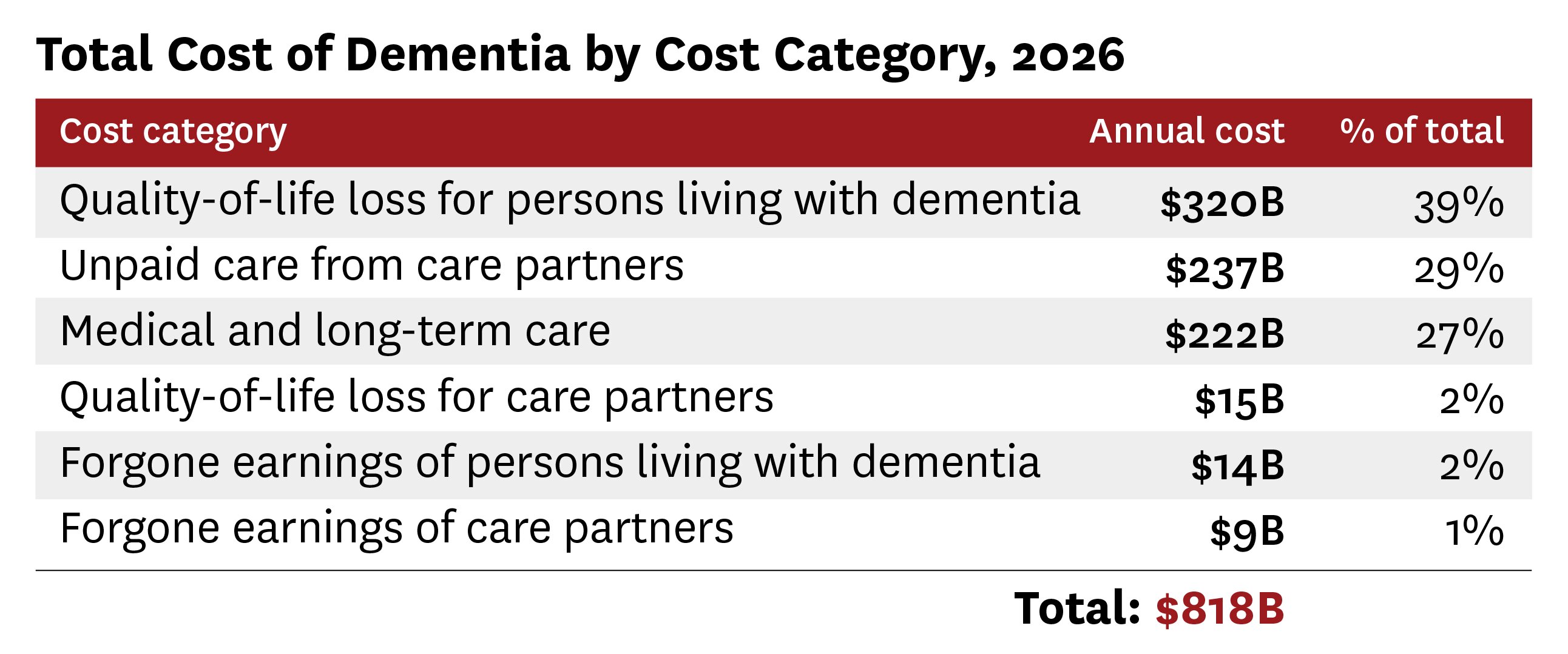
Alzheimer’s disease and related dementias are projected to cost the United States $818 billion in 2026, according to a USC-led study published June 24 in Alzheimer’s & Dementia. The estimate matters because the study counts costs that families often absorb outside the formal health care system, including unpaid caregiving, lost wages and reduced quality of life.
The U.S. Cost of Dementia Project estimates that 5.7 million people in the country are living with dementia this year, including 5.1 million adults ages 65 and older. The research was led by the USC Schaeffer Center for Health Policy & Economics, with collaborators from other USC schools, the Alzheimer’s Association and the University of Pennsylvania.
The largest category in the estimate is the loss of quality of life for people with dementia, which the researchers valued at $320 billion. The study links those losses to declines in cognition, daily function and independence. It also estimates $15 billion in quality-of-life losses for informal care partners, reflecting physical and emotional strain.
Unpaid care makes up another large share of the burden. According to the study, about 5.2 million relatives and friends provide 6.8 billion hours of unpaid help to people with dementia, work the researchers valued at $237 billion. Many of those caregivers are in their main working years, the USC team said.
Medical and long-term care costs total $222 billion, according to the study. Medicare and Medicaid pay about 70% of that amount, or $154 billion, while patients and families pay about 20%, or $46 billion, out of pocket. The researchers also estimated that people with dementia and their care partners lose $23 billion in yearly earnings.
Broader accounting of dementia costs
The 2026 estimate expands on the project’s 2025 work. USC said this year’s peer-reviewed model adds forgone earnings for people with dementia and new estimates of health-related quality-of-life effects for care partners. A separate methods paper, also published in Alzheimer’s & Dementia, lays out the model’s data, assumptions and approach.
The researchers used large national data sources, including the Health and Retirement Study and administrative health data from the Centers for Medicare and Medicaid Services. The project uses dynamic microsimulation to estimate how treatments, care models and public policies could change dementia costs over time, including effects on finances and well-being that standard spending measures may miss.
Julie Zissimopoulos, principal investigator of the U.S. Cost of Dementia Project and co-director of the Aging and Cognition program at the USC Schaeffer Center, said the annual estimates are intended to help policymakers and health systems decide how to use resources as the number of people with dementia rises. She said the model can test how a treatment that slows dementia might affect quality of life or nursing home demand.
USC said the cost model is also informed by public health leaders, clinicians, people with mild cognitive impairment and care partners of people with dementia through panel discussions organized by the Alzheimer’s Association.
Dana Goldman, founding director of the USC Schaeffer Institute, said new Alzheimer’s therapies, approved blood tests and care models that help people remain at home could change the course of dementia in the United States if used effectively. The project’s cost estimates, he said, are meant to give the health care system a clearer view of those changes and future innovations.
This story draws on original reporting from Medical Xpress.