
Yale scholars say Trump confuses force with leadership
Jeffrey Sonnenfeld and Steven Tian argue Trump’s view of power elevates coercion over institutions, coalitions and moral purpose.
By Sofia Marchetti · World Affairs Correspondent
3 min read
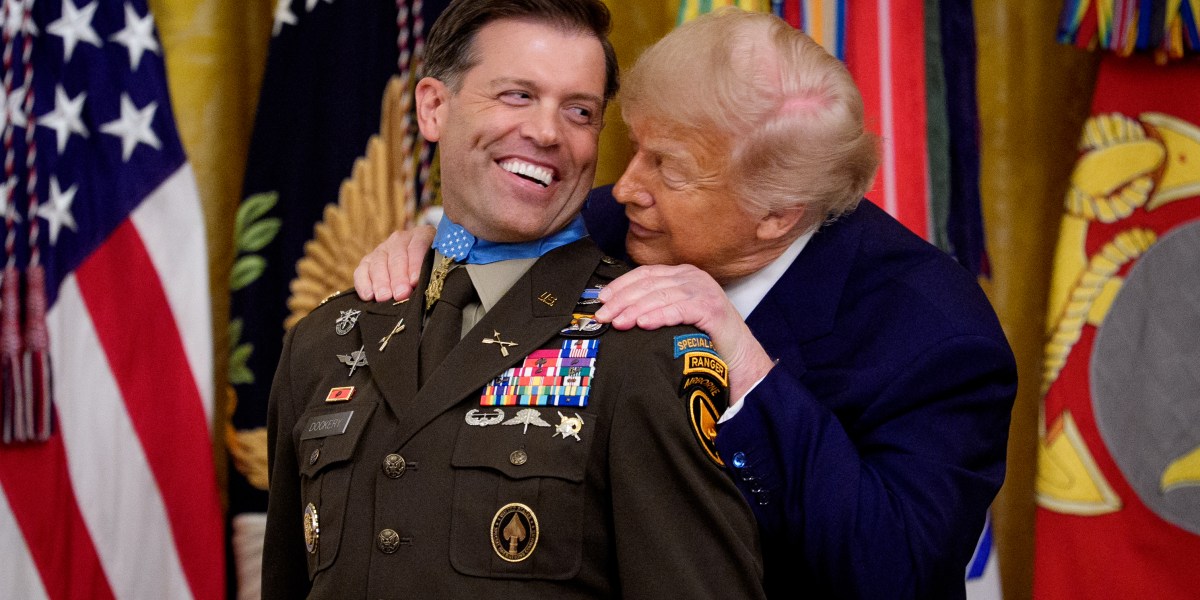
Two Yale leadership scholars are criticizing President Donald Trump’s understanding of power, arguing that he treats intimidation as a model for leadership. In a Fortune commentary published Wednesday, Jeffrey Sonnenfeld and Steven Tian said that view misreads both democratic authority and the historical record.
Sonnenfeld is the Lester Crown Professor of Leadership Practice at the Yale School of Management and founder of the Yale Chief Executive Leadership Institute. Tian is the institute’s director of research. Their essay builds on themes from their book, Trump’s Ten Commandments, published by Simon & Schuster in March 2026.
The authors point to Maggie Haberman and Jonathan Swan’s book Regime Change: Inside the Imperial Presidency of Donald Trump, which they say describes Trump as seeing himself as a “great man of history.” According to Sonnenfeld and Tian, that account compares Trump’s self-image with figures including Attila the Hun, Genghis Khan, William the Conqueror, Alexander the Great, Napoleon, Stalin, Mao and Hitler.
Sonnenfeld and Tian said some attention has gone to the sourcing of that claim, which they said was attributed to a “presidential historian” but came from golf pro Gary Player’s caddy. Their broader argument is that the episode shows Trump’s fascination with rulers who held power through fear.
The commentary contrasts that view with Theodore Roosevelt’s phrase “the bully pulpit.” Sonnenfeld and Tian said Roosevelt used “bully” in an older sense meaning excellent, rather than as a term for cruelty or intimidation.
Power versus institutions
Sonnenfeld and Tian argue that Trump’s model of leadership centers on personal dominance and direct control. They compare that with leaders they say built institutions designed to outlast them.
They cite Steve Jobs, who told biographer Walter Isaacson that his goal was to build “an enduring company” at Apple. They also point to Franklin D. Roosevelt, saying he used centralized authority to create New Deal programs and agencies that continued after his presidency.
The authors frame that distinction as one between power hoarding and institution building. They quote former House Speaker Sam Rayburn’s line that “any jackass can kick down a barn, but it takes a skilled carpenter to build one.”
Moral purpose and coalitions
Sonnenfeld and Tian also argue that leaders remembered as great tied their authority to broader causes. They cite Abraham Lincoln’s focus on abolition, Nelson Mandela’s and Mahatma Gandhi’s liberation movements, and George Washington’s decision to give up military and presidential power.
The commentary says Trump measures success through personal pride, money and visible displays of his name. Sonnenfeld and Tian contrast that with leaders they say gained lasting stature by serving causes beyond personal recognition.
On negotiation, the authors say Trump relies on coercion to win immediate concessions, a method they argue damages trust over time. They cite Doris Kearns Goodwin’s Team of Rivals to describe Lincoln’s handling of rivals such as William Seward, Salmon Chase and Edward Bates through shared purpose rather than humiliation.
The authors also cite Oona Hathaway of Yale Law School, who wrote this week that U.S. power has depended on building international institutions that others wanted to join. Sonnenfeld and Tian use that argument to say durable leadership depends on alliances, persuasion and diplomacy.
The commentary concludes that figures such as Washington, Lincoln, Gandhi and Mandela are honored because societies later embraced them as representatives of shared values. Sonnenfeld and Tian argue that Trump’s admiration for coercive rulers points him toward a legacy closer to villainy than heroism.
This story draws on original reporting from Fortune.