
Xi pitches global AI cooperation as China counters US restrictions
China’s president used a Shanghai AI forum to call for wider governance efforts and criticize security-based curbs on technology access.
By Daniel Okafor · Business Editor
4 min read
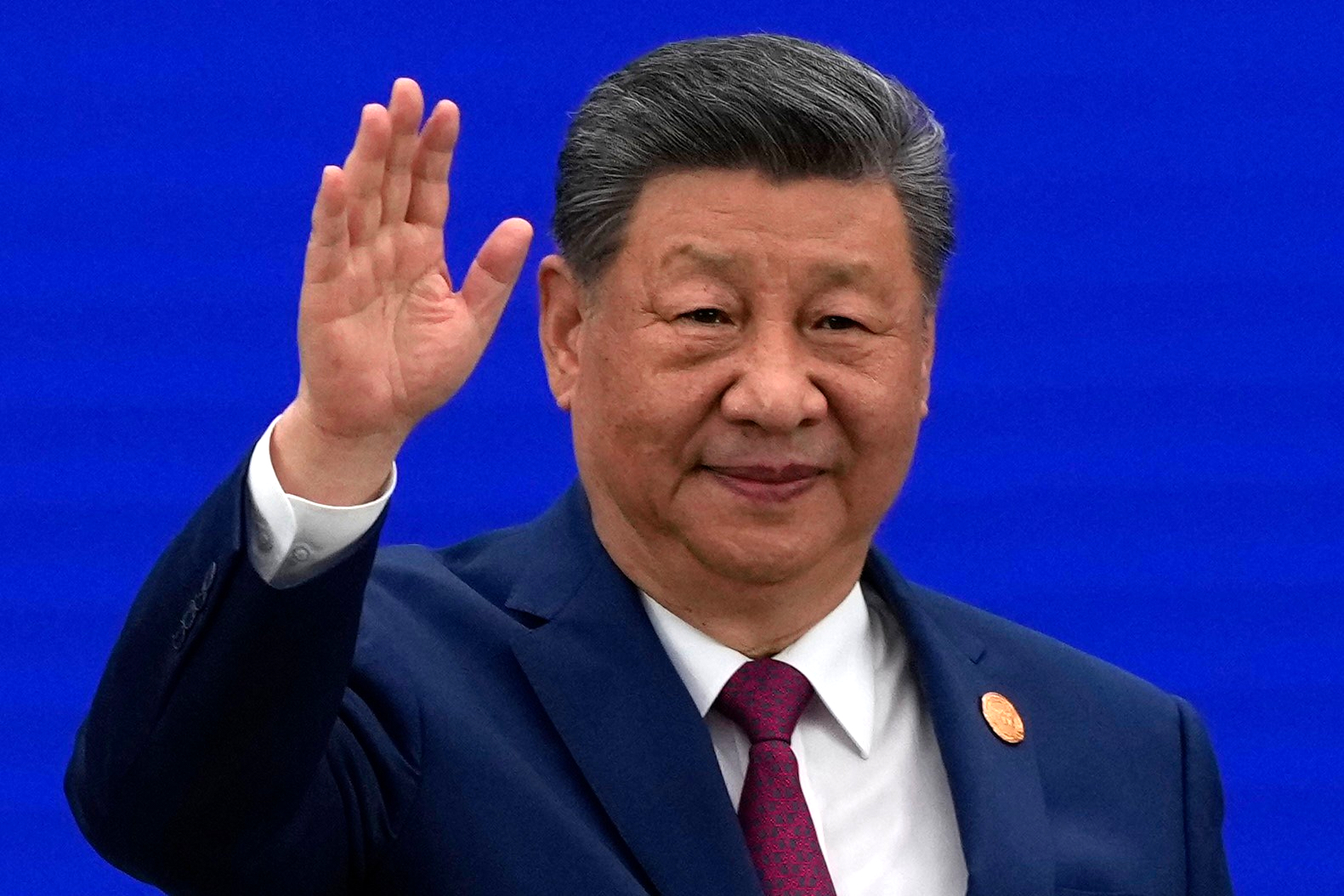
Chinese President Xi Jinping called Friday for artificial intelligence development and oversight to be handled through international cooperation, framing the technology as too important for any one country to control. His remarks in Shanghai came as U.S.-led restrictions have limited China’s access to some advanced technologies, a pressure point in the rivalry between the world’s two largest economies, according to the Associated Press.
Speaking at the opening of China’s annual World Artificial Intelligence Conference, Xi said AI “should not be a solo performance by any single country but rather a symphony of global cooperation.” The AP reported that attendees included leaders from Kazakhstan, Cambodia and Thailand, along with U.N. Secretary-General António Guterres.
Xi criticizes security-based restrictions
Xi repeated Beijing’s criticism of countries that broaden national security arguments to justify technology limits. He said governments should oppose “overstretching the concept of national security” in AI and putting one country’s security ahead of others, according to the AP.
China plans to widen AI cooperation with groups including the Association of Southeast Asian Nations, the League of Arab States, the African Union, the Community of Latin American and Caribbean States, the Shanghai Cooperation Organization and BRICS countries, Xi said. He also said China would give 30 countries access to a Chinese-developed AI weather tool for early warnings.
Xi said China will offer 5,000 AI training opportunities to developing countries over the next five years. He argued that closer cooperation could help prevent what he called “historical injustice in AI,” according to the AP.
New organization positions China in AI governance
Before the conference, 29 countries, including Pakistan, Russia and Kazakhstan, signed an agreement with China to create a World Artificial Intelligence Cooperation Organization. Chinese state media described the body as an intergovernmental organization based in Shanghai and focused on global AI governance, the AP reported.
George Chen, partner and chair of digital practice at The Asia Group, told the AP the new organization can be seen as China’s response to the U.S.-led Pax Silica initiative. That framework, launched late last year, aims to strengthen cooperation with U.S. allies and partners on AI-related supply chains; the AP reported that Japan, the U.K., Australia, the Philippines, Israel and India are among its signatories.
Chen, who attended the Shanghai conference, said Xi’s speech also signaled that China wants to present itself as a dependable partner for developing countries. “China will not let America be the monopoly of AI technology,” Chen told the AP.
The AP reported that China and the United States agreed to hold talks on AI development and governance after a mid-May Beijing meeting involving Xi and a representative of U.S. President Donald Trump.
Chinese firms show new AI systems
More than 1,100 companies and 1,400 guests are taking part in this year’s conference, according to Chinese state media cited by the AP. The event runs through Monday.
Huawei is displaying its Atlas 950 SuperPoD AI computing system at the conference, the AP reported. China’s five-year plan through 2030 prioritizes advances in frontier science and technology, including AI.
The AP said some technology analysts now view China as an AI innovator rather than a country only trying to catch up with the United States. Chinese open-source models, including DeepSeek, are seen in many developing countries as attractive and often less expensive than largely closed-source U.S. models, according to the AP.
Chinese AI startup Moonshot released its latest model, Kimi K3, alongside the conference. The company said its 2.8 trillion parameters would make it the world’s largest open-source model, compared with 1.6 trillion parameters for DeepSeek’s V4 Pro, according to the AP.
Another Chinese company, Zhipu, also known as Z.ai, launched its GLM-5.2 open-source model last month in a challenge to U.S. rivals including Anthropic, the AP reported. U.S. politicians and major AI companies including Anthropic have accused Chinese AI models of illicit “distillation” of their systems, while Beijing has called the allegation “groundless.”
This story draws on original reporting from Fortune.