
World Cup semifinals lift travel demand in U.S. host cities
Bookings and hotel revenue are rising as fans wait to see which teams reach the late rounds, according to travel and spending data.
By Hana Yoshida · Markets Reporter
3 min read
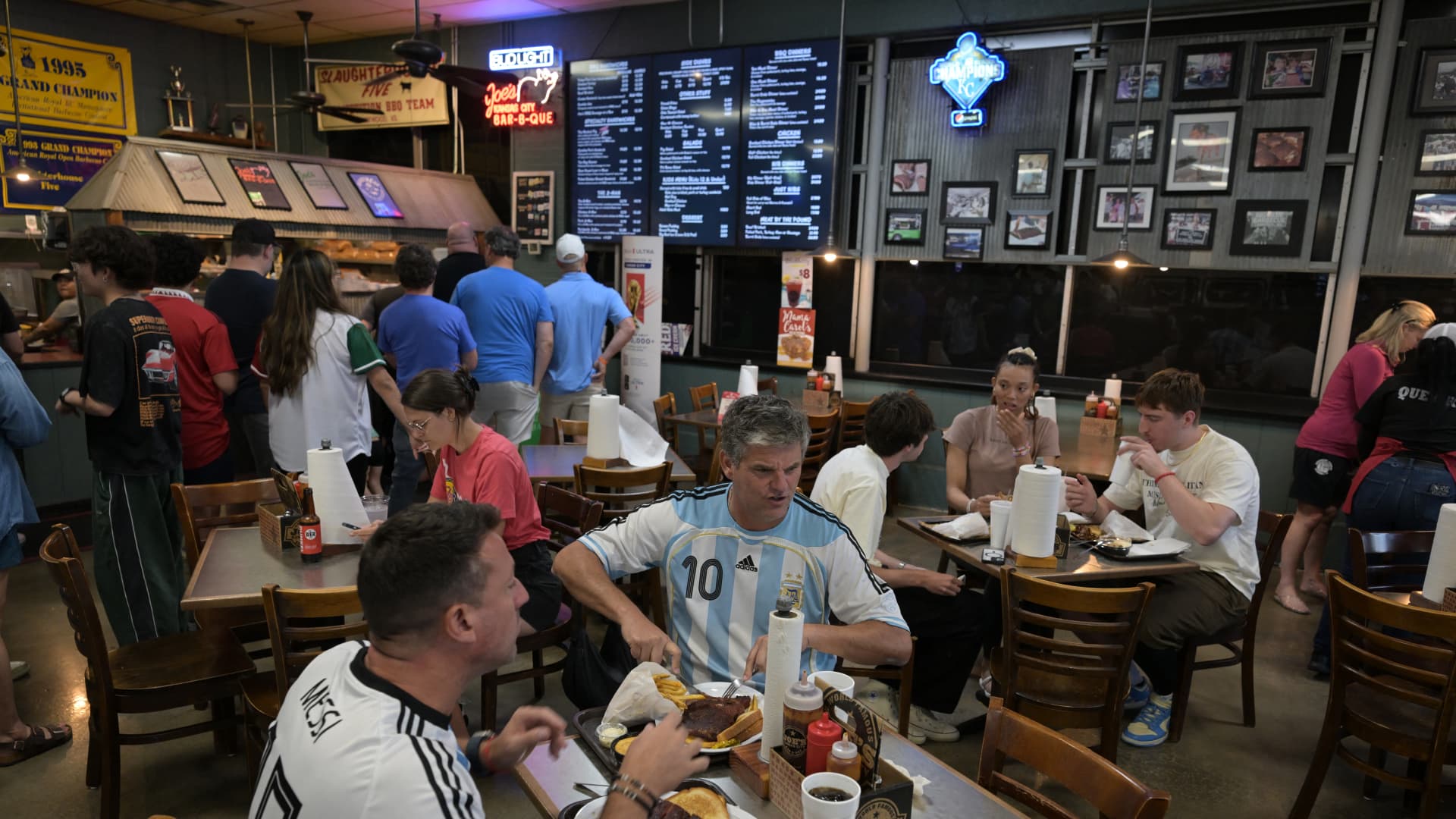
World Cup travel demand in U.S. host cities is gaining strength as the tournament reaches the semifinals, giving hotels, restaurants and airlines a later-than-expected lift. The surge matters for local businesses that had faced concerns about soft advance bookings before fans began making last-minute plans around decisive matches.
France is scheduled to play Spain in Dallas on Tuesday, while England faces Argentina in Atlanta on Wednesday. CNBC reported that bookings have picked up as the tournament field has narrowed and supporters have moved quickly to follow teams still in contention.
Bank of America Institute said every U.S. host city has received an economic boost from soccer fans. David Tinsley, a senior economist at the institute, told CNBC that spending rose after the tournament began, with restaurants and bars among the strongest beneficiaries as fans gathered around matches.
Spending rises in host cities
In-person spending in U.S. host cities increased 5% from a year earlier between June 10 and July 5, according to Bank of America credit and debit card data cited by CNBC. Kansas City posted the strongest increase among those markets.
The bank’s figures cover spending on Bank of America cards by U.S. households. CNBC noted that the data does not include cash, checks, corporate card purchases or spending by international visitors, meaning the overall impact may be larger than the bank’s sample shows.
Hotel data also showed gains, though demand has been uneven. CoStar, an industry analytics firm, said Kansas City had the largest weekly increase in hotel revenue per available room among host markets, with RevPAR up nearly 50%.
Philadelphia also had a strong stretch, according to CoStar data cited by CNBC. Weekend RevPAR there rose more than 74% as a World Cup match overlapped with Fourth of July travel and America 250 events.
Those gains eased some worries among hotel owners, CNBC reported. Before the tournament began, owners had been concerned about weak early reservations and FIFA releasing large room blocks back into the market.
Late-round matches drive bookings
Hotels were not uniformly full during the tournament’s earlier phase. CoStar said occupancy in U.S. host cities fell almost 3% from a year earlier during the final week of the group stage, suggesting some business and leisure travelers changed plans.
Even with lower occupancy, hotel rates in host cities were 21% higher during the early rounds, according to CoStar. From June 28 to July 4, as the tournament moved into the knockout stage, demand rose 2.4% from a year earlier and RevPAR increased 23%, despite there being half as many matches as the prior week.
Short-term rentals also benefited from the later rounds, according to AirDNA. Braham Gallagher, the company’s director of economic forecasting, told CNBC that some fans appeared to wait until they knew which teams would play before booking trips.
RateGain Travel Technologies founder Bhanu Chopra told CNBC that Argentina fans were reacting quickly as their team advanced. Flight bookings from Argentina have risen nearly 46% year over year since the tournament began, according to RateGain’s FIFA World Cup 2026 Market Pulse Index.
Bookings from Argentina to Atlanta, where Argentina played a round-of-16 match and is set to play its semifinal, have more than doubled, rising nearly 108%, Chopra said. Overall bookings to World Cup host cities are up nearly 4% from last year, according to RateGain data cited by CNBC.
After the opening match, flight reservations jumped nearly 75% from the previous week, according to the same data. Chopra said Argentina bookings to New York/New Jersey, host of the final, were still down about 15% year over year, while bookings into Miami, host of the third-place match, were up nearly 17%.
Ticket demand has also shifted as teams have exited. CNBC reported that resale prices for several quarterfinal matches dropped sharply after the U.S. and Mexico were eliminated, while FIFA still had nearly 1,200 mid-tier final tickets available late last week at $7,380 each.
This story draws on original reporting from CNBC.