
Warsh gives no rate signal while warning inflation remains above target
The Fed chair told House lawmakers the central bank will follow data, not political pressure, as inflation cooled but stayed above its goal.
By Hana Yoshida · Markets Reporter
3 min read
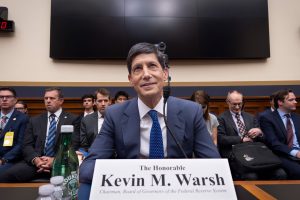
Federal Reserve Chair Kevin Warsh told lawmakers Tuesday that the central bank remains committed to bringing inflation down, but he did not say whether officials are finished raising interest rates. His testimony came as new government data showed price pressures eased in June, giving the Fed more room to wait while it weighs risks from energy prices and other parts of the economy.
Appearing before the House Financial Services Committee for the first time since becoming chair on May 22, Warsh said Fed policymakers have “no tolerance for persistently elevated inflation” and share a commitment to restoring price stability. He replaced former Chair Jerome Powell.
Warsh leads a rate-setting committee split over what should happen next. Forecasts released last month showed about half of the Fed’s 19 policymakers expected higher rates by year-end, while the other half favored holding rates steady or cutting them.
The latest inflation report complicated the debate. The government said inflation fell 0.4% from May to June, largely because gasoline prices declined. Core inflation, which excludes food and energy, was flat for the month, a softer reading than economists had expected.
On a 12-month basis, inflation slowed to 3.5% in June from 4.2% in May. Core inflation eased to 2.6% from 2.9%, according to the government report, but remained above the Fed’s 2% target.
Warsh cautioned lawmakers against treating one month of data as proof the Fed’s work is done. “There might be some that look at this morning’s data and say, ‘mission accomplished,’” he said. “That is not my view.”
The softer inflation numbers reduce pressure on the Fed to use higher rates to restrain prices. A renewed conflict in the Middle East has pushed oil prices higher again, however, and could put upward pressure on inflation in the months ahead.
Oil had retreated close to its prewar level before climbing again after the renewal of the Iran war. Gasoline prices had dropped about 20% from their peak, but they rose in the past week and remained about 35% higher than when the U.S. attacked Iran on Feb. 28, according to the reported figures.
Some Fed officials have said underlying inflation remains too high even after excluding gasoline, and that more rate increases may be needed. Warsh, who has said he wants to provide less guidance about future Fed decisions, offered no direct signal Tuesday on whether he agrees.
Lawmakers also pressed Warsh on the Fed’s independence. Democrats asked how he would respond if President Donald Trump, who repeatedly criticized Powell, pushed him to cut rates or take other actions not supported by economic data.
Rep. Gregory Meeks, Democrat of New York, asked Warsh whether he was ready for that pressure. Warsh replied that his commitment was to follow the law, the data and the Fed’s best judgment.
Warsh pointed to the Supreme Court’s recent decision allowing Fed Governor Lisa Cook to remain on the board, at least for now, after Trump sought to remove her. Warsh said the ruling answered questions about whether the court views the Fed as independent.
The Fed chair also said investment in artificial intelligence infrastructure is “the most striking feature of the economy right now.” He said the central bank is watching what that spending could mean for inflation and employment, as demand for chips and processors has lifted semiconductor prices and fed into higher prices for some electronics.
Other Fed officials have been more explicit about possible next steps. Fed Governor Christopher Waller said Monday that another hot inflation report would force the Fed to consider raising rates soon, while New York Fed President John Williams said last week the Fed could avoid another increase if core inflation holds to a 0.2% monthly pace for the rest of the year.
This story draws on original reporting from Fortune.