
U.S. renews Iran blockade as Hormuz fighting widens
Washington resumed a naval blockade and expanded strikes as Iran threatened to halt Middle East energy exports, raising pressure on oil markets.
By Hana Yoshida · Markets Reporter
3 min read
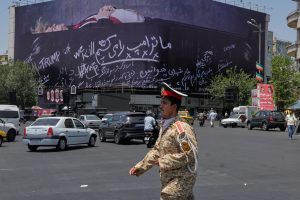
The United States reimposed a naval blockade on Iran and expanded airstrikes Wednesday after Tehran attacked ships near the Strait of Hormuz, according to U.S. and Iranian officials. The escalation puts renewed pressure on a waterway central to global energy trade and has left a fragile interim deal close to collapse.
Iranian officials said U.S. strikes hit an army barracks, killed at least seven troops and wounded more than 260 people across the country. Iran’s paramilitary Revolutionary Guard responded by threatening to stop all oil and gas exports from the Middle East, saying energy shipments from the region would be available to all countries or to none.
U.S. strikes and Iranian fire intensify
U.S. Central Command said American forces struck dozens of targets overnight and continued attacks during the day, a pace that signaled a widening campaign. The command said that within 17 hours of the blockade being restored, U.S. forces had redirected two commercial ships that tried to pass through it.
Central Command said one U.S. strike hit Greater Tunb Island, a strategic point in the Strait of Hormuz, where it said Iranian defense and missile sites were targeted. Iran seized Greater Tunb, Lesser Tunb and Abu Musa in 1971 from what later became the United Arab Emirates, which has sought their return.
Iranian state television said another U.S. attack struck a barracks used by the 388th Mechanized Infantry Brigade in Sistan and Baluchestan province. The broadcaster said at least 13 missiles were fired and that the dead included both conscripts and career soldiers.
Iranian government spokesperson Fatemeh Mohajerani said more than 30 people have been killed in recent days, including those at the barracks, but did not give further details. Health Ministry spokesperson Hossein Kermanpour said more than 260 people were wounded in the overnight strikes alone.
Iran’s army pledged what it called a decisive response, according to state television. Missile alerts sounded in Bahrain and Kuwait early Wednesday, while Jordan said it intercepted three Iranian missiles. Iran said it attacked all three countries, each of which hosts U.S. forces.
U.S. Navy Adm. Brad Cooper, the head of Central Command, said Iran had fired dozens of missiles and drones at neighboring Gulf Arab states. President Donald Trump told Fox News on Tuesday night that further U.S. strikes would come over the next two days and said bridges and power plants could be targeted next week if talks do not resume.
Hormuz remains the center of the crisis
The Strait of Hormuz has remained the focus of the conflict because, in peacetime, about one-fifth of global oil and natural gas trade moves through it. Iran effectively closed the passage to shipping after the U.S. and Israel launched the war on Feb. 28, sending prices for oil, fertilizer and other goods higher, according to the Associated Press.
The United States first imposed a blockade in April, then lifted it last month after an interim agreement paused the fighting and opened a 60-day negotiating period on issues including Iran’s nuclear program. Those talks have stalled as attacks around the strait have resumed.
During the pause, some vessels used a route near Oman overseen by the U.S. military and outside Tehran’s control, according to the Associated Press. Iran recently attacked ships on that route, setting off new exchanges of fire.
Brent crude, the global oil benchmark, traded above $85 a barrel Wednesday, more than 15% higher than before the war but below the nearly $120 reached earlier in the conflict. International Monetary Fund analysts Azim Sadikov and Jean-Marc Natal warned Wednesday that spare capacity and inventories have been drawn down, leaving the global market more exposed to another supply shock.
Regional mediators are still trying to bring Washington and Tehran back to negotiations, according to the Associated Press.
This story draws on original reporting from Fortune.