
Think tank says U.S. debt path puts Gen Z jobs and wages at risk
The Peter G. Peterson Foundation says rising federal debt could cut millions of jobs and reduce pay over coming decades.
By Maya Lindqvist · Senior Technology Correspondent
3 min read
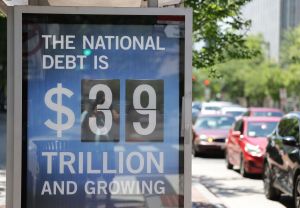
The Peter G. Peterson Foundation warned that the United States’ $39 trillion national debt could leave younger workers with fewer jobs and lower pay if the government stays on its current fiscal course. The foundation said Gen Z and younger generations would face the largest effects because they will make up much of the labor force in the decades covered by the projections.
The report said higher federal borrowing costs can squeeze public spending on investment and discourage companies from investing. That combination, according to the foundation, would slow growth and weaken the job market.
“Rising interest costs not only crowd out resources for public investments within the budget, but also deter private investment in businesses, which slows economic growth and negatively impacts the labor market,” the Peterson Foundation said in the report.
The foundation focuses on long-term fiscal issues and commissioned outside analysis for part of its warning. EY’s Quantitative Economics and Statistics practice projected that a rising debt path would leave the U.S. with 1.2 million fewer jobs by 2035 than under a scenario in which lawmakers stabilize the debt.
EY’s analysis projected a wider gap over time, with employment lower by 2.7 million jobs by 2055 and 3.6 million jobs by 2075 compared with a stabilized-debt baseline. The Peterson Foundation said those later effects would fall heavily on Gen Z and Gen Alpha as they become the core of the workforce.
Pay would fall below a stabilized-debt path
The EY analysis also found that wages would lag if policymakers do not slow debt growth, according to the Peterson Foundation. Compared with a stabilized-debt baseline, annual wages would be 0.6% lower by 2035, 3% lower by 2055 and 5.3% lower by 2075.
The warning comes as interest costs consume a growing share of the federal budget. The Congressional Budget Office found that net interest on public debt for the fiscal year reached $857 billion, or about $23.8 billion a week.
The Peterson Foundation said those interest payments now exceed by $20 billion the combined outlays for the Departments of Defense, Commerce, Homeland Security and Education, along with the Environmental Protection Agency, the Small Business Administration and the U.S. Coronavirus Refundable Credits program.
Several business leaders have also raised concerns about federal borrowing. Citadel CEO Ken Griffin wrote in his 2023 shareholder letter that it was “irresponsible” for the U.S. government to run a 6.4% deficit while unemployment was near 3.75%, saying the country should stop borrowing at the expense of future generations.
JPMorgan Chase CEO Jamie Dimon has also warned about the risks tied to U.S. borrowing. Speaking in April with Nicolai Tangen, CEO of Norges Bank Investment Management, Dimon said a bond market crisis was the most likely outcome if the issue is left unresolved, while adding that the U.S. economy would handle the disruption.
The Peterson Foundation urged younger Americans to press policymakers for action. The group said choices made by current leaders on taxes, spending and debt would shape the economic prospects of the next generation.
This story draws on original reporting from Fortune.