
Trump sharply shrinks two Utah national monuments
The proclamations reduce Bears Ears and Grand Staircase-Escalante to under 303,000 acres combined, reviving a public lands fight in the West.
By Daniel Okafor · Business Editor
3 min read
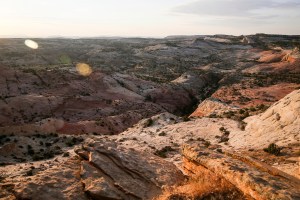
President Donald Trump on Monday used Antiquities Act proclamations to cut two Utah national monuments by about 90% each, the Associated Press reported. The decision reduces protections at Bears Ears and Grand Staircase-Escalante, areas with Native cultural sites, archaeological resources and mineral deposits that Utah officials want opened to development.
The move returns Trump to a fight from his first term, when he also reduced the monuments before President Joe Biden restored the protections, according to AP. It also fits a broader Republican push to expand drilling, mining and logging on federal lands while scaling back conservation rules and protections for threatened species.
At a White House signing event, Trump said, “They took the land from the people quite honestly. We’re giving it back.” Utah Gov. Spencer Cox, standing with Trump, called it “a big day for Utah” and said monument boundaries should cover the smallest area needed to protect antiquities.
Long-running fight over protected land
President Bill Clinton created Grand Staircase-Escalante in 1996, and President Barack Obama established Bears Ears in 2016, AP reported. Both acted under the 1906 Antiquities Act, which lets presidents protect places with historic, archaeological or cultural significance.
The two monuments previously covered more than 3.2 million acres combined, an area close to the size of Connecticut, according to AP. Trump’s new proclamations leave them at less than 303,000 acres combined, a deeper reduction than during his first term, when Grand Staircase-Escalante remained at 1 million acres and Bears Ears at 213,000 acres.
Bears Ears was the first national monument created at the request of tribal nations, AP reported. The designation honored the Navajo, Hopi, Zuni, Ute Mountain Ute and Uintah-Ouray Ute tribes, and the area includes ancestral villages, ceremonial and burial sites, and places tied to tribal creation and migration histories.
Davina Smith-Idjesa, a citizen of the Navajo Nation and co-chair of the Bears Ears Inter-Tribal Coalition, told AP that tribal leaders had expected a cut after Trump won a second term. She called the action heartbreaking and accused federal officials of avoiding their legal duty to consult affected tribal nations.
“From a Navajo perspective, Bears Ears is not simply a piece of federal public land,” Smith-Idjesa said, according to AP. “This is a living cultural site that holds our histories, our ceremonies, our traditional foods and medicines and our ancestors’ footprints.”
Development and conservation clash
Grand Staircase-Escalante includes cliffs, canyons, natural arches, archaeological sites and rock paintings, AP reported. It also contains large coal reserves, while the Bears Ears area has uranium deposits.
National monument status restricts drilling, mining and new construction around protected features and landscapes, according to AP. Supporters of Trump’s action argue the boundaries are too broad and block access to critical minerals.
Trump also claimed Monday that people cannot hunt, fish or “virtually not even walk” inside the monuments. AP reported that the claim is false, citing Steve Bloch, legal director for the Southern Utah Wilderness Alliance, who said hunting, fishing, camping and other recreation are allowed under state and federal rules.
Democrats criticized the action. Sen. Martin Heinrich of New Mexico said Trump was adding another chapter to what he called the administration’s “war on the West” and accused him of “turning the Antiquities Act on its head,” according to AP.
Interior Secretary Doug Burgum said last year that federal officials would review monument boundaries as part of Trump’s energy agenda, AP reported. Trump has also used proclamations to lift commercial fishing limits in some marine monuments, while separate Republican efforts to sell or transfer federal lands have met resistance, including from members of both parties.
This story draws on original reporting from Fortune.