
Tech stocks support global markets as oil eases amid Iran war
Major share indexes mostly rose Friday as chip and tech names gained, while oil slipped despite pressure on supplies through the Strait of Hormuz.
By Maya Lindqvist · Senior Technology Correspondent
3 min read
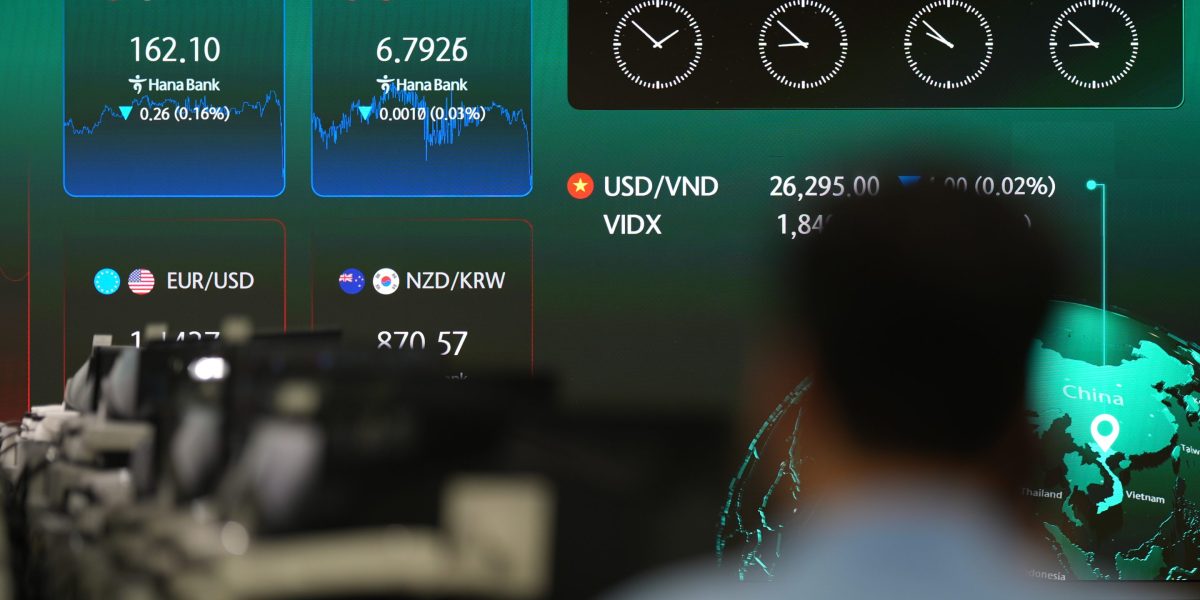
Global stock markets mostly moved higher Friday, with technology shares helping offset investor caution over the Iran war, according to the Associated Press. Oil prices fell even as traders watched supply risks tied to the Strait of Hormuz, a key route for energy shipments.
The Associated Press reported that tensions between Iran and the United States have intensified after President Donald Trump said the ceasefire agreement in the Iran war was “over.” The United States and Iran have also exchanged attacks, AP reported.
European markets were mixed
In early European trading, Britain’s FTSE 100 rose 0.1% to 10,478.98, according to AP. France’s CAC 40 declined 0.1% to 8,322.31, and Germany’s DAX also slipped 0.1% to 25,082.58.
U.S. stock futures showed little movement. AP reported that S&P 500 futures were down 0.1%, while futures tied to the Dow Jones Industrial Average rose 0.1%.
Asian shares gained ground
Asian trading was broadly stronger, led by South Korea. The Kospi climbed 2.5% to 7,475.94, recovering part of its earlier weekly decline, AP reported.
Shares of SK Hynix fell 0.3% in Seoul ahead of the memory-chip maker’s scheduled Nasdaq debut in New York on Friday, according to AP. In Japan, the Nikkei 225 advanced 1.2% to 68,557.73.
SoftBank Group, a major investor in OpenAI, rose 10.7% in Tokyo, while chip-equipment maker Tokyo Electron added 2.7%, AP reported. Hong Kong’s Hang Seng gained 0.6% to 24,175.12, while the Shanghai Composite fell 1% to 3,996.16.
Australia’s S&P/ASX 200 rose 0.5% to 8,806.00, according to AP. India’s Sensex added 1.2%.
Oil slipped while supply worries remained
Oil prices declined Friday after another volatile session, according to AP. The report said global supplies remained under strain because only a limited number of vessels were able to pass through the Strait of Hormuz.
Brent crude, the international benchmark, fell 0.5% to $75.94 a barrel. AP reported that Brent had been trading near $72 a barrel before the war began in late February.
U.S. benchmark crude also lost 0.5%, trading at $71.71 a barrel, according to AP.
Chip stocks lifted Wall Street
On Thursday, U.S. stocks closed higher, with technology shares leading the advance, AP reported. The S&P 500 rose 0.8%, the Dow gained 0.3%, and the Nasdaq composite climbed 1.3% to 26,206.89.
Semiconductor companies posted some of the strongest gains. Micron Technology rose 4.5% after the company said it planned to increase U.S. investment, citing “surging demand for memory in the AI era,” AP reported.
Advanced Micro Devices gained 5.7%, Marvell Technology rose 5%, and ON Semiconductor added 4.4%, according to AP.
Yen strengthened against the dollar
In currency trading early Friday, the U.S. dollar fell to 161.71 Japanese yen from 162.37 yen, according to AP. The euro traded at $1.1432, slightly above $1.1430.
AP reported that the yen gained after Japanese Finance Minister Satsuki Katayama told a parliamentary committee that the government intends to encourage large pension funds to put more money into domestic assets denominated in yen.
This story draws on original reporting from Fortune.