
Tech executives warn companies over data shared with AI labs
Microsoft, Palantir and other tech figures say businesses risk handing valuable know-how to AI model providers while paying for access.
By Sofia Marchetti · World Affairs Correspondent
3 min read
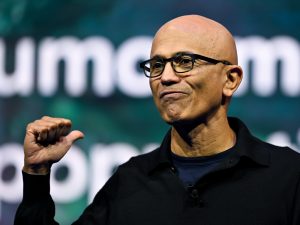
Senior technology executives are warning companies that their use of advanced AI models may be giving model makers access to valuable internal knowledge. The concern is that businesses are paying for AI tools while also supplying the data, workflows and corrections that can make those tools more capable.
Microsoft CEO Satya Nadella raised the issue this week in a blog post, saying companies that use models from providers such as OpenAI and Anthropic can end up “paying twice.” In Nadella’s account, businesses pay once for the tokens used to complete tasks and again by contributing the proprietary information that helps the systems improve.
Nadella wrote that models can learn from the byproducts of use, including prompts, agent tool use and user corrections. He argued that those corrections can capture a company’s internal expertise and processes.
His warning was pointed because Microsoft has invested heavily in OpenAI and Anthropic, according to Fortune. Nadella argued that AI labs can train on much of the open internet while limiting how enterprises can use the labs’ own models for learning.
Nadella’s proposed answer is for companies to keep control of their data, build private learning environments in the cloud and use orchestration layers that let them switch among AI providers. Fortune noted that this recommendation lines up with services Microsoft sells to enterprise customers.
Palantir makes a similar case
Palantir CEO Alex Karp made a related argument on CNBC earlier this month. Karp said frontier AI labs are extracting the proprietary data, business processes and competitive advantages that make companies valuable, while charging high token prices for products he said do not always deliver matching value.
Karp said some enterprise customers are privately angry with their AI vendors. He accused leading labs of focusing on “tokenmaxxing,” a term he used to describe maximizing token usage, rather than solving business problems.
Palantir later published a nine-point “AI sovereignty” manifesto, according to Business Insider, declaring that “data retention is your treasure.” Fortune reported that Karp’s position also supports Palantir’s commercial pitch: its Foundry platform is marketed as a way for companies to use different AI models without exposing proprietary operational knowledge.
David Sacks, the former White House AI and Crypto Czar, backed Karp’s view on the All-In podcast, according to Yahoo Finance. Sacks said OpenAI and Anthropic had created a duopoly that leaves companies with too little power over their data and AI infrastructure.
Open models gain attention
The criticism could strengthen interest in open-weight models, whose parameters are released publicly so users can download, run and modify them. Fortune reported that such models can give companies more control and transparency, often at lower cost than closed systems such as GPT-5 or Claude.
Some of the strongest open-weight models are coming from China-based companies, according to Fortune, and their performance gap with leading closed models has narrowed. Vercel said open models now make up 29% of traffic through its AI gateway.
Amazon CTO Werner Vogels told Fortune that he has seen companies move from frontier model providers toward open-source options. He said businesses are doing so to control costs and better understand technology they are putting inside their operations.
Fortune also reported that the U.S. government’s recent decision to block access to Anthropic’s Fable 5 models has pushed companies to consider relying on more than one AI vendor. For businesses running critical workloads on AI systems, the risk is that access to a single provider could be cut off with little warning.
This story draws on original reporting from Fortune.