
Tariff refunds help firms absorb new cost pressures
U.S. importers have received about $71 billion in tariff refunds, but some companies say energy, freight and commodity costs are taking much of the relief.
By Maya Lindqvist · Senior Technology Correspondent
3 min read
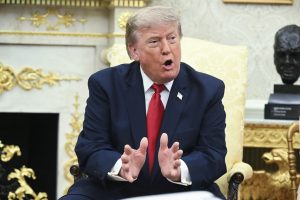
U.S. companies have received about $71 billion in tariff refunds, giving importers cash back after a major legal defeat for some of President Donald Trump’s tariffs. Several companies say the money is being used to absorb fresh cost pressures, including commodity inflation and higher energy and shipping expenses tied to the Iran war.
U.S. Customs and Border Protection issued $49.2 billion in refunds in June, according to the Treasury Department’s monthly statement. The refunds bring the total returned to about $71 billion out of $166 billion made available after the Supreme Court struck down tariffs imposed under the International Emergency Economic Powers Act in February, according to the Treasury figures.
PepsiCo Chief Financial Officer Steve Schmitt told investors last week that the company expects more pressure from commodity costs. Schmitt said PepsiCo would use tariff refunds to help offset that inflation while continuing to invest in the business.
PepsiCo Chief Executive Ramon Laguarta told investors that the Iran war, especially its effect on gasoline prices, has changed consumer behavior. According to Laguarta, higher gas costs have reduced discretionary spending and cut trips to convenience stores, where some PepsiCo purchases are made.
McCormick & Company is also using tariff refunds to cover other expenses. Chief Financial Officer Marcos Gabriel said during the spice company’s earnings presentation last month that McCormick’s $31 million in refunds would be used to counter higher costs.
Gabriel said the Middle East conflict had created inflation the company had not previously expected, and that most of the refund would go toward those expenses. McCormick raised prices twice over the past year because of tariffs and constrained freight capacity, according to the company’s prior disclosures cited in the earnings discussion.
Energy prices remain a risk
Economists have described Trump’s tariff policy as inflationary. Goldman Sachs warned that prices could remain elevated even after the IEEPA tariffs were struck down, citing continuing duties under Sections 122, 232 and 301 of the 1974 Trade Act.
Wholesale inflation fell last month as energy prices declined, according to prior inflation data cited by analysts. But renewed U.S. attacks on Iran and tension around the Strait of Hormuz have raised concern that energy prices could rise again.
Goldman Sachs chief U.S. economist David Mericle warned that if oil moves above $100 a barrel, as it did earlier in the conflict, monthly core inflation could rise by 3 to 4 basis points in the coming months. Bank of America Securities analyst Steve Juneau wrote in a May 20 client note that oil and gas costs were likely to remain elevated, making tariff rebates a tool for covering freight expenses.
Juneau said importers receiving refunds would probably use the cash to offset energy and shipping costs. He also said any consumer benefit would more likely come through slower price increases than direct rebates, based on survey results.
Companies are choosing different uses for the cash
Some retailers are passing at least part of the refunds to shoppers. BJ’s Wholesale Club President and Chief Executive Bob Eddy told investors in May that tariff refunds would help lower in-store consumer prices by half a percentage point.
Rebecca Homkes, a London Business School lecturer and Duke Corporate Executive Education faculty member, told Fortune that companies are facing repeated shocks. She said businesses moved from inflation relief to tariff costs, then to the Supreme Court ruling and new pressures from the Iran war.
Homkes said some companies are responding by pausing spending or strengthening supply chains to calm boards and investors worried about geopolitical risk. She also said tariffs remain one of the top three issues for executives, though current tariffs are narrower than the IEEPA tariffs because Section 122 tariffs are set to expire later this month and Section 301 tariffs apply only to certain goods from a specific country.
This story draws on original reporting from Fortune.