
Tariff collections fall short of U.S. debt interest costs
CBO figures show customs duties have brought in $189 billion this fiscal year, compared with $742 billion in federal interest payments.
By Sofia Marchetti · World Affairs Correspondent
3 min read
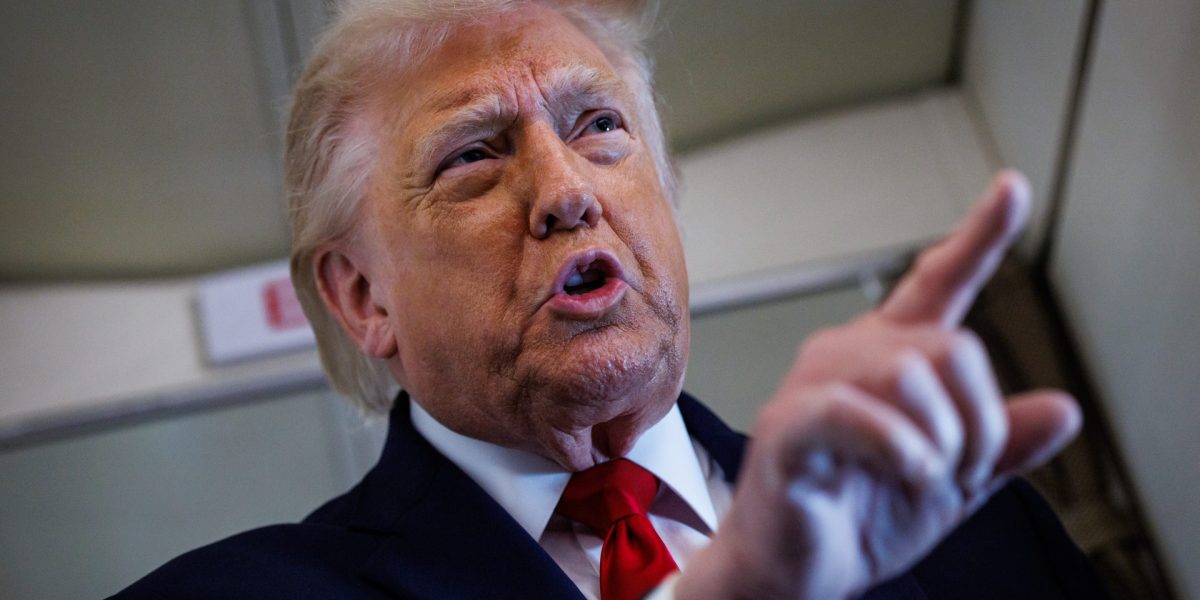
Tariffs have raised far less money than the federal government needs to cover interest on the national debt, according to the Congressional Budget Office. The figures undercut President Donald Trump’s earlier pitch that a broader tariff program could help reduce U.S. debt.
Fortune reported that Trump said when announcing the tariff plan that it was “primarily to pay down debt, which will happen in very large quantity.” Treasury data cited by Fortune put the U.S. national debt at $39.2 trillion as of June 2026.
The CBO said the federal budget deficit reached $1.2 trillion during the first eight months of fiscal 2026. Over that October-to-May period, the government took in $3.66 trillion and spent $4.9 trillion, according to the agency’s monthly budget review.
The CBO said federal revenue increased by $174 billion from the same period a year earlier, while spending rose by $57 billion. Even with that faster growth in receipts, the agency’s numbers show tariff income remains well below the cost of carrying the debt.
Debt-service costs totaled $742 billion from October through May, up from $674 billion in the same period of fiscal 2025, according to the CBO. The agency attributed the 10% increase to a larger debt load and higher long-term interest rates, while lower short-term rates partly offset the rise.
Customs duties generated $189 billion so far in fiscal 2026, according to the CBO figures cited by Fortune. That equals a little more than one-quarter of the interest payments the government made during the same period.
Tariff refunds hit May collections
The CBO said customs duties had more than doubled from the comparable period in fiscal 2025, rising by $107 billion through April. The agency said that increase stemmed from executive action.
Collections then dropped sharply in May as tariff refunds began, according to the CBO. Fortune reported that the decline followed a February Supreme Court ruling against a group of tariffs the White House had imposed in 2025 under the International Emergency Economic Powers Act.
Congressional documents cited by Fortune said the government was ordered to refund about $129 billion. Fortune reported that the White House later moved to restore tariffs using different legal authority, Section 122 of the Trade Act of 1974, which could affect future revenue data.
Debt debate continues
Trump has also described the national debt in different terms. In a Fortune interview with Editor in Chief Alyson Shontell, he compared federal debt with the value of U.S. assets, including natural assets such as the Grand Canyon and surrounding oceans.
Trump said those assets would be worth “hundreds of trillions of dollars” and that if the national debt stayed at $40 trillion, the country would be “way under-levered,” according to Fortune.
The Committee for a Responsible Federal Budget is pressing lawmakers to prioritize deficit reduction as Congress considers a third budget reconciliation bill, according to Fortune. The group called for at least $600 billion in savings and said the prior two reconciliation bills are projected to add nearly $5 trillion to the debt through 2035.
This story draws on original reporting from Fortune.