
Stocks fall as investors question Trump-Xi trade claims
Markets sold off after Trump touted China trade progress but gave few details, while analysts warned the summit had done little to ease global risks.
By Daniel Okafor · Business Editor
3 min read
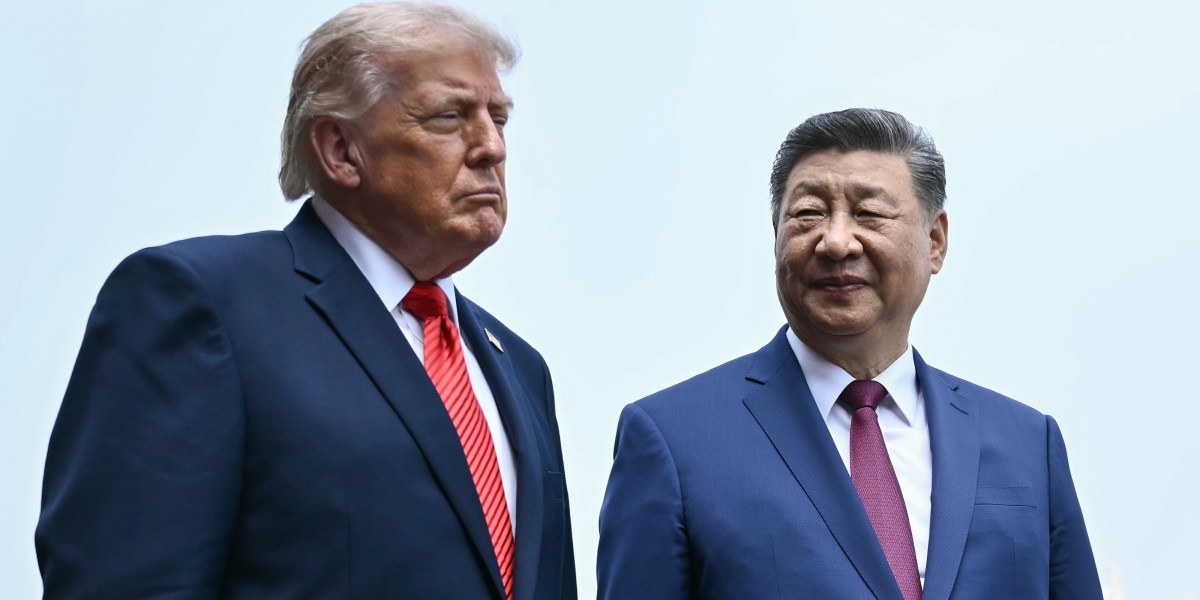
Global markets fell after President Donald Trump returned from talks with Chinese President Xi Jinping without giving investors much detail on the trade progress he claimed. The reaction mattered because traders had been looking for signs that Washington and Beijing could ease trade tensions or help reduce pressure from the Iran conflict and high oil prices.
Fortune reported Friday that U.S. stock futures and major indexes in Europe and Asia were broadly lower after the summit in Beijing. S&P 500 futures were down 1% before the New York open, after the index rose 0.77% the previous day, according to Fortune.
In Europe, the Stoxx 600 fell 1.28% in early trading and Britain’s FTSE 100 was down 1.42% before midday, Fortune reported. In Asia, South Korea’s KOSPI dropped 6.12%, Japan’s Nikkei 225 lost 1.99%, India’s Nifty 50 slipped 0.13% and China’s CSI 300 declined 1.12%.
Few details from the summit
The Wall Street Journal reported that Trump told reporters he and Xi both wanted the Iran conflict to end and wanted Iran to be kept from obtaining a nuclear weapon. Trump also said the two leaders had made “fantastic trade deals,” but did not provide details, according to the Journal.
China’s government said the two countries had reached “a series of new common understandings,” though it did not spell out what those understandings covered, the Journal reported. That lack of detail weighed on investors who had expected more from the meeting.
UBS analyst Paul Donovan told clients that the summit produced “nothing of real substance,” Fortune reported. Donovan said Xi’s statement about keeping trade relations stable carried limited value because neither side would be expected to announce unstable trade ties, and because U.S. trade policy had not been associated with stability over the previous 15 months.
Boeing order disappoints investors
Boeing shares also came under pressure after Trump said China had agreed to buy 200 Boeing aircraft, Reuters reported. Fortune reported that Boeing fell 4.73% on Thursday and lost another 1.38% in overnight trading.
The aircraft order appeared smaller than some investors had expected. Fortune reported that Trump’s 2017 China trip involved 300 aircraft, while White House sources had suggested before the latest trip that a deal could include 500 planes.
Oil and Iran fears add pressure
Analysts at Deutsche Bank said hopes that China might play a role in ending the Iran war had not been met, according to Fortune. Deutsche Bank’s Jim Reid and colleagues said markets lost momentum after Trump said the U.S. did not need the Strait of Hormuz open “at all,” a remark they said added to fears that the strait could stay blocked and extend an energy shock for the global economy.
Brent crude rose to $109 a barrel Friday morning after touching $103 on Thursday, Fortune reported. Fortune said high oil prices were supporting the dollar against other currencies, adding to inflation pressure and making the Federal Reserve more hawkish, while bonds were also selling off.
ING’s Francesco Pesole said in a note seen by Fortune that the Trump-Xi meeting had been expected to produce positive headlines, possibly including on Iran, that could have lifted sentiment. Pesole said the results had been too limited so far.
This story draws on original reporting from Fortune.