
Starmer says he will step down after Labour rebellion
Keir Starmer said he will leave Labour’s leadership and remain prime minister until the party chooses a successor by Sept. 1.
By Hana Yoshida · Markets Reporter
3 min read
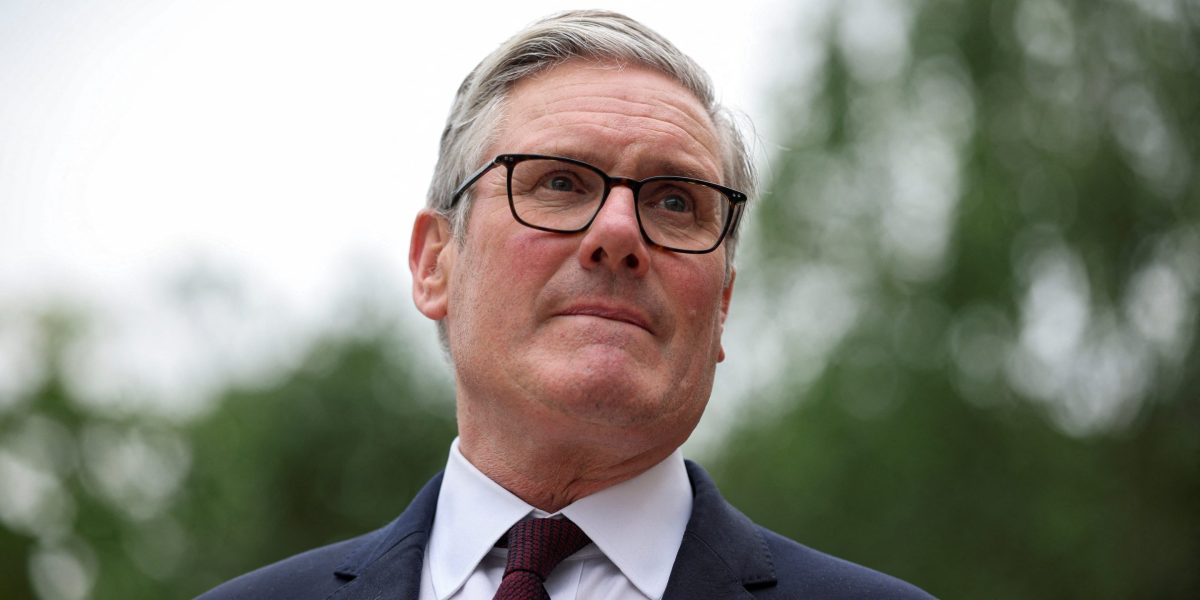
Keir Starmer said Monday he will resign as Labour leader and leave Downing Street once his party chooses a successor, setting up another change at the top of the U.K. government. Bloomberg reported that the timetable could make Britain’s next leader its fifth prime minister since 2022.
Speaking outside No. 10 Downing Street, Starmer said nominations for the Labour leadership would open July 9 and that the contest, if one is needed, would end by Sept. 1, when Parliament’s summer break concludes. He said he would stay in office during the process to oversee a controlled transfer to the winner.
Starmer said Labour MPs had made clear they did not see him as the right person to lead the party into the next general election. He said he accepted that judgment with “good grace.”
Burnham seen as leading contender
Bloomberg reported that Andy Burnham, the Greater Manchester mayor, is viewed as the most likely successor. Burnham last week won the parliamentary seat of Makerfield, near Manchester, giving him the House of Commons foothold needed to pursue the Labour leadership.
That victory followed a sharp Labour setback in the same area. Bloomberg reported that Nigel Farage’s Reform UK, which leads national voting-intention polls, had won every available council seat there in local elections six weeks earlier.
Wes Streeting, the former health secretary, has also signaled that he plans to run, according to Bloomberg. Under Labour rules cited by Bloomberg, a candidate needs nominations from one-fifth of the Parliamentary Labour Party, and it is unclear whether Streeting can secure the 81 MPs needed to force a race against Burnham.
Local elections intensified pressure
Bloomberg reported that Starmer’s move followed demands from many Labour backbenchers and some cabinet ministers, including Energy Secretary Ed Miliband, for a planned transition. The pressure had been building after policy reversals, unpopular decisions and other missteps under Starmer’s leadership, according to Bloomberg.
The early May local elections turned discontent into a wider challenge. Bloomberg reported that Labour lost nearly 60% of the seats it was defending, while Reform UK and the Green Party gained ground. About a quarter of Labour’s 403 MPs called for Starmer to leave after the result, Bloomberg reported.
Josh Simons stepped down as Makerfield’s MP a week after those elections, Bloomberg reported, clearing the way for Burnham to stand for the seat. Bloomberg said Starmer had previously blocked Burnham from contesting another special election earlier in the year, but could not stop him from targeting Makerfield.
Starmer defends his record
Before Starmer spoke, Downing Street staff and allies including Deputy Prime Minister David Lammy, Chief Secretary to the Prime Minister Darren Jones and Attorney General Richard Hermer gathered outside, according to Bloomberg. Protesters nearby played Beethoven’s “Ode to Joy,” the European Union anthem, Bloomberg reported.
Starmer used the speech to argue that he had restored Labour after taking over a party he described as politically, financially and morally broken. He pointed to economic improvement, shorter National Health Service waiting lists, stronger workers’ rights, 500,000 children lifted out of poverty, support for Ukraine and closer relations with the EU, according to Bloomberg.
Starmer said his successor would have his full support and would inherit a country stronger and fairer than the one he took over two years ago. Bloomberg reported that his voice wavered as he thanked his family and said he would spend more time with them after leaving office.
This story draws on original reporting from Fortune.