
Southeast Asia risks lagging in AI supply chain, economist says
Edward Lee says the region remains behind North Asia in high-value manufacturing as AI demand lifts chipmakers and server suppliers.
By Hana Yoshida · Markets Reporter
3 min read
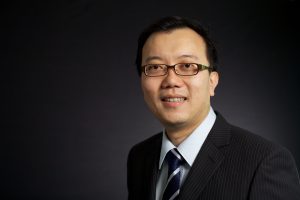
Southeast Asia risks capturing only a limited share of the artificial intelligence boom because much of its manufacturing base remains lower in the supply chain, Standard Chartered economist Edward Lee told Fortune. Lee, the bank’s chief economist and head of foreign exchange for ASEAN and South Asia, said the region accounts for 6% of global intermediate manufacturing, compared with 15% for China.
Lee said the region has attracted foreign direct investment, but that has not translated into a broad move into higher-value production. That gap matters as demand for AI chips, memory and related components sends more revenue to companies in North Asia.
Taiwan Semiconductor Manufacturing Co., Samsung Electronics and SK Hynix are among the companies benefiting from AI-related demand, according to Fortune. TSMC said on July 16 that quarterly profit reached 707 billion New Taiwan dollars, or $22 billion, up 77% from a year earlier and above analysts’ expectations.
Southeast Asia does have a role in the AI supply chain, Fortune reported. Singapore makes semiconductors, Malaysia works in chip assembly, packaging and testing, and Malaysia and Thailand help assemble AI servers.
Lee said the region’s AI industry remains much smaller than North Asia’s, where leading semiconductor companies, AI server assemblers and component makers are based. He said companies and governments in Southeast Asia need to spend more on AI-related research and development to avoid falling further behind.
Singapore has pledged more than 1 billion Singapore dollars, or $776 million, for fundamental and applied AI research, according to its government. Lee told Fortune that research and development is expensive, and he said there is no easy formula for becoming a major AI producer.
Uneven gains across the region
Lee warned against treating Southeast Asia as a single AI story. He told Fortune that Singapore, Malaysia and Vietnam are likely to gain from stronger demand for electronics manufacturing.
He was less certain about the Philippines because AI may put pressure on its business process outsourcing sector. Fortune reported that the industry contributes 8% of Philippine GDP.
The IT & Business Process Association of the Philippines cut its best-case forecasts on July 14 for 2028 revenue and employment, according to Bloomberg. The group lowered those estimates to $50.5 billion in revenue and 2.14 million jobs, from previous projections of $59 billion and 2.5 million jobs. It said the industry generated $40.3 billion and employed 1.89 million people last year.
Growth outlook cut
Standard Chartered’s research team also reduced its 2026 global growth forecast to 3.0% from 3.4%, citing downgrades tied to conflict in the Middle East. The bank’s economists said conflict risks appear to have peaked and expect global growth to continue at a steady pace for the rest of 2026.
Eric Robertsen, Standard Chartered’s chief strategist and global head of research, said at a July 15 briefing that the forecast cut reflected events that had already occurred. He said the Middle East conflict could still leave economic damage in the second half of the year, including disruption to supply chains.
Robertsen said some oil, natural gas and other commodities had begun moving out of the Strait of Hormuz, but flows had not returned to normal. Fortune reported that transit through the strait has been largely blocked during the Iran war, and that a breakdown in the Iran-U.S. ceasefire has brought new Iranian attacks on ships and a renewed U.S. blockade of Iranian shipping.
Divya Devesh, Standard Chartered’s co-head of FX research for ASEAN and South Asia, said net commodity importers such as India, the Philippines and Thailand could see weaker currencies if energy strains combine with a stronger dollar. Lee said geopolitics is now playing a larger role in business decisions about supply chains, with companies paying more attention to where and how goods are made.
This story draws on original reporting from Fortune.