
South Korea enforces false information law despite press warnings
The measure allows punitive damages and fines over false or manipulated content, raising concerns among journalists and rights groups.
By Sofia Marchetti · World Affairs Correspondent
3 min read
South Korea began enforcing a new law Tuesday that can impose heavy penalties on media organizations and major online accounts accused of spreading false or manipulated information, the Associated Press reported. Press and civil liberties groups say the measure could make journalists and citizens less willing to scrutinize powerful people and companies.
Under the law, courts may order news organizations and large social media channels, including YouTube creators, to pay as much as five times proven damages if they distribute unlawful false or altered information to harm others or make money, according to AP. The law also allows South Korea’s media regulator to fine repeat distributors up to 1 billion won, or about $656,000, after a court has already determined the material was false or manipulated.
AP reported that large internet platforms with more than 1 million daily users must respond to reports of false or fabricated information by taking steps such as deleting content or suspending accounts. The measure was supported by President Lee Jae Myung’s liberal Democratic Party and passed the National Assembly in December while conservative opposition lawmakers boycotted the vote.
Lee’s party says the law is needed because false information and disinformation are damaging democratic politics by feeding social division and hate speech, AP reported. The party had tried to pass similar legislation under earlier administrations but did not succeed.
The Journalists Association of Korea warned that repeated lawsuits or large damage claims could have an “unavoidable chilling effect” on newsrooms. In a statement cited by AP, the group said a law with a legitimate goal could still damage democracy if enforcement discourages the press and citizens from criticizing or examining people in power.
The Seoul Foreign Correspondents’ Club also raised concerns about how the measure could affect reporting and the movement of information, according to AP. Journalists and civil liberties groups say the wording is too broad and does not clearly state what content is banned, creating risks for reporting on officials, politicians and major businesses.
The law followed years of concern over South Korea’s online political debate, AP reported. Lee raised the issue after then-President Yoon Suk Yeol briefly declared martial law in 2024; Yoon was later impeached, removed from office, convicted of rebellion and sentenced to life in prison, a ruling he appealed in February.
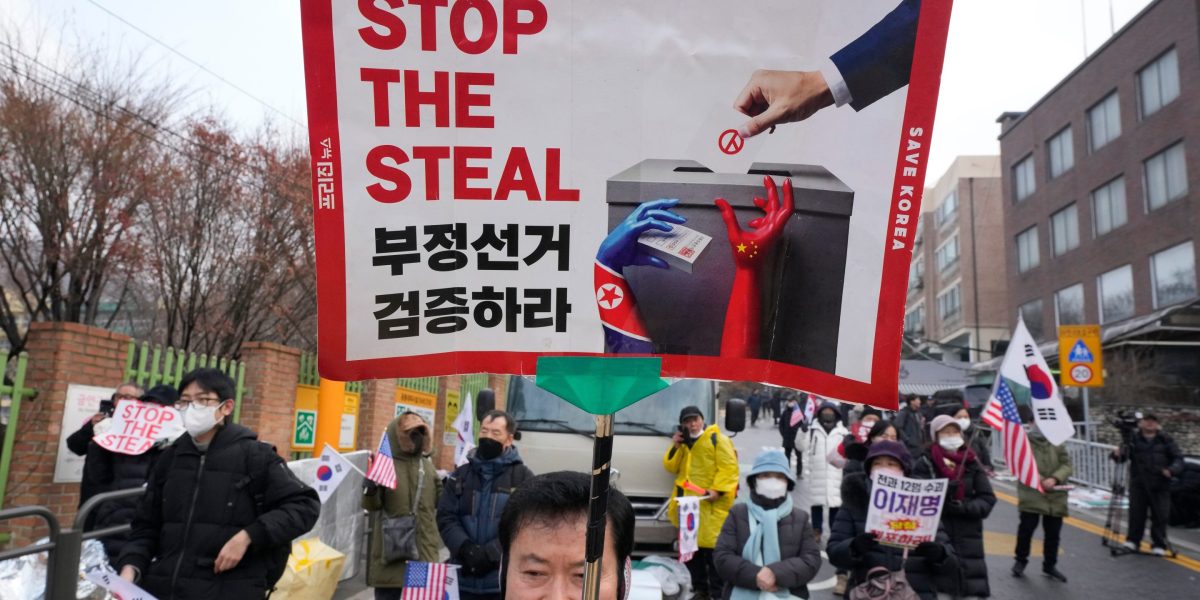
AP reported that Yoon, who faces other criminal cases, used unsupported election-fraud claims circulating on YouTube to justify his failed power grab and rally conservative supporters against Democrats. Critics cited by AP say those claims added falsehoods to already bitter political disputes and made compromise harder.
The Korea Media and Communications Commission has rejected warnings that the law could become a government censorship tool, AP reported. The commission said last week that private platform operators, rather than the government, would decide whether flagged content was false or manipulated, and that public-interest reporting is exempt from damages claims.
Kim Hong-yeol, a professor at Duksung Women’s University in Seoul, wrote for the news site Medius that the law could push people and companies toward self-censorship. Kim said internet firms may remove lawful material or moderate too aggressively to avoid legal exposure.
AP reported that major South Korean internet companies including Naver and Kakao have been updating systems for reporting and addressing false information under guidelines from the Korea Internet Self-Governance Organization. AP said it remains unclear how foreign platforms such as Google’s YouTube will comply.
YouTube told AP it tries to balance openness with user protection and would continue talking with relevant parties about its work. After the law passed in December, U.S. Under Secretary of State Sarah B. Rogers criticized it on X, saying the revised measure threatened technology cooperation and risked viewpoint-based censorship.
This story draws on original reporting from Fortune.