
Schmidt urges philanthropy to back science as U.S. turns 250
The philanthropist says America’s anniversary should spotlight scientific progress and renewed support for researchers.
By Maya Lindqvist · Senior Technology Correspondent
3 min read
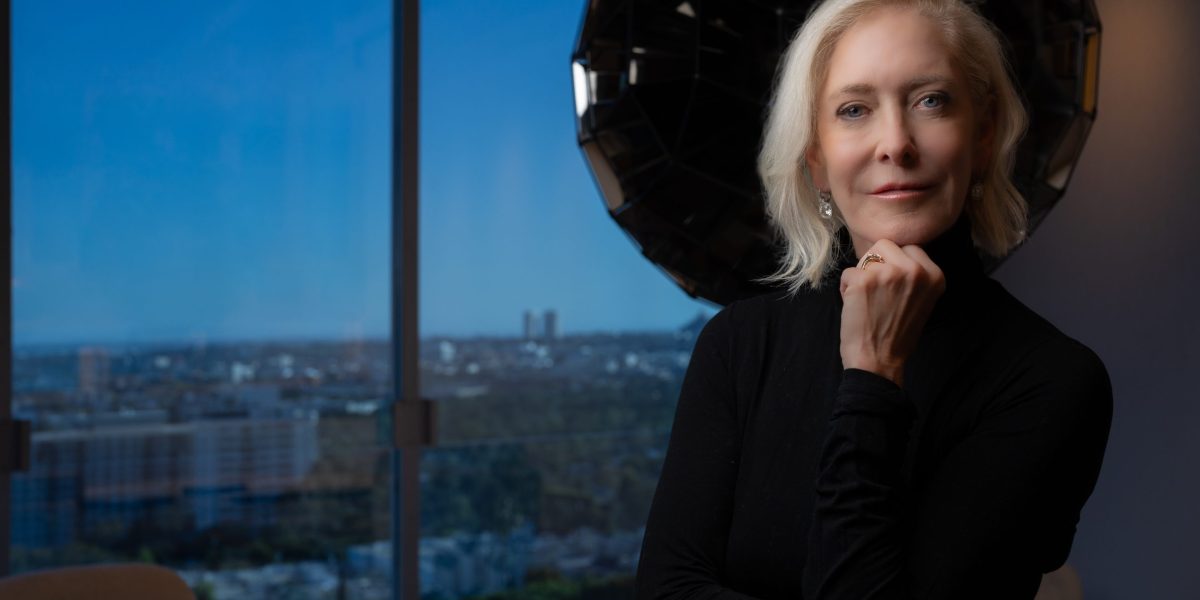
Philanthropist Wendy Schmidt is urging donors to strengthen science funding as the United States approaches its 250th anniversary. In a Fortune commentary published June 29, Schmidt argued that the milestone should be used to mark scientific advances and to support researchers facing lower public funding and public skepticism.
Schmidt is co-founder of Schmidt Sciences, Schmidt Ocean Institute and the Schmidt Family Foundation, where she serves as president. She wrote that looking at U.S. history through science, rather than only through politics or war, offers a broad way to measure progress and prepare for future challenges.
She framed the argument with the death of George Washington in 1799. According to Schmidt, Washington died at 67 after suffering from a sore throat that was likely caused by a bacterial infection, and his doctors used bloodletting, a treatment now understood to have contributed to his death.
Schmidt cited PBS in describing other treatments given to Washington on his final day, including mercury chloride, an emetic, an enema and a paste of Spanish flies applied to his throat. She also noted that Washington asked not to be buried for 72 hours after death, reflecting the limits of medical knowledge at the time.
Science as an anniversary lens
Schmidt used Washington’s era to show how much scientific understanding has changed. She wrote that when Washington died, there was no scientific knowledge of dinosaurs, no concept of extinction and no understanding that anything existed beyond the Milky Way.
She also wrote that scientists at the time were only beginning to consider that Earth might be millions of years old rather than thousands. By contrast, Schmidt pointed to later U.S. achievements including the polio vaccine, discovery of the double helix and the moon landing, as well as the post-World War II rise of federal scientific investment.
Schmidt said today’s scientific tools are expanding what researchers can study, from the deep ocean to outer space. She listed advanced computation, optics, robotics and rocketry among technologies helping researchers observe connections across fields and better understand life on Earth and beyond it.
Funding, trust and AI
Schmidt warned that public funding for basic research, university laboratories and Earth-monitoring systems in space and at sea has fallen sharply. She also said public distrust of science has grown, alongside concern about fast-moving information and intelligence systems offered by a small number of powerful companies.
Her proposed answer centers on philanthropy. Schmidt said donors should help protect scientific institutions by funding threatened datasets, including decades of Earth observation records, and by supporting university labs working in biology, chemistry, atmospheric science, public health, ocean research and related fields.
She also said philanthropy can support computer scientists and social scientists working on artificial intelligence accountability, ethics and transparency. Schmidt wrote that such work is needed if AI systems are to deliver public benefit.
Schmidt said private giving cannot replace long-term government spending at the scale that helped create technologies such as the internet. She argued, however, that philanthropic capital can take early risks that government and industry rarely accept, as long as findings, including failures, are shared publicly.
She also called for science philanthropy to work across borders. Schmidt wrote that scientific ideas move quickly and do not depend entirely on one government or university, making international cooperation central to long-term resilience.
Schmidt closed by linking the anniversary to the present moment: new technologies have broadened human capability, she wrote, while also requiring researchers and funders to stay focused on shared humanity and the interdependence of life on Earth.
This story draws on original reporting from Fortune.