
Challengers put New York pension oversight at center of comptroller race
Drew Warshaw and Raj Goyle are challenging Thomas DiNapoli over fees, investments and control of New York’s nearly $300 billion pension fund.
By Daniel Okafor · Business Editor
3 min read
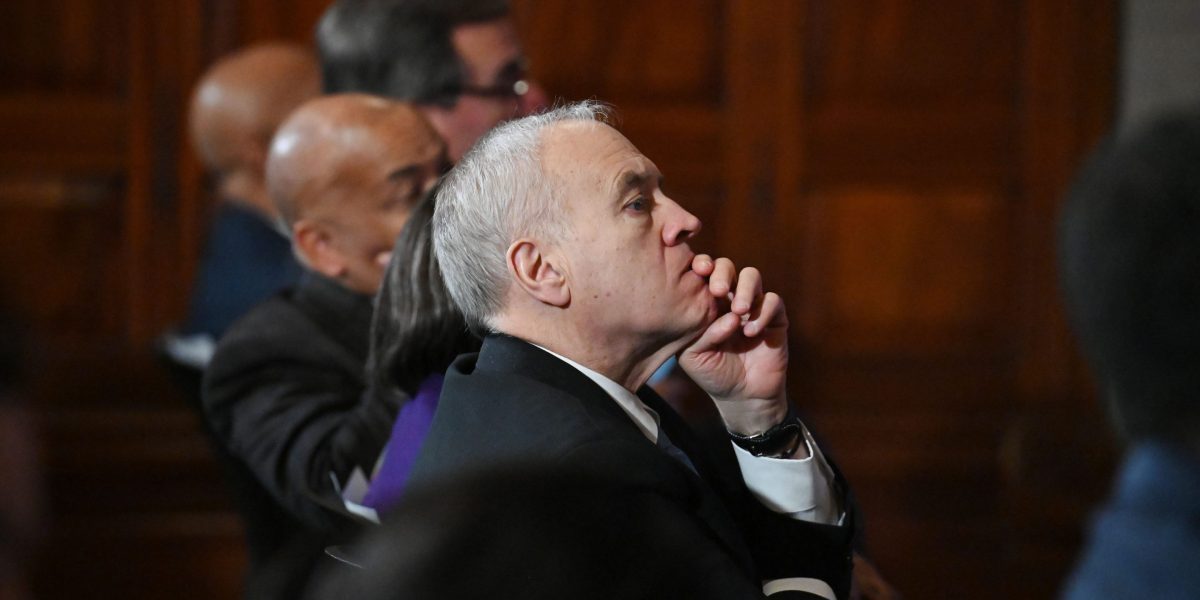
New York’s comptroller race has become a fight over who should control one of the largest public pension funds in the country. Thomas DiNapoli, who has held the office since 2007, faces challenges from Drew Warshaw and Raj Goyle as they argue the nearly $300 billion New York State Common Retirement Fund has lacked enough scrutiny.
Fortune reported that the comptroller serves as sole trustee of the fund, the third-largest public pension fund in the United States. The structure gives the office unusual power over investments, fees and divestment decisions without a governing board like those used by some other large state pension systems.
DiNapoli’s profile with voters has remained low despite that authority. Fortune cited a recent poll finding that 65% of New York Democrats had not heard of him.
Fees and performance drive the challenge
Warshaw, a former New York government official and renewable energy executive, told Fortune he began examining the fund’s annual reports and focused on the number of outside investment managers and the fees paid to them. He calculated that the fund paid about $1.1 billion in fees in 2024 and $862 million in 2025.
DiNapoli’s office confirmed to Fortune that the fund uses outside managers and has paid about $1 billion in fees, but said the number was a low share for a pension fund of its size. The office also said New York’s investment expenses ranked 33rd among 74 large public pension funds in a New York State Department of Financial Services survey.
Warshaw commissioned Stanford economist Ryan Cummings to compare 19 years of fund performance with DiNapoli’s stated benchmarks. According to Warshaw’s campaign, the analysis found the fund lagged those benchmarks by 39%, paid $11.3 billion in fees during that period and cost taxpayers $59.1 billion because state law requires the pension system to remain fully funded.
The study has not been peer reviewed. DiNapoli’s office told Fortune the figure was based on faulty math and said the fund returned 8.94% over the past decade. The office also pointed to reviews by Weaver and the state Department of Financial Services that it said praised the fund’s performance, asset allocation, fees and ethics controls.
Goyle, a former Kansas state legislator and legal tech entrepreneur, shares the broad critique of high fees. He told Fortune that pension money should not be locked into opaque managers that fail to deliver.
Investments and accountability
Both challengers support moving more of the fund toward low-cost index investing. Fortune reported that they cite Nevada’s state pension system as a model because it moved toward that approach and has outperformed actively managed peers.
Goyle has also criticized the fund’s holdings on ethical grounds. He pointed to investments tied to Palantir and SpaceX, saying public pension funds should reflect public values. Fortune reported that filings showed the New York fund had $339 million invested in Palantir as of March 31, after cutting its stake by 0.16%.
DiNapoli has taken some action on corporate governance. Fortune reported that he joined New York City Comptroller Mark Levine and CalPERS CEO Marcie Frost in a May 13 letter to Elon Musk raising concerns about SpaceX’s reported governance structure and requesting a meeting.
The race has also exposed tension between the two challengers. Fortune reported that Warshaw and Goyle have known each other for about two decades through progressive politics, but they have clashed over Goyle’s past record in Kansas and over who can make the stronger case for change.
DiNapoli has defended his tenure by pointing to the pension fund’s funding status and recent returns. His challengers say the legal requirement that the fund stay fully funded means taxpayers cover shortfalls, making investment decisions and fees central to the office’s public role.
This story draws on original reporting from Fortune.