
Musk stock award hinges on SpaceX reaching Mars colony goal
SpaceX’s IPO filing ties a major Elon Musk stock grant to market value targets and a permanent Mars settlement of at least 1 million people.
By Hana Yoshida · Markets Reporter
3 min read
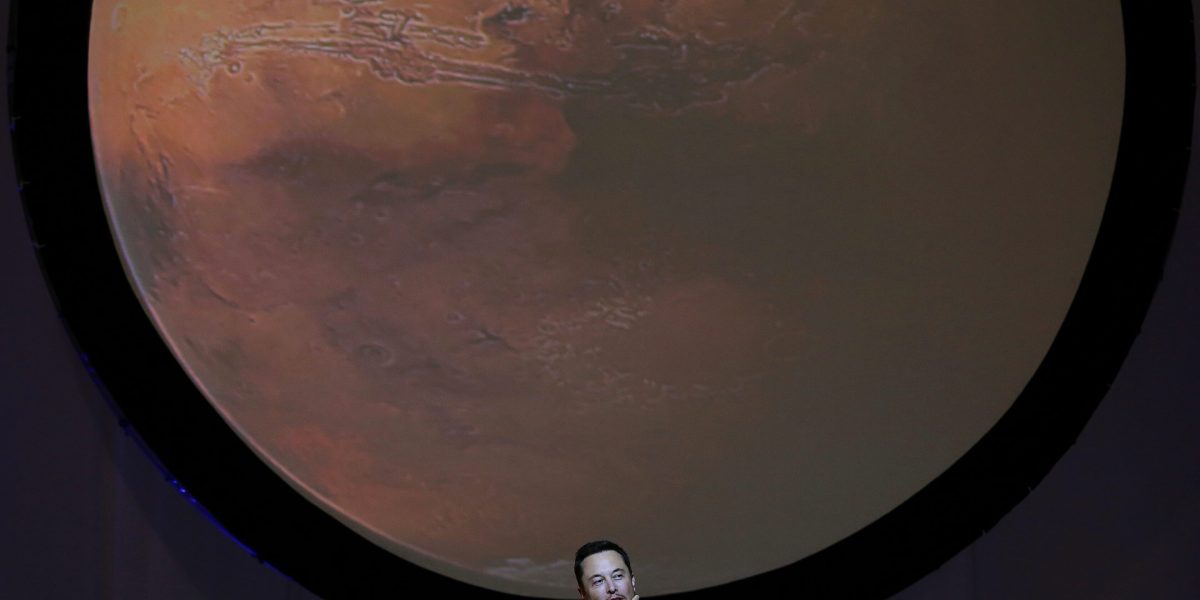
SpaceX’s board has tied a major stock award for Elon Musk to a goal far outside standard executive pay plans: creating a permanent human settlement on Mars. According to the company’s IPO prospectus and SEC materials cited by Fortune, Musk would receive 1 billion restricted Class B shares if SpaceX meets market value targets and establishes a Mars colony with at least 1 million inhabitants.
The condition puts Musk’s long-running Mars ambition directly into SpaceX’s compensation plan as the company prepares for what Fortune described as the largest IPO in history. SpaceX filed its S-1 on May 20, giving investors a first detailed look at its finances, mission language and executive pay structure.
The award requires SpaceX to hit 15 market capitalization milestones that rise as high as $7.5 trillion, according to the SEC filing. It also requires what the filing calls a permanent human colony on Mars with at least 1 million residents.
The shares would not vest unless Musk remains employed at SpaceX when the board certifies that the goals have been reached, Fortune reported. At Monday’s price, Fortune calculated that the Mars-linked award would be worth $165 billion.
Mars is written into the business case
SpaceX’s filing presents Mars settlement as central to the company’s purpose, not as a side project. Fortune reported that the word “Mars” appears 63 times in the document, including in the executive compensation section.
The prospectus argues that keeping human civilization on one planet creates risks that cannot be controlled at a planetary scale. The filing says SpaceX does not want humans to meet “the same fate as dinosaurs.”
Fortune reported that Musk already holds roughly 5 billion SpaceX shares, valued at about $825 billion. The new award would add to that stake if the company and Musk meet the required targets.
The broader stock-based awards include 1.3 billion super-voting Class B shares with 10 votes each, Fortune reported. The structure is designed to keep Musk’s control over SpaceX strong even as the company enters public markets.
SpaceX links AI, robots and Starlink to Mars plans
Fortune reported that Musk merged xAI and X into SpaceX three months before the filing. The deal valued SpaceX at $1 trillion and xAI at $250 billion, according to Fortune.
The filing frames the combined company’s pieces as part of the Mars project. Fortune reported that the Mars effort would need robots to build habitats, AI systems able to operate with a communications delay of about 20 minutes, and connectivity at Starlink scale.
The timetable remains uncertain. SpaceX did not give a deadline for reaching Mars in the prospectus, citing technologies that still must be developed and proven, according to Fortune.
The company is targeting uncrewed cargo flights as early as 2028, with Tesla’s Optimus robots potentially among the first payloads, Fortune reported. Starship, the rocket SpaceX is developing for the Mars plan, is still in testing.
Prediction market Kalshi gives SpaceX less than a 20% chance of sending humans to Mars by 2030, Fortune reported. The IPO filing nevertheless makes the Mars colony target a formal condition of one of the most unusual pay awards disclosed by a public-market candidate.
This story draws on original reporting from Fortune.