
L’Oréal executive says AI favors companies with long institutional memory
Delphine Viguier-Hovasse says L’Oréal’s data, structure and research spending give it an AI edge in beauty innovation.
By Hana Yoshida · Markets Reporter
3 min read
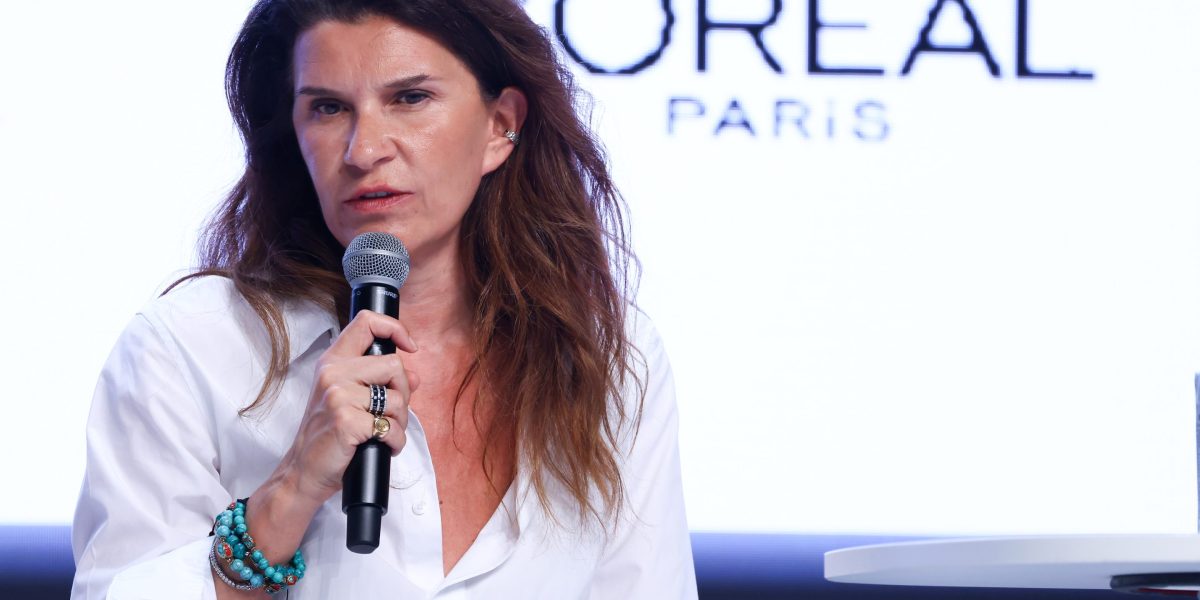
L’Oréal’s top innovation executive says artificial intelligence may give older companies an advantage, rather than only helping startups move faster. Delphine Viguier-Hovasse, L’Oréal’s chief innovation and prospective officer, told Fortune that the company’s decades of research data and global organization are becoming more valuable as AI changes product development.
Viguier-Hovasse said it is easier than before to launch a beauty brand because AI can help create imagery and names, while suppliers can provide formulas and ingredients quickly. She also said many of those brands disappear after a short run, making speed alone a weak basis for durable growth.
Data and structure shape L’Oréal’s AI edge
Fortune reported that L’Oréal has registered 725 patents and ranked sixth on Fortune’s 2026 list of Europe’s Most Innovative Companies. Viguier-Hovasse attributed the company’s innovation record to accumulated knowledge, cross-company work and a clear commercial target.
The company uses a matrix structure, according to Fortune, with employees tied to both brand strategy and functional or regional leadership. Viguier-Hovasse said research teams, business units and legal staff challenge one another during product development, forcing formulas to be revised before they reach the market.
Her own team includes scientists who build products and marketers who explain the science to consumers, she told Fortune. She said L’Oréal has long emphasized advertising and consumer education, giving the group a way to turn technical work into products shoppers understand.
Viguier-Hovasse said the company focuses on one main measure: gaining market share through new products. Fortune reported that L’Oréal reinvests 3% of turnover into research, amounting in 2025 to €1.3 million, and Viguier-Hovasse described that research budget as one of the company’s strengths.
AI cuts the cost of testing
AI is changing how quickly L’Oréal can test ideas, Viguier-Hovasse said. She told Fortune that testing 20 molecules on hair once took years, while AI can help evaluate a molecule in about three months, reducing the cost of failed experiments.
The company’s older data gives it a starting point that newer rivals may lack, she said. Viguier-Hovasse told Fortune that L’Oréal has built up substantial data over roughly 40 years and needs AI to sort and interpret it.
That cleaned data includes information on skin tones among women globally, how hair responds to different environments and what she described as an atlas of wrinkles, according to Fortune. Viguier-Hovasse said L’Oréal ran 40,000 formula stability tests last year and 44,000 tests on reactions to one skin cream, a scale she said would be hard to handle without AI.
Trend spotting remains part of the process
L’Oréal also applies AI alongside a long-running company habit of watching early consumer signals, Viguier-Hovasse said. She cited a phrase used by François Dalle, who became L’Oréal’s second chief executive in 1957: “Saisir ce qui commence,” meaning to seize what is beginning.
Viguier-Hovasse said teams look beyond formal forecasts and large data sets, listening for small signals from consumers in different markets. A pattern seen in the U.S., China and Korea, she told Fortune, can point to a trend gaining force.
She pointed to longevity as one example. L’Oréal began work in that area before it became widely discussed, she said, and is developing longevity-related treatments at Episkin, its Lyon innovation center, where scientists use reconstructed skin to test products and study skin biology.
Fortune reported that L’Oréal has elevated the innovation officer role to its executive committee. Viguier-Hovasse said that position helps connect technology, science, marketing, legal, safety and sustainability as the company decides which ideas to turn into products.
This story draws on original reporting from Fortune.