
Khosla urges AI data centers to use on-site linear generators
The venture capitalist says AI builders can avoid years-long grid delays by generating power at data center sites.
By Hana Yoshida · Markets Reporter
3 min read
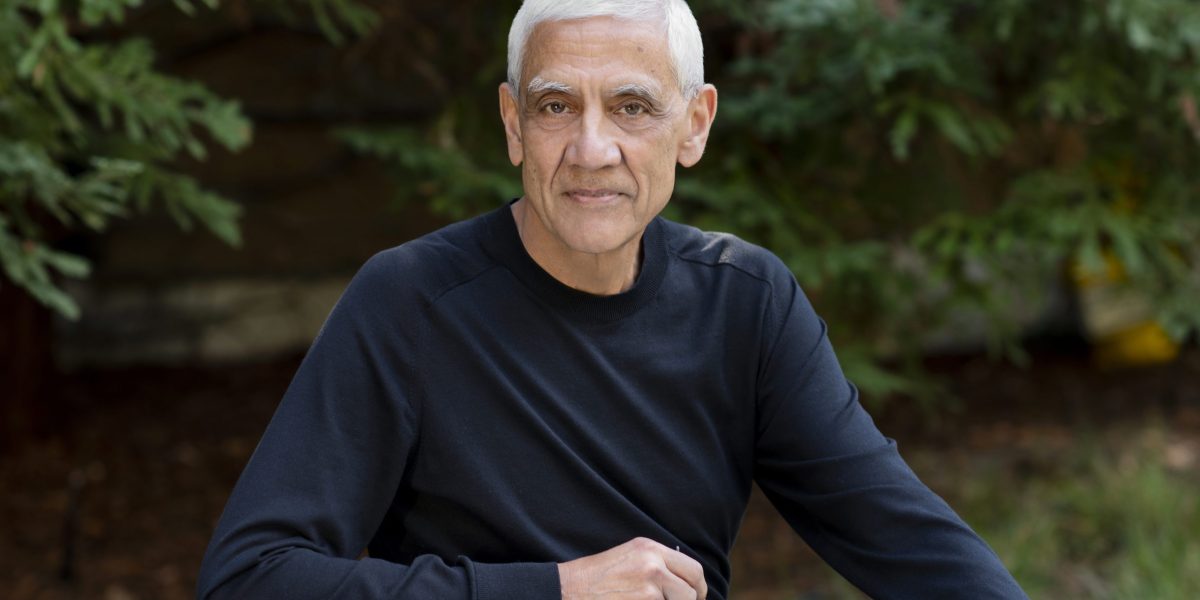
Vinod Khosla says AI data center developers should power more projects on site rather than wait years for grid connections. In a Fortune commentary, the Khosla Ventures founder argued that electricity delivery, rather than electricity supply itself, has become a central constraint for AI infrastructure.
Khosla, who Fortune identified as the first institutional investor in OpenAI, said a single large AI data center can use as much electricity as a city of 80,000 people. He wrote that companies are building hundreds of such facilities at once, often in places the grid was not built to serve quickly.
According to Khosla, utilities can face seven-year queues for new interconnections. He said more than 2,600 gigawatts of proposed projects are waiting to connect to a grid with total installed capacity below half that amount.
Khosla said the industry has often turned to gas turbines and engines, technologies he described as familiar but poorly suited to AI’s pace of expansion. He argued that relying on decades-old combustion equipment could leave some AI infrastructure companies at a disadvantage against rivals that secure faster, more flexible power.
His preferred answer is linear generators, which he said convert fuel into electricity through a low-temperature, flameless reaction. Khosla wrote that the systems do not use combustion or complex mechanical parts.
He said linear generators can run on natural gas, biogas, hydrogen, propane or blends of those fuels, and can switch among them depending on what supply is available. Khosla also said they produce almost no nitrogen oxide emissions, can meet strict air-quality rules, and can be added in modular increments from single-digit megawatt deployments to hundreds of megawatts.
For data centers, Khosla said the key advantage is speed. He wrote that the technology can be deployed in months, can operate without a grid connection from the start, and can later support the grid once a connection becomes available.
That model would let developers build data centers without waiting for substation upgrades or transmission projects, Khosla argued. He said power could be produced where computing capacity is being built, then increased as demand rises.
Khosla framed the issue as broader than data centers. He wrote that manufacturing, defense, health care and logistics also depend on power, and that countries able to deploy abundant local energy quickly will have an edge in AI and economic growth.
He said linear generation capacity is already in development and commercial operation, and that major companies and data center developers are adopting the technology because they cannot wait for the grid to expand. Khosla also argued that developers using local, fuel-flexible generation will be able to build faster, choose more locations and cut emissions compared with conventional gas engines and turbines.
Khosla said investors should watch the sector as AI infrastructure choices made now could shape competition for the next two decades. He compared the moment to earlier shifts in solar, computing and artificial intelligence, saying companies that build for the next era tend to define it.
This story draws on original reporting from Fortune.