
FedEx Freight split puts focus on control over capital and tech
CEO John Smith told Fortune that independence lets FedEx Freight set priorities built for less-than-truckload shipping.
By Daniel Okafor · Business Editor
3 min read
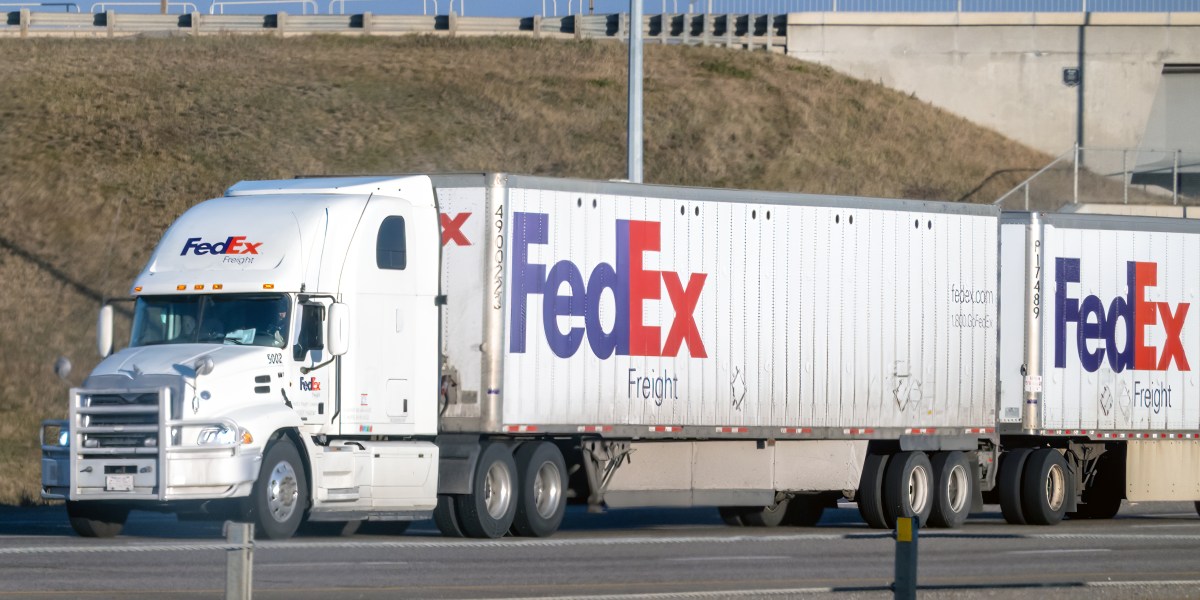
FedEx Freight’s separation from FedEx gives the freight carrier direct control over spending, technology and sales strategy after years inside a much larger parcel-focused company. CEO John Smith told Fortune that the new structure is meant to let the business invest around the needs of less-than-truckload shipping.
The company became independent earlier in June, according to Fortune. It produces about $9 billion in annual revenue and runs one of North America’s largest less-than-truckload networks, while former parent FedEx generates nearly $90 billion a year.
Smith told Fortune that the gap in size affected decisions on capital and technology. In his view, investment inside FedEx naturally tended to flow toward the larger parcel operation, leaving FedEx Freight to work within systems and priorities designed for a different business.
Why the split matters
Fortune reported that FedEx Freight had long shared technology, finance, sales and back-office operations with the broader FedEx organization. Smith said those shared functions became less suited to the freight business as its market changed.
The less-than-truckload model moves shipments from multiple customers through a network rather than dedicating an entire trailer to one load. According to Fortune, Smith sees independence as a way to build tools and processes around that market instead of adapting systems built mainly for parcel delivery.
The CEO’s agenda includes modernizing technology, creating a sales force focused on freight, applying artificial intelligence and machine learning to network decisions, and pursuing more business from healthcare, food and beverage, and small-business customers, Fortune reported.
Data, pricing and customers
One opportunity Smith identified is the operational data already collected by FedEx Freight. Fortune reported that the company records dimensional information on freight shipments, giving it a view of both weight and the amount of trailer space a shipment uses.
Smith told Fortune that artificial intelligence and machine learning could help turn that data into better decisions on routing, capacity use and pricing. Those areas are central to less-than-truckload profitability because carriers must match irregular freight flows with available network capacity.
Small and midsize businesses are another target. Smith told Fortune that FedEx Freight had not performed as strongly as it could have with those customers, in part because the company was often hard to do business with.
Healthcare is also on the list. According to Fortune, Smith wants FedEx Freight to build on relationships developed elsewhere in FedEx and expand further into medical equipment and other specialized freight categories.
A test of operating structure
The spin-off highlights a common management problem for large companies: shared scale can lower costs and provide resources, but it can also limit a unit whose customers, technology and competitive pressures differ from the parent company’s main business.
Smith framed the separation to Fortune as the beginning of a new phase rather than the completion of a restructuring. The test for FedEx Freight will be whether control over its own capital, systems and sales approach produces the growth its CEO says the business can pursue on its own.
This story draws on original reporting from Fortune.