
Fed rate-cut hopes run into inflation rule warning
Bank of America says the central bank is straying from a standard inflation-fighting guide as markets await fresh CPI data.
By Maya Lindqvist · Senior Technology Correspondent
3 min read
Bank of America warned that the Federal Reserve is setting policy below the level suggested by a widely used inflation rule. The warning raises doubts about near-term rate cuts as Wall Street waits for a fresh consumer price index report.
Fortune reported that analysts expected the new CPI reading to be about 3.7%, up from 3.3% the prior month. That would put inflation above the Fed’s current base interest rate of 3.5%, a combination that makes a cut harder to justify under conventional monetary-policy models.
Mark Cabana and his team at Bank of America said the Fed is straying from the Taylor rule, a standard guide that links interest rates to inflation and economic slack. Under that framework, when inflation runs above the Fed’s 2% target, the policy rate should be higher than inflation and should rise faster as price pressure builds.
Cabana’s team said the Fed appears willing to disregard price increases tied to tariffs and commodities because officials expect those pressures to fade by late 2026. Even under that assumption, Bank of America said the standard Taylor rule points to a federal funds target of 4.0% at the end of 2026.
“Fed is meaningfully deviating from the most standard policy rule,” Cabana said in a note cited by Fortune.
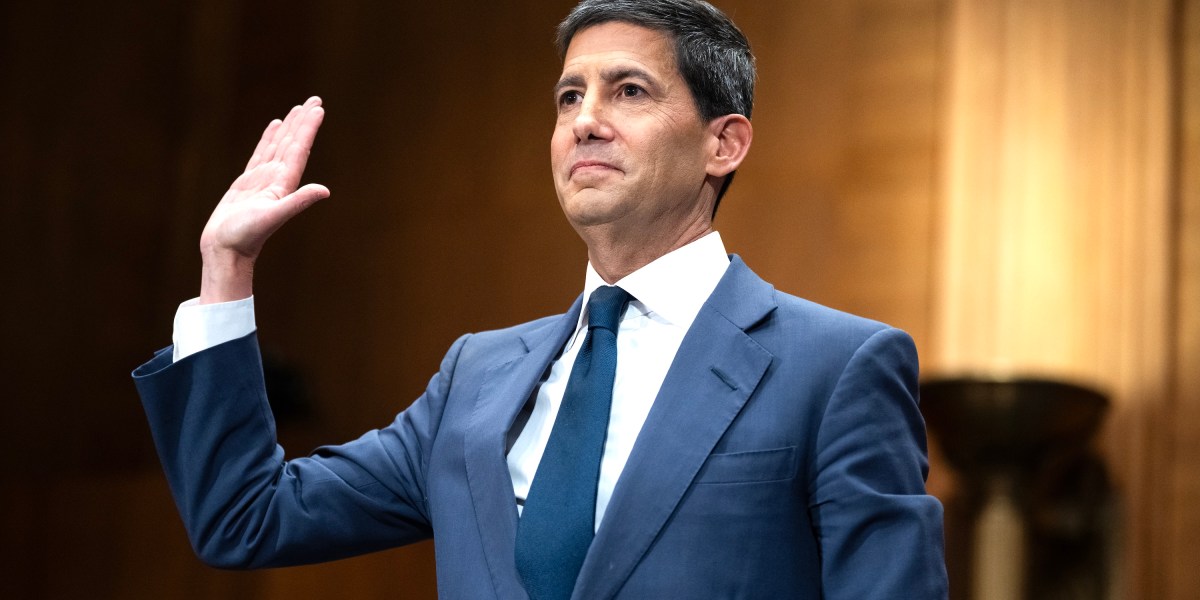
The warning comes during a leadership change at the central bank. Fortune reported that Jerome Powell’s final day as Fed chair is Friday, with Kevin Warsh set to take over.
President Trump has sought lower interest rates, according to Fortune. Warsh has not made an outright commitment to cut rates, but the inflation data described by analysts would make easing more difficult and could increase pressure on the Fed to keep policy tight.
Market pricing also pointed to little expectation of immediate action. Fortune reported that the Fed funds futures market, using CME Group’s FedWatch tool, put the probability of a hold at 95.8% on Monday.
Some analysts see the risk shifting toward higher rates if inflation remains firm and unemployment stays moderate. A hotter CPI reading would likely challenge expectations for cuts and could push traders to consider the chance of another increase.
Goldman Sachs economist David Mericle expects the Fed to wait longer before easing. Fortune reported that Mericle moved the final two 25-basis-point cuts in his forecast to December 2026 and March 2027, saying the central bank is likely to remain on hold until the war is over.
Morgan Stanley’s Lisa Shalett and her team pointed to another tension in markets. They said the S&P 500 and expectations for future Fed cuts have often moved together, but that relationship has recently weakened.
“We are not convinced that this disconnect can persist for long,” the Morgan Stanley team said in a note cited by Fortune.
This story draws on original reporting from Fortune.