
EasyJet shares discount Castlelake’s £5.2 billion takeover plan
The airline has accepted the U.S. investor’s £6.90-a-share proposal in principle, but market pricing points to doubts over approval and structure.
By Hana Yoshida · Markets Reporter
3 min read
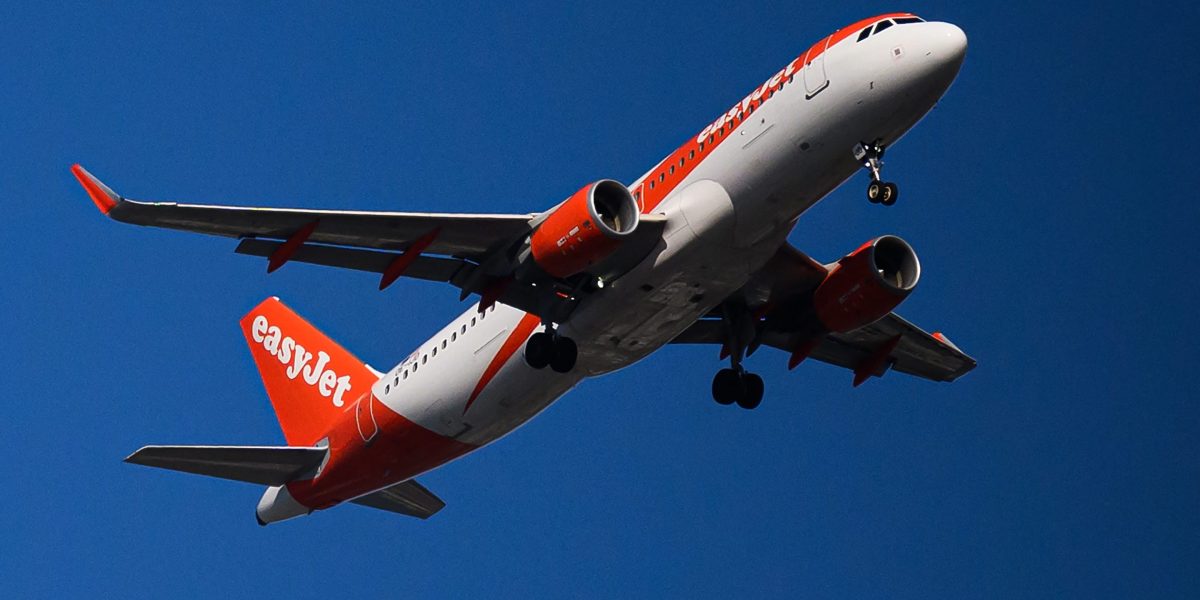
EasyJet shares stayed below Castlelake LP’s latest cash proposal after the airline agreed in principle to the offer, a sign that investors are still pricing in uncertainty around the takeover. The bid could take one of Britain’s best-known low-cost carriers private, but analysts cited by Bloomberg point to regulatory, ownership and political hurdles.
EasyJet accepted a £6.90-a-share proposal from the U.S. investment firm after rejecting earlier approaches as too low, Bloomberg reported. The stock rose as much as 11% on Monday, according to Bloomberg, but continued to trade below the proposed price and even below some earlier Castlelake offers that EasyJet had turned down.
The latest proposal values EasyJet’s equity at £5.2 billion, or $6.9 billion, Bloomberg reported. An EasyJet spokesperson said Sunday that the valuation rises to £5.5 billion on a fully diluted basis.
Conroy Gaynor, an analyst at Bloomberg Intelligence, said doubts remain over how the airline would be owned and whether regulators would approve the deal. He said a share price at the £6.90 bid level, adjusted for the time value of money, would imply nearly complete market confidence that the transaction will close, which he said is not the case.
EasyJet declined to comment Monday to Bloomberg on its share price or the likelihood of a transaction being completed. The companies said in a statement that no firm offer is guaranteed, even if preconditions are met or waived.
Castlelake first showed interest in EasyJet on May 29, according to Bloomberg. The firm made successive offers of £5.60, £6.00, £6.25 and £6.50 a share, all of which EasyJet rejected. EasyJet described the earlier approaches as “highly opportunistic” and accused Castlelake of seeking to buy the airline “on the cheap,” Bloomberg reported.
The new offer is about 6% above Castlelake’s previous £6.50-a-share proposal. EasyJet and Castlelake also agreed to extend the U.K. takeover deadline for a firm bid to Aug. 3 at 5 p.m. London time, according to Bloomberg.
Castlelake has said it respects EasyJet and its employees and wants to back the airline’s growth and fleet modernization plans, according to the companies’ statement cited by Bloomberg. The two sides have not detailed what would happen to EasyJet’s assets, management or workforce if a deal is completed.
Some analysts see EasyJet’s aircraft, slots and order book as central to the investment case. Bloomberg reported that the airline has 356 Airbus A320-family aircraft, orders for 287 more planes, 100 additional purchase rights, prime landing slots in London, Milan and Geneva, and a holidays business.
Alex Irving, an analyst at Bernstein, told Bloomberg the most likely outcome would be Castlelake selling EasyJet assets mainly to Lufthansa, IAG and Air France-KLM, while some Airbus orders could go to airlines outside Europe. Stephen Furlong, an analyst at Davy, told Bloomberg he does not expect a breakup, saying EasyJet could instead become a smaller carrier with more routes tied to its holidays business.
EasyJet has been under pressure from higher jet fuel prices linked to the Iran conflict, Bloomberg reported. The airline reported a first-half loss and a decline in summer bookings.
Ownership rules are another issue. Bloomberg reported that Castlelake, as a U.S. entity, cannot fully control EasyJet because U.K. and European rules require majority ownership and control by regional nationals, meaning the investor needs a partner.
Castlelake’s bidding group includes Brookfield Asset Management, Mark Breen and Peter Bellew, a former EasyJet executive who left the airline in 2022, Bloomberg reported. EasyJet’s largest shareholder is the family of founder Stelios Haji-Ioannou, with a 15.3% stake, and the family has not commented publicly, according to Bloomberg.
This story draws on original reporting from Fortune.