
Disney cruise revenue topped $3 billion as fleet expansion accelerated
U.K. filings show Disney’s cruise arm crossed $3 billion in annual revenue while profit fell as it added ships and staff.
By Maya Lindqvist · Senior Technology Correspondent
3 min read
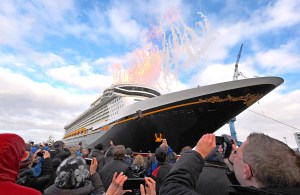
Disney’s cruise business passed $3 billion in annual revenue for the first time, according to U.K. company filings reported by Fortune. The figures give a rare look at a business Disney does not separately detail in its U.S. financial disclosures, even as the company plans more ships under a broader Experiences expansion.
The filings for Magical Cruise Company, the London-based entity that directly owns Disney’s cruise line, show revenue rose 20.3% in the year ended Sept. 27, 2025, Fortune reported. The gain followed the December 2024 debut of the Disney Treasure, which became the sixth ship in the fleet.
Disney’s U.S. reporting groups cruises inside its Experiences division, alongside theme parks and other businesses. According to Disney disclosures cited by Fortune, Experiences produced 57% of the company’s $17.6 billion in operating income in 2025 and nearly 40% of its $94.4 billion in revenue.
Profit fell as costs rose
The cruise line’s revenue growth did not translate into higher net profit. Magical Cruise Company’s net profit fell 12.9% to $302.7 million, according to the filings reported by Fortune.
Costs increased as Disney brought on more workers and prepared additional ships for service. Staff expenses rose 31.4% to $437.2 million after the company added 1,765 employees, with most of the new hires working on ships, the filings show.
Jeff Swindell, senior vice president of finance at Disney Signature Experiences, said in commentary included in the filings that the company stayed profitable while absorbing one-time costs tied to growth, including pre-opening expenses for the Disney Destiny and Disney Adventure.
Disney had eight ships after the Disney Destiny and Disney Adventure entered service, Fortune reported. The Disney Adventure is based in Singapore and has 2,111 rooms. Disney bought the vessel for $44 million after previous owner Genting Cruise Lines entered administration, according to Fortune.
London base gives a clearer view
Fortune reported that Disney’s cruise operation is headquartered near Orlando, Florida, but is owned through Magical Cruise Company in London. The structure requires annual U.K. financial statements, which disclose revenue, profit, staffing costs and other operating details.
Fortune said the U.K. location also gives qualifying shipping companies access to the country’s Tonnage Tax system. Under that regime, tax is based on fleet tonnage rather than actual income, according to Fortune’s description of the filings and tax rules.
Disney’s cruise history began before it owned ships. Fortune reported that Disney partnered with Premier Cruise Lines in 1985 on combined cruise, hotel and theme park packages, including appearances by Disney characters. After that partnership ended in 1993 and talks with Carnival and Royal Caribbean did not lead to a deal, Disney launched the Disney Magic in 1998.
Five more ships are planned
Disney plans to add five more cruise ships by 2031, Fortune reported. The vessels are part of a $60 billion investment in Disney Experiences, with 20% of that total allocated to cruises.
One planned ship will be financed, owned and operated in Japan under license by Oriental Land Company, according to filings cited by Fortune. Oriental Land projected that one ship could produce annual net sales of about $650 million, or ¥100 billion, within its first few years, with an operating margin of about 26.7% and profit of roughly $174 million.
Swindell said in the filings that Disney expects to keep strong profitability in fiscal 2026, supported by added capacity from the Disney Treasure, Disney Destiny and Disney Adventure.
The filings did not state how many passengers Disney carried in 2025, Fortune reported. CruiseMarketWatch estimated the figure at 1 million, equal to 3.1% of the market, compared with 6.8 million passengers for Carnival.
This story draws on original reporting from Fortune.