
Data center power demand puts utility customers at risk of higher bills
A University of Florida energy researcher says rate-setting rules could leave households paying for grid upgrades tied to data centers.
By Hana Yoshida · Markets Reporter
3 min read
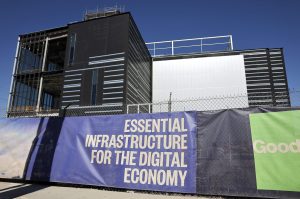
Electricity demand from data centers is already shaping power bills, and households may have limited ways to avoid the costs. Theodore J. Kury, director of energy studies at the University of Florida, says the way regulators divide grid expenses can leave residential customers exposed when large new users require power plants, substations and transmission upgrades.
The clearest example cited by Kury comes from the market monitor for PJM, the regional power market covering all or part of 14 Mid-Atlantic and Midwest states. That monitor found that expected data center demand was a primary driver of $23 billion in customer price increases set to last at least through the end of 2028.
How regulators divide the bill
State utility commissions set electricity rates by reviewing what utilities spend to serve customers, Kury wrote for The Conversation. Those costs include long-lived assets such as power plants, transmission lines and substations, along with operating expenses such as fuel, wages, replacement parts and purchased electricity.
Regulators then assign those costs to customer classes, including residential, commercial and industrial users. The goal is to charge customers for the costs they cause, but Kury says that task becomes difficult when an investment supports the wider grid as well as a specific large customer.
A data center may clearly be responsible for the cost of a short line connecting it to a nearby substation, Kury says. If that substation must be expanded or the utility must secure more power, the expense can become part of the shared system, meaning other customers may help pay.
Rate analysts use several methods to divide costs, including total electricity use, the number of customers and usage during periods of high system demand. Once regulators approve those allocations, the assigned costs flow into the rates paid by each customer group.
Peak-demand rules may favor flexible users
Kury points to one rate-setting method called coincident peak demand, which looks at how much a customer group uses when the whole system reaches its highest demand. Costs tied to that peak are often divided based on each group’s share of use at that moment.
Data centers can be more flexible than households, Kury says. Automated systems can shift computing work and reduce electricity use during narrow windows, while homeowners have fewer practical options for cutting demand quickly.
That flexibility could allow data centers to reduce or avoid their measured contribution during peak periods, Kury says, while still using large amounts of electricity at other times. He notes that cryptocurrency miners in Texas have used similar timing strategies to reduce power consumption at key moments.
Household representation can be uneven
Utilities, industrial customers, retailers and data centers can all submit proposals in rate cases. Kury says large data centers have the resources to hire experts who argue over how costs should be assigned.
Residential customers may have weaker representation on that specific question. According to Kury, every state except Georgia, Idaho and Louisiana has a consumer advocate office, but some are required to represent all customers without favoring one group over another, limiting their ability to argue that households should pay less if another class pays more.
Kury also flags a longer-term risk: utilities may build infrastructure for data centers that are delayed, canceled, use less energy than forecast or become obsolete. If that happens, he says, the costs already incurred by utilities may be spread across other customers.
The challenge can be harder for municipal utilities and rural electric cooperatives, Kury says, because city councils, independent boards or elected cooperative boards may not have full-time regulatory staff. He says consumers should pay attention to cost-allocation proceedings and participate in public comments and hearings.
This story draws on original reporting from Fortune.