
Congress questions Iran ceasefire terms and $300 billion fund
Lawmakers are scrutinizing President Trump’s Iran ceasefire deal, including a proposed reconstruction fund and new Pentagon spending.
By Hana Yoshida · Markets Reporter
4 min read
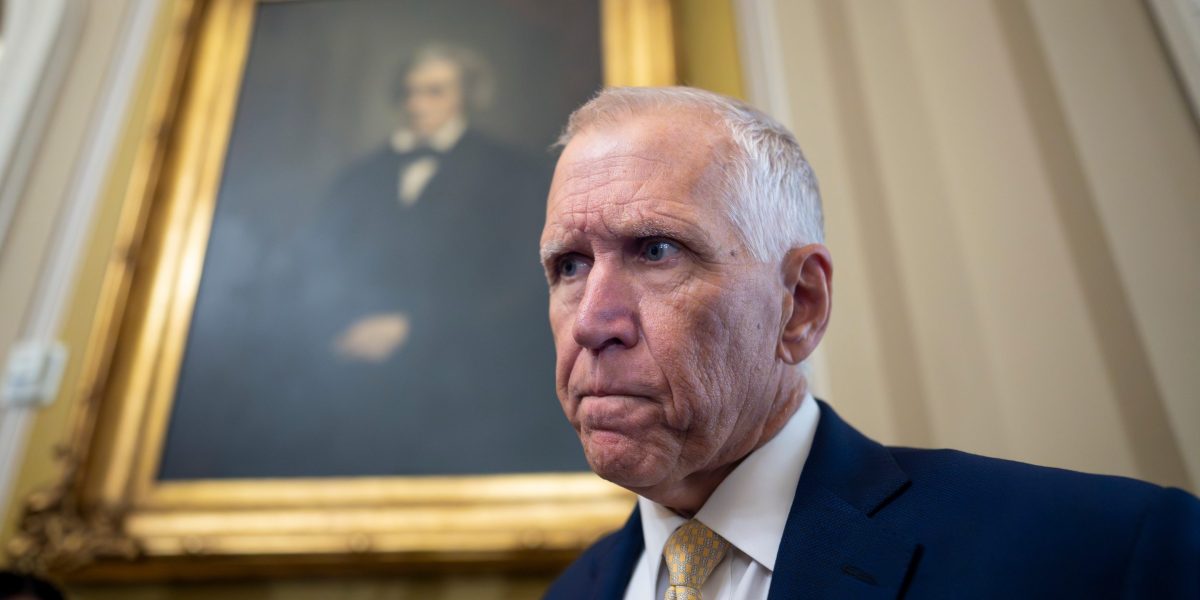
Congress is weighing the costs and terms of President Donald Trump’s ceasefire deal with Iran after a nearly four-month conflict that lawmakers did not formally authorize, the Associated Press reported. Senators from both parties are focusing on a proposed $300 billion fund for Iran’s reconstruction and economic development, even as they debate whether the war made the United States safer.
According to AP, Trump signed a memorandum of understanding with Iran that opens a 60-day period for talks aimed at ending Tehran’s nuclear program. The deal has left members of Congress sorting through the war’s human toll, its cost, the state of U.S. military supplies and the risks around a fragile ceasefire.
Sen. Chris Coons, a Delaware Democrat on the Senate Foreign Relations Committee, sharply criticized the agreement, AP reported. He called it “Pathetic. Failure,” and said it reflected poor strategy, weak public persuasion and a flawed reading of the region.
Sen. Ron Johnson, a Wisconsin Republican and former chairman of the Senate Homeland Security and Governmental Affairs Committee, defended Trump’s actions, according to AP. Johnson said, “We are safer today,” while acknowledging that a complete victory was unlikely.
Reconstruction fund draws scrutiny
The tentative agreement’s potential $300 billion reconstruction and economic development fund for Iran has become a central concern for senators, AP reported. Some Republicans have compared the idea to arguments they made against the Obama-era Iran nuclear agreement, which included about $1.7 billion tied to military equipment Iran had paid for but did not receive.
Sen. Thom Tillis, a North Carolina Republican, told AP his concerns center on “the money and the conditions.” Tillis warned that if the United States sends a large amount of money, the arrangement could be judged harshly over time, according to AP.
Sen. Mike Rounds, a South Dakota Republican who serves on the Armed Services and Intelligence committees, said he understood Trump’s effort to seek a peaceful outcome, AP reported. Rounds said he commended that goal, while adding that lawmakers have “a lot of questions.”
Pentagon spending also under review
Defense Secretary Pete Hegseth visited Capitol Hill as lawmakers reviewed Defense Department funding in the next Republican budget package, AP reported. The White House has requested $1.5 trillion for the Pentagon this year, on top of additional military funding Republicans approved in Trump’s tax-cut package last year.
Republicans are considering a defense increase of more than $350 billion that could pass through reconciliation, the process that lets the majority advance certain budget measures without Democratic support, according to AP.
Senators are also seeking limits on Hegseth’s travel funds until the Pentagon provides required reports, AP reported. One report concerns an investigation into a strike on an elementary school in Iran that killed more than 165 people early in the war; officials have said they believe the United States was responsible and that the strike was based on faulty intelligence, according to AP.
War powers fight fell short
Congress repeatedly tried to use the War Powers Act to stop U.S. military action in Iran, AP reported. The House passed a resolution seeking to end the war after a small number of Republicans joined Democrats, while the Senate voted nine times but did not reach the majority needed.
Congress also did not pass a separate authorization for the use of force, as it has in some past conflicts, including the Iraq War, AP reported.
Sen. Jeanne Shaheen of New Hampshire, the top Democrat on the Senate Foreign Relations Committee, said in a statement reported by AP that she was glad the conflict had ended and hoped the ceasefire would hold. She also said Trump had not achieved his objectives and that Americans were facing higher costs and tens of billions of dollars in tax spending.
Sen. Lisa Murkowski, an Alaska Republican, told AP she struggled to see what leverage the United States gained over Iran. She said the signed deal did not appear to put the United States in a much different position than before the war began.
This story draws on original reporting from Fortune.