
Commercial real estate demand highest in St. George, NAR index finds
South Carolina leads states and St. George, Utah, leads metro areas in NAR’s new forward-looking commercial real estate demand index.
By Daniel Okafor · Business Editor
3 min read
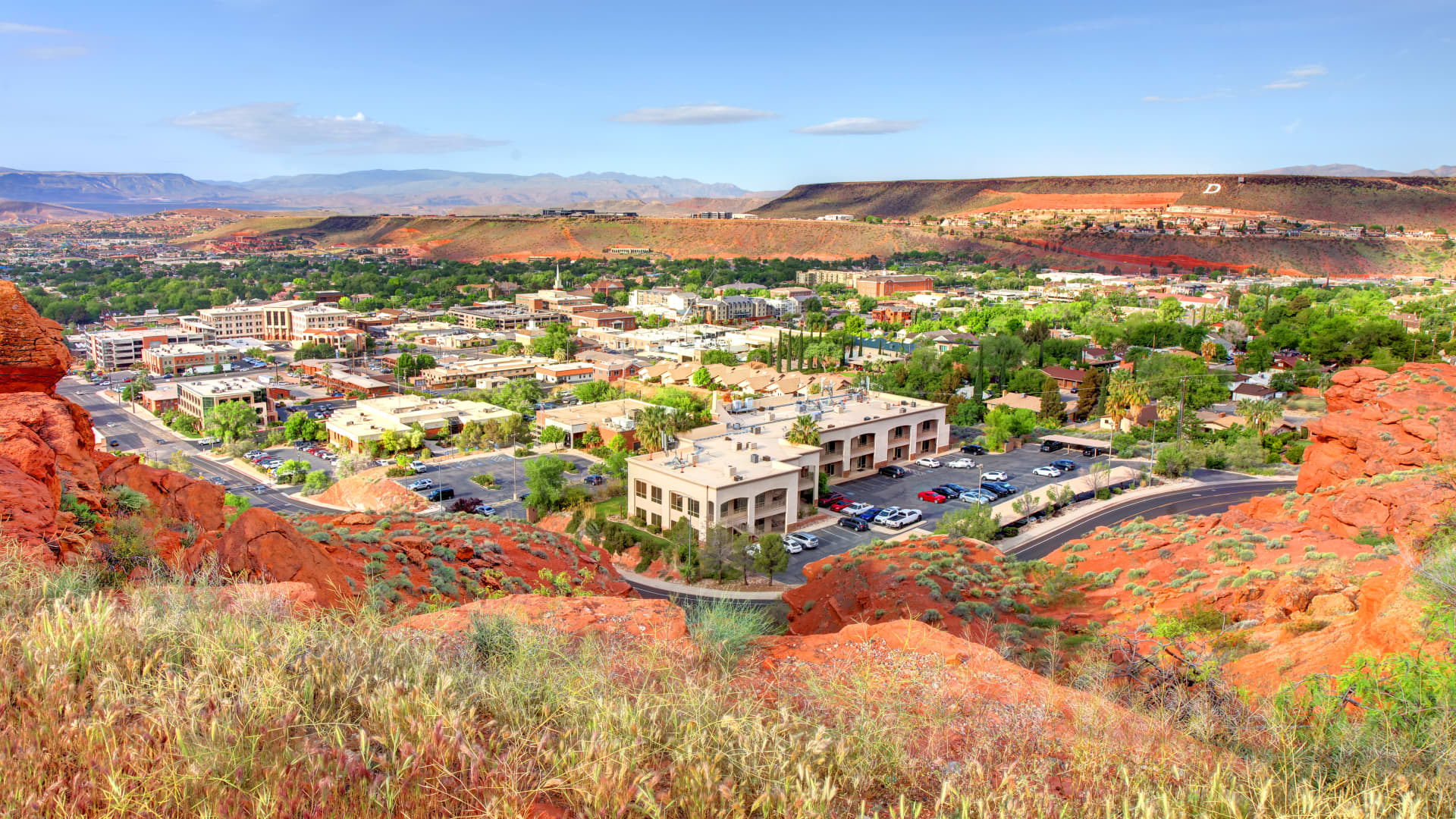
Commercial real estate demand highest is a different answer at the state and metro levels: South Carolina leads states, while St. George, Utah, ranks first among metropolitan areas, according to a new National Association of Realtors index reported by CNBC. The measure is designed to flag places where economic and demographic trends point to potential future demand, rather than to rank current property sales, rents or investment returns.
NAR’s Commercial Real Estate Demand Index covers more than 300 metro areas and tracks office, industrial, retail and multifamily property separately, CNBC reported. It combines those sector measures into an overall reading of local momentum.
What does the commercial real estate demand index measure?
The index uses employment growth and population trends as signals of possible future property demand, according to NAR as reported by CNBC. NAR draws population and migration inputs from Bureau of Labor Statistics and Census Bureau data, CNBC said.
Office: growth in professional and business-services employment.
Industrial: growth in manufacturing, transportation and warehousing employment.
Retail: growth in retail-trade, leisure and hospitality employment.
Multifamily: population growth and net domestic and international migration.
The index is not a recommendation to purchase property in any particular market, NAR principal economist and research director Nadia Evangelou told CNBC. It is intended to identify areas where underlying momentum appears to be building.
Why St. George ranked first overall
St. George led the metro ranking because it recorded the nation’s strongest office-employment growth, according to the NAR findings reported by CNBC. Evangelou also pointed to the Utah city’s population growth, in-migration and above-average industrial-demand reading.
Salem, Oregon, and Fairbanks, Alaska, were the top markets in the industrial portion of the index, CNBC reported. The available findings did not provide corresponding top rankings for office, retail or multifamily.
Smaller markets outrank many coastal cities
NAR found that Raleigh, North Carolina, was the only major U.S. market stronger than it had been in 2022, the period CNBC described as the high point of pandemic-era migration. Austin, Texas; Miami; and Naples, Florida, had fallen markedly from their 2022 readings, according to the report.
Evangelou said smaller, fast-growing Sun Belt markets generally performed better in this index than large coastal markets such as New York and San Francisco. She identified Fayetteville, Arkansas; Huntsville, Alabama; and Spartanburg, South Carolina, as smaller or midsize places worth watching; she said Fayetteville showed growth across measures and Huntsville had one of the country’s strongest multifamily scores.
For readers assessing a market, the result offers a directional view of employment and population trends. It does not replace measures of vacancies, asking rents, property prices, completed transactions or the likely return from a particular investment.
This story draws on original reporting from CNBC.