
CDC nominee avoids pledge to resist Kennedy on vaccine decisions
Dr. Erica Schwartz told senators she would follow science but would not say how she would respond to vaccine directives from Health Secretary Robert F. Kennedy Jr.
By Hana Yoshida · Markets Reporter
4 min read
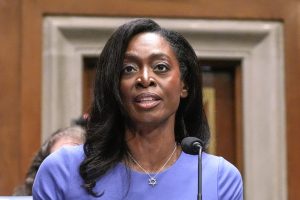
Dr. Erica Schwartz, President Donald Trump’s nominee to lead the Centers for Disease Control and Prevention, drew sharp questioning Wednesday after she declined to say whether she would oppose vaccine-related directives from Health Secretary Robert F. Kennedy Jr. The exchange matters because the Atlanta-based CDC has been hit by leadership turnover, staff losses and disputes over political influence in scientific decisions, according to The Associated Press.
Schwartz told the Senate health committee she “will never betray the science” and said she would use “radical transparency” to help restore confidence in the agency, AP reported. Several senators pressed her on how she would respond if Kennedy pushed CDC actions that conflicted with established vaccine science.
Sen. Maggie Hassan, a New Hampshire Democrat, asked Schwartz whether she would comply if Kennedy ordered her to halt promotion of flu vaccination during a severe flu season. Schwartz replied that she did not answer hypothetical questions, according to AP.
Hassan said the situation was not hypothetical and pointed to internal CDC emails released last month by Sen. Bernie Sanders that described such a directive from Kennedy to CDC employees last year, AP reported.
Questions over CDC independence
Schwartz, 54, has spent much of her career in uniformed service, according to AP. She held a senior role at the U.S. Coast Guard overseeing 41 clinics and 150 sick bays, including policies supporting vaccinations for service members, and later served as deputy surgeon general.
The CDC has lost more than 3,000 employees, more than a quarter of its staff, largely through layoffs and resignations since Trump returned to office last year, AP reported. Agency morale has fallen as a series of temporary leaders and political appointees have cycled through senior posts.
Kennedy, who previously was a prominent anti-vaccine activist, had promised not to alter the national vaccination schedule, according to AP. After taking office, he said he would examine the childhood vaccine schedule and later pursued major changes to recommendations for children, some of which a federal judge paused earlier this year.
The administration’s first CDC nominee, former Florida Rep. Dr. David Weldon, did not receive a confirmation hearing after it was canceled shortly before it was scheduled to begin in March 2025, AP reported. Susan Monarez, who had been acting CDC director, was later confirmed by the Senate but was removed within a month after administration officials said she did not align with their agenda.
Several senior CDC scientists resigned after Monarez’s dismissal, saying it undermined hopes that the agency’s director could shield scientific work and public health guidance from political pressure, according to AP. National Institutes of Health Director Jay Bhattacharya has most recently been overseeing the CDC.
Vaccine website and agency mission
During Wednesday’s hearing, Schwartz said she did not know that CDC programs focused on smoking prevention and vaccination promotion had been reduced, AP reported. She also would not promise to remove a CDC webpage suggesting a connection between childhood vaccines and autism, saying she had not reviewed it, though she agreed that existing medical evidence has not found such a link.
Schwartz said the CDC should focus on infectious disease response and said the agency had experienced “mission creep,” according to AP. She also agreed, in response to Republican senators, to examine whether artificial intelligence data centers pose health risks and to look at creating a World Trade Center Health Program clinical center in Florida.
Schwartz has told the government that, if confirmed, she will leave her UnitedHealth Group job, where she earns about $850,000 in salary and bonus money, cash out stock options and resign from three boards, AP reported.
Preparedness nominee also questioned
Senators also reviewed Sean Kaufman’s nomination to be assistant secretary for preparedness and response, the federal post responsible for public health emergency and disaster readiness, according to AP. Kaufman faced questions about past social media posts, including one in which he expressed hatred for the CDC.
AP reported that Kaufman also was questioned about support for a Trump administration decision last year to cancel 22 mRNA vaccine development projects worth $500 million. Kaufman said he supports mRNA technology and believes COVID-19 vaccines are safe and effective, while also saying officials should review past work and examine side effects.
This story draws on original reporting from Fortune.