
Cape Verde’s first World Cup run ends after Argentina scare
The island nation reached the knockouts in its tournament debut and pushed Argentina to extra time, Fortune.com reported.
By Hana Yoshida · Markets Reporter
3 min read
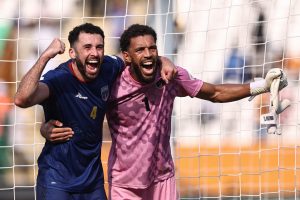
Cape Verde’s debut World Cup campaign ended with a 3-2 extra-time loss to defending champion Argentina, but Fortune.com reported that the island nation’s run stood out in an expanded tournament that sent several traditional powers home early. The country of roughly 525,000 people reached the knockout stage after finishing second in its group without a defeat, according to Fortune.com.
Fortune.com reported that Cape Verde drew with Spain and Uruguay, both former world champions, before advancing from the group. Its elimination came only after taking Argentina beyond 90 minutes, a result the commentary framed as one of the tournament’s notable underdog stories.
The same first knockout round also eliminated Germany and the Netherlands, according to Fortune.com. Germany, a four-time champion, went out to Paraguay on penalties after a 1-1 draw, while the Netherlands, ranked seventh and a three-time finalist, lost a shootout to Morocco.
A squad built away from the spotlight
Cape Verde’s team was made up largely of professionals playing in leagues across Portugal, Cyprus, Turkey, Bulgaria and other countries, Fortune.com reported. The squad had few players at high-profile clubs, with Benfica and Villarreal cited as rare examples.
Fortune.com said the team’s rise was not presented as a product of star power. Instead, the commentary pointed to a broader team culture, including shared confidence, clear short-term targets and a system that did not rely on one standout player.
One example cited by Fortune.com was defender Roberto Lopes, who was working at a bank in Dublin when Cape Verde’s federation contacted him on LinkedIn in 2018 because of his Cape Verdean roots. Fortune.com reported that Lopes first treated the message as spam before later joining the national setup; by 2026, he was part of the defense that kept Spain from scoring.
Confidence as the explanation
The Fortune.com commentary connected Cape Verde’s performance to the idea of “collective efficacy,” a term associated with psychologist Albert Bandura. It described the concept as a group’s belief in its shared ability to perform, and argued that such belief can help teams set ambitious goals and recover from setbacks.
Fortune.com said Cape Verde’s staff emphasized manageable objectives rather than public talk of beating elite opponents. Those aims included surviving the opening stages of matches, scoring, earning a point and advancing from the group.
The commentary also described coach Bubista as protecting a relaxed dressing-room environment, with music, jokes and recovery time treated as part of preparation. Before a match against former world champions, midfielder Kevin Pina said, according to Fortune.com: “We know our quality and we know what we’re doing. My heart is at peace.”
Fortune.com also linked the team’s backing to Cape Verde’s diaspora, reporting that supporters in Atlanta and Houston came from the same global community represented in the squad. The commentary said that connection helped turn the crowd into a source of energy for the players.
By the end of its run, Cape Verde had outlasted Germany and the Netherlands and become, according to Fortune.com, the smallest nation to reach a World Cup knockout round. Its tournament ended against Argentina, but its first appearance gave the competition one of its clearest examples of a small national team competing with established soccer powers.
This story draws on original reporting from Fortune.