
Plumbing Detectives issues brass-union water heater corrosion guide
The Southwest Florida plumber promotes a brass-union connection, but the announcement provides no independent technical validation.
By Daniel Okafor · Business Editor
2 min read
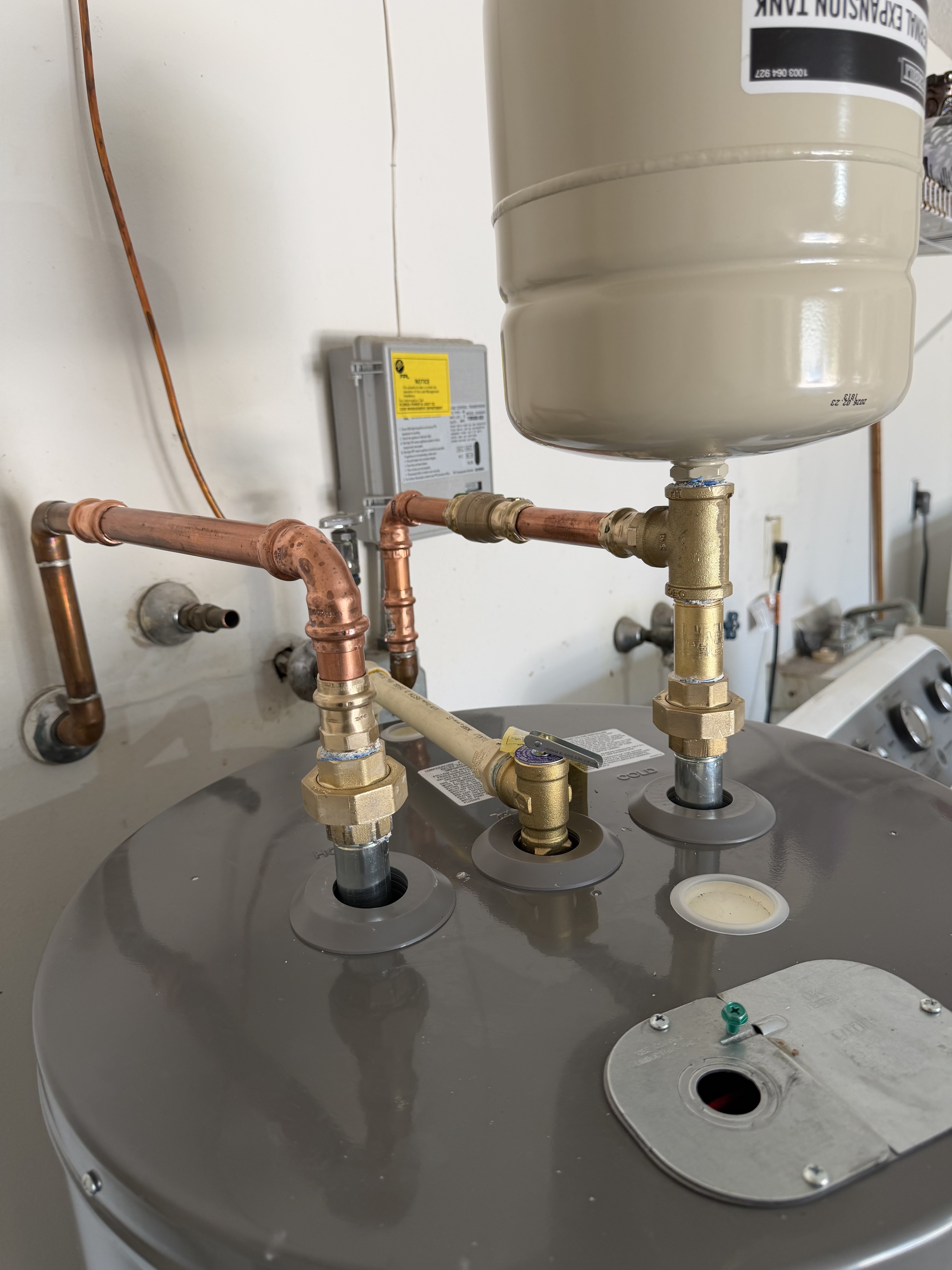
Plumbing Detectives LLC has published a guide on brass union water heater corrosion, warning Southwest Florida homeowners against connecting copper pipe directly to galvanized-steel nipples at the top of a tank. The contractor says its recommended brass-union transition can reduce corrosion risk at those connections, though the detailed announcement is an announcement.
Published Aug. 7, the guide applies to the company’s stated service area of Venice, Sarasota, Englewood, North Port and Nokomis. Plumbing Detectives describes direct copper-to-galvanized contact in a water-heater connection as causing galvanic corrosion that can eventually lead to leaks.
Does a brass union prevent water heater corrosion?
The company’s proposed sequence uses a 3/4-inch brass female union on each of the tank’s hot- and cold-water connections. Under that approach, the brass union attaches to the galvanized nipple, followed by a copper adapter and then copper piping.
Plumbing Detectives says the brass component sits between the two metals and cuts the corrosive driving force by roughly 86%. Owner Mike Reynolds put the retail cost of a 3/4-inch brass union at about $17 and said the union can also make a later tank replacement easier because it can be disconnected with a wrench.
Those figures and the installation sequence are the company’s recommendations, not established consumer guidance in the materials available here. The announcement’s body calls for a brass female union, while its image caption labels the fittings “dielectric unions.” The materials do not establish whether the featured part is a particular dielectric-union design or whether a plain brass union is equivalent to one.
No supplied code text, water-heater manufacturer instructions or independent technical source validates the company’s claims about corrosion performance, the recommended fitting arrangement or local installation requirements. A plumbing-video publisher cited in the available material says dielectric unions may help avoid premature corrosion, while also cautioning that corrosion can still occur with unions installed.
Pricing also depends on the product. A plumbing-supply retailer’s listings include a 3/4-inch dielectric nipple at $15.16 and several 3/4-inch dielectric unions priced above $31, products that may not match the brass union described by Plumbing Detectives. The company’s Southwest Florida water heater corrosion guide advises homeowners to look for copper connected straight to a steel nipple, as well as crusting, rust streaks or dampness around the tank-top fittings.
For homeowners weighing a repair or replacement, the practical questions are the exact fitting specification, the water-heater maker’s connection instructions and the requirements that apply locally. Plumbing Detectives says rebuilding an existing connection with brass transitions generally takes two to three hours.