
Bracket22 AI agents run Kelly’s trading workflow, with human decisions retained
Brian Kelly says Bracket22 replaced its staff with specialized AI agents, while he keeps final investment decisions and uses only his own capital.
By Hana Yoshida · Markets Reporter
3 min read
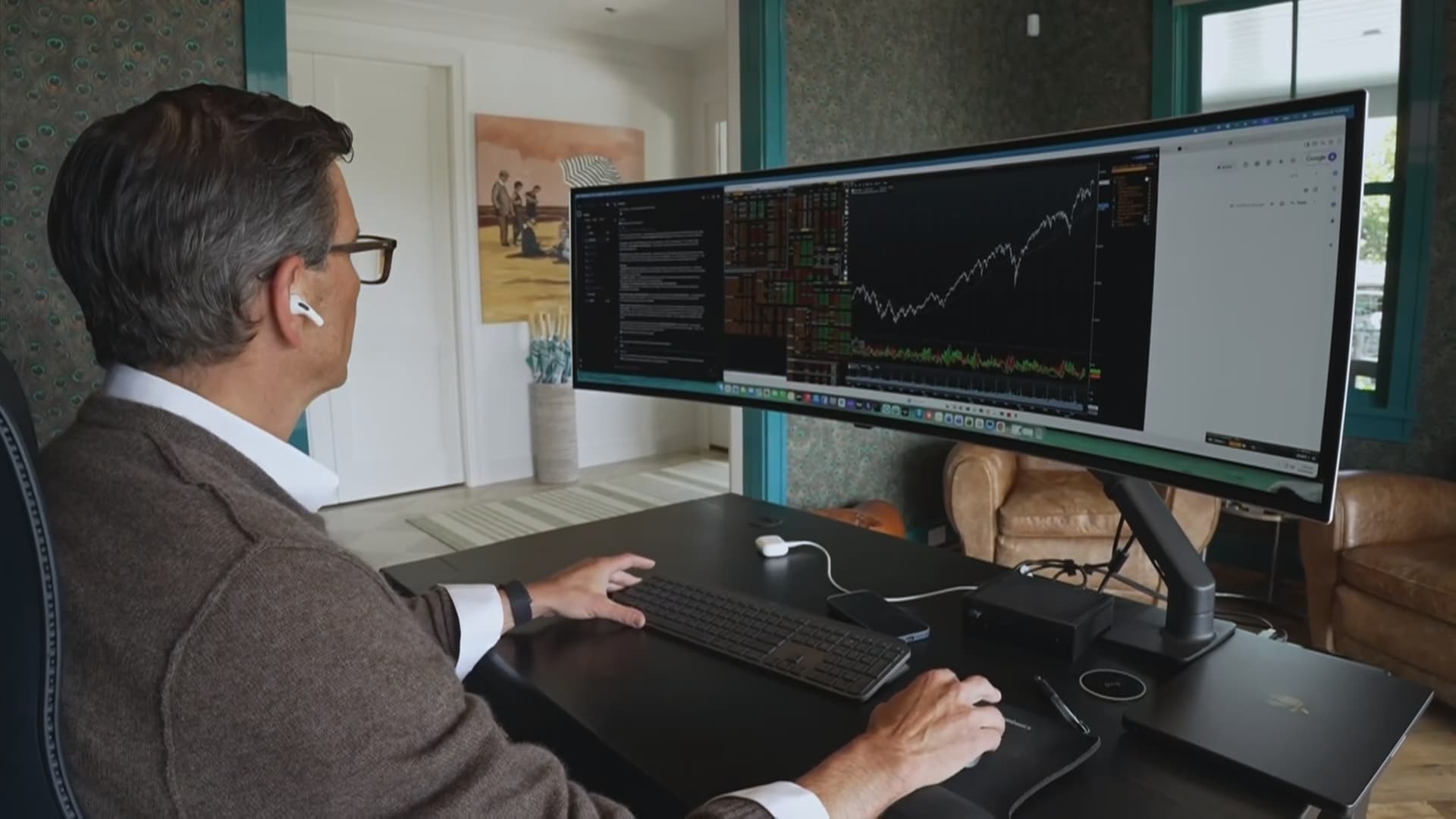
Bracket22 AI agents now handle the staffing and research workflow at Brian Kelly’s new trading firm, according to CNBC. Kelly says the system sharply reduced his operating costs, but he retains the final call on investments rather than allowing the firm to trade without human judgment.
Kelly, a former cryptocurrency hedge-fund manager and CNBC “Fast Money” trader, closed his prior crypto fund in early 2025, CNBC reported. He began testing artificial intelligence later that year before establishing Bracket22, which trades only his own money in cryptocurrencies, stocks and commodities.
How do Bracket22 AI agents work?
Kelly divided work among agents designed for separate specialties, CNBC reported. An agent called Steffi conducts technical analysis, Desmond works on quantitative strategies, and Houston acts as a central coordinator that brings the inputs together.
Kelly said he built the arrangement to get distinct assessments from specialists rather than one combined system. He then reviews the agents’ work and makes the final investment decision using his own judgment, meaning the firm’s investing process is AI-supported rather than fully autonomous.
- Steffi: technical analysis.
- Desmond: quantitative strategies.
- Houston: coordination of the system’s components.
- Kelly: final investment decisions.
Kelly’s cost and productivity claims
Kelly told CNBC that his earlier operation employed roughly seven or eight people in several locations, with many based in New York. Including compensation, computing, health care, office space and bonuses, he put its annual labor-related expense at about $5 million.
By comparison, Kelly said Bracket22 costs about $30,000 to $40,000 a year to operate, covering its AI agents, computing and related needs. He also estimated that the agents have made him at least 10 times more productive. Those figures are Kelly’s estimates; CNBC’s report did not provide independently audited cost figures or productivity measurements.
Kelly said he sees the broader use of such systems as expanding what existing employees can do, rather than necessarily eliminating jobs. In his example, AI could allow a 100-person team to operate with the capacity of a far larger staff.
What is known—and not known—about Bracket22?
CNBC did not report Bracket22’s investment returns, assets under management, model specifications, trading controls, regulatory structure or risk-management process. Since the firm uses only Kelly’s capital, the report also does not establish how its approach would perform for outside investors.
The model arrives as financial firms test AI for parts of their operations. CNBC reported that JPMorgan Chase planned to introduce agents that could work autonomously for hours and that Morgan Stanley was directing some work to AI, while a Goldman Sachs partner warned that heavy use could weaken bankers’ reasoning skills. Separately, Hedgeweek reported that Magnetar Capital was preparing an AI-focused fund while leaving investment decisions and trade execution with human portfolio managers.
This story draws on original reporting from CNBC.