
BIE graduation gains reflect data fixes and local school changes
Graduation rates at Bureau of Indian Education schools have risen sharply, but AP reporting ties the increase to better data, new programs and uneven resources.
By Maya Lindqvist · Senior Technology Correspondent
3 min read
Graduation rates at U.S. Bureau of Indian Education high schools have climbed sharply, reaching 79% in 2025 after sitting just above half of students in 2015, according to the Associated Press. The increase matters because tribal leaders and educators say the gains remain fragile as federal education changes and staffing cuts put new pressure on the system.
The BIE oversees 183 primary and secondary schools serving more than 40,000 students, the AP reported. Agency officials and school leaders told the AP that the improvement reflects a mix of better reporting, locally designed programs and, in some cases, new ways to keep students connected to school.
Agency officials said part of the increase comes from more accurate counting. For years, the AP reported, some BIE schools treated students who transferred elsewhere as dropouts, making graduation rates look worse than they were.
Carmelia Becenti, the BIE’s chief academic officer, told the AP the agency needed common rules for accountability across its schools. The bureau began standardizing graduation data in 2018, and an AP analysis found rates have risen 55% since those standards started rolling out. Nine BIE secondary schools reported growth of 100% or more, according to the AP analysis.
Career training lifts one Washington school
At Chief Leschi Schools on the Puyallup Reservation in Washington, administrators told the AP that career and technical education helped students see a reason to stay enrolled. The school reported that its four-year graduation rate rose from 53% in 2019 to 87% in 2025.
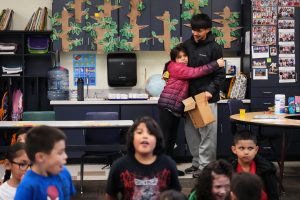
Gerald Dillon, 18, graduated from Chief Leschi in June after shifting much of his senior-year schedule toward career training, the AP reported. He worked as a teaching assistant in a second grade classroom, where younger students greeted him with hugs or fist bumps, and he told the AP that helping them gave him motivation to attend school.
Dillon said his grades improved after he began taking career training courses as a junior, according to the AP. He is now considering college for a teaching degree.
Don Brummett, Chief Leschi’s superintendent, told the AP the school had previously put too much weight on college preparation while many students wanted to work after graduation. With funding from the Puyallup Tribal Council, the school started its career and technical curriculum in 2020, including pathways in health sciences, education and fisheries management.
Other schools try flexible models
The AP reported that fewer than one-third of BIE schools are run directly by the agency; most are tribally operated with federal support. At Choctaw Central High School, operated by the Mississippi Band of Choctaw, administrators said a virtual learning option that began during the pandemic helped graduation rates rise from about 70% to 93%.
Principal Alaric Keams told the AP that online classes helped students with work or family responsibilities finish their diplomas. The district kept a virtual option for high schoolers after pandemic restrictions ended, according to the AP.
Resources remain uneven. Peter Lengkeek, chairman of the Crow Creek Sioux Tribe in South Dakota, told the AP that the BIE-operated high school serving his community has chronic staffing shortages and serious maintenance problems, including a gym with sinking walls and rodents. The school has reported on-time graduation rates below 60% in recent years, according to the AP.
Tribal leaders warn about federal shifts
Tribal leaders told the AP they fear federal changes could weaken progress. Those concerns include the planned dismantling of the U.S. Department of Education, DOGE-related staff reductions and repeated threats of funding cuts, the AP reported.
In November 2025, the Education Department began shifting oversight of dozens of Native student programs to the BIE, according to the AP. At a February consultation in Washington, tribal leaders opposed the move, saying the bureau was already understaffed and that tribes had not been properly consulted.
Jason Dropik, executive director of the National Indian Education Association, told the AP that abrupt federal decisions can delay services in schools. Lengkeek said schools need stability, more funding and better infrastructure to keep improving.
This story draws on original reporting from Fortune.