
Bank of America now expects three Fed rate hikes this year
Bank of America shifted its Fed call after policymakers signaled rate increases and inflation stayed above target.
By Daniel Okafor · Business Editor
3 min read
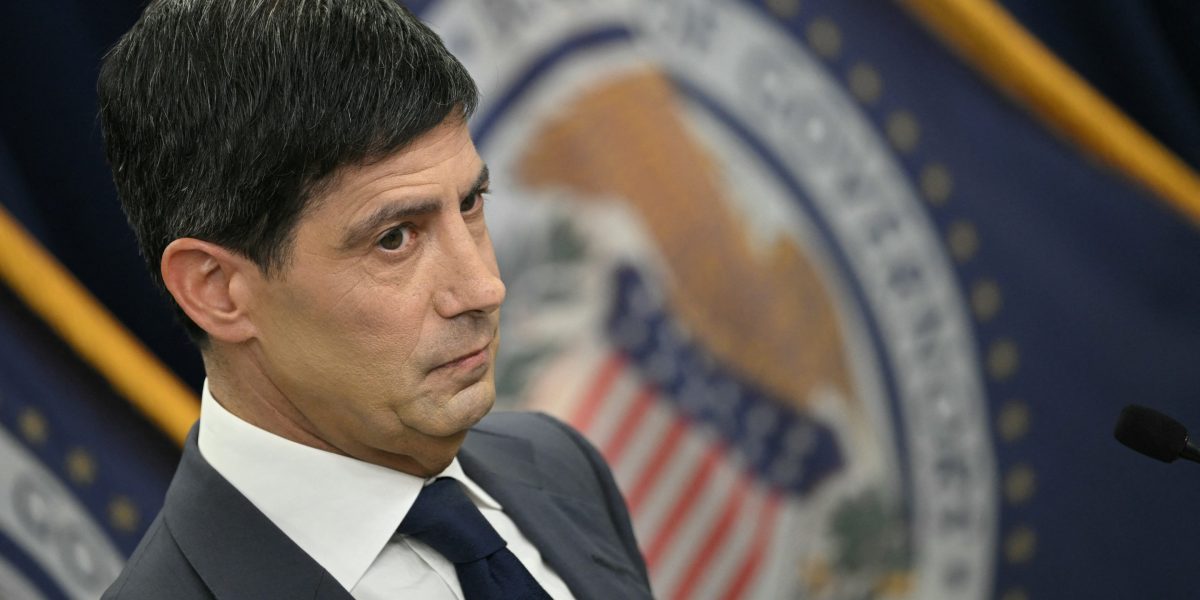
Bank of America now expects the Federal Reserve to raise interest rates three times this year, a shift that would undo the central bank’s most recent cut. The call matters for borrowers, investors and companies because it points to tighter financial conditions after months of debate over whether inflation pressures would fade.
In a Monday note, Bank of America analysts forecast three quarter-point increases in 2026, taking the federal funds rate to a range of 4.25% to 4.5%. The benchmark rate is now in a 3.5% to 3.75% range, according to the bank.
The bank had previously expected the Fed to leave rates unchanged through the year. Bank of America said it revised that view after last week’s Federal Open Market Committee meeting, where half of policymakers projected rate hikes, and after remarks from Fed Chairman Kevin Warsh that the bank viewed as more hawkish than expected.
The Fed held rates steady last week, and Bank of America expects another hold next month. The bank’s new forecast calls for increases in September, October and December, which would reverse the quarter-point cut made on Dec. 10, 2025.
Bank of America said the Fed’s tolerance for above-target inflation is wearing thin after five years in which inflation stayed above the central bank’s 2% goal. The bank said the economic case has changed since last fall, when the Fed cut rates amid weaker jobs data and expected tariffs from President Donald Trump to have only a temporary effect on prices.
This year, Bank of America said, the labor market has strengthened and oil prices rose after the Iran war. The bank also said inflation pressures have become harder for the Fed to dismiss.
Bank of America said core PCE inflation could hit 3.5% in May, about 70 basis points higher than a year earlier. The bank attributed part of the increase to tariffs and other one-time factors, but said housing-related disinflation has mostly run its course and other core services prices remain sticky.
The Fed’s own projections also shaped the bank’s change in view. Bank of America said several policymakers now expect rate hikes even without a decline in unemployment, undercutting the bank’s earlier assumption that the Fed would need a tighter labor market before raising rates again.
Those projections put inflation at 2.5% by the end of next year, still above the Fed’s target. Bank of America said that suggests price pressures may persist even after this year’s temporary factors fade.
Markets have begun reflecting the risk of a stricter Fed stance, according to Fortune’s market data. On Monday, the 10-year Treasury yield rose 4.6 basis points to 4.497%, while Brent crude fell 4% to $77.29 a barrel.
Bank of America said the Fed could still refrain from tightening if job growth weakens sharply, inflation eases or stocks fall. The bank also said Warsh may be sounding hawkish to build credibility while preserving room to cut rates later.
Warsh said at his Wednesday press briefing that monetary policy overall is “somewhat restrictive,” while also pointing to uneven effects across financial markets. Fortune reported that companies are on pace to raise trillions of dollars through stock and debt offerings this year.
Other analysts disagree with Bank of America’s call. Chen Zhao, chief global strategist at Alpine Macro, said in a Monday note that actual rate hikes remain unlikely, citing the possibility that oil falls to $50 to $60 a barrel after the end of the Iran war, weaker wage growth, pressure on small businesses and productivity gains from AI.
Zhao said inflation should begin falling later this year as temporary shocks pass through the economy. He wrote that although half of Fed voting members may be signaling rate increases, “the odds of actual tightening remain very low.”
This story draws on original reporting from Fortune.