
All-male Artemis III crew choice prompts scrutiny of women’s space leadership
A Fortune commentary says NASA’s next Moon crew has no women, despite women making up roughly 40% of the astronaut corps.
By Daniel Okafor · Business Editor
3 min read
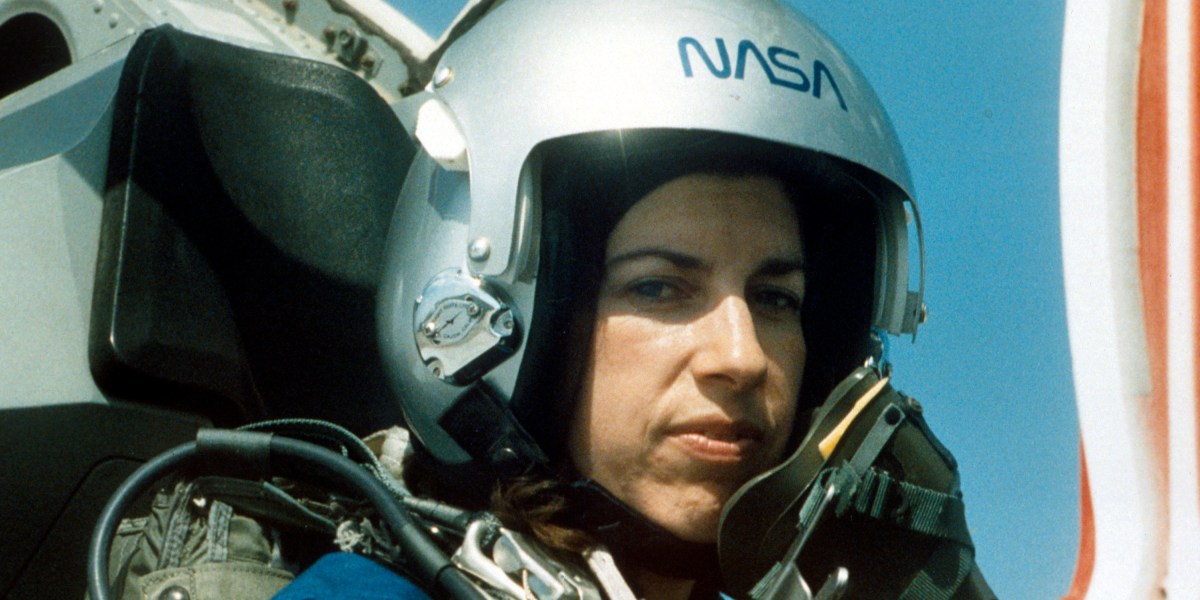
NASA’s selection of an all-male Artemis III crew has renewed attention on how women advance in spaceflight and other high-pressure fields. Savanah F.S. Bray, an aerospace and defense executive, wrote in Fortune that the choice came two months after Christina Koch became the first woman to travel to the Moon on Artemis II.
Bray said women account for roughly 40% of NASA’s astronaut corps, making their absence from the next mission a notable setback after Koch’s flight around the far side of the Moon. Bray, who heads marketing and communications at Ursa Major Technologies and is a U.S. Air Force veteran, framed the moment as an example of the barriers women still face on the way to senior roles.
Her commentary drew on the “leadership labyrinth” concept developed nearly 20 years ago by scholars Alice Eagly and Linda Carli. Bray said the metaphor better fits women’s career paths than the older idea of a single glass ceiling because it captures repeated obstacles, including bias, family demands and institutional friction.
Research on women astronauts
Bray said her doctoral research examined 25 women astronauts, representing more than one-fifth of all women who have gone to space. She said the work used original interviews, oral histories and other records to study how women in an unusually demanding profession came to see themselves as capable leaders.
Her main conclusion was that leadership confidence is built over time, not created by a short training program or a promotion. Bray said women’s belief in their ability to lead is shaped across five areas: childhood, school, friendship, work and romantic partnership.
In family and school settings, Bray said adults helped future astronauts by treating girls’ interests as serious and by opening doors when institutions did not. She cited Bonnie Dunbar, whose father formed a club so she could show cattle when 4-H was not open to girls, and Kathy Sullivan, whose adviser steered her into a science course that changed her path.
Support systems beyond work
Bray said friendships played an underappreciated role in women’s leadership development. She cited Emily Calandrelli and Amanda Nguyen, who agreed to pursue spaceflight and shared what they learned with each other until both reached space.
Bray also pointed to Koch’s description of leaning on friends while training to fly a supersonic jet. Koch said, “Human spaceflight is the ultimate team sport. And so is life.”
In the workplace, Bray said sponsorship mattered more than general encouragement. She cited Nicole Stott’s boss telling her to “pick up the pen and apply” for the astronaut corps, and Eileen Collins’ ROTC commander putting her forward for pilot training before she had asked.
Bray said partners also had a decisive effect on whether women could keep building confidence, especially during early motherhood. The women she studied, she wrote, valued practical shared labor over verbal encouragement alone; she cited Cady Coleman’s conclusion that one of the best examples she could set for her son was to carry out the mission she believed she was meant to do.
Bray argued that institutions still need to change, but women’s leadership development also depends on daily actions by parents, teachers, friends, managers and partners. NASA’s Artemis III decision, in her view, shows that progress for women in space can move unevenly even after a milestone such as Koch’s Moon flight.
This story draws on original reporting from Fortune.