
AI could recast middle managers as human-AI coordinators
Brett Hurt argues that AI will erase old corporate layers while creating a stronger management role built around judgment, purpose and AI oversight.
By Daniel Okafor · Business Editor
3 min read
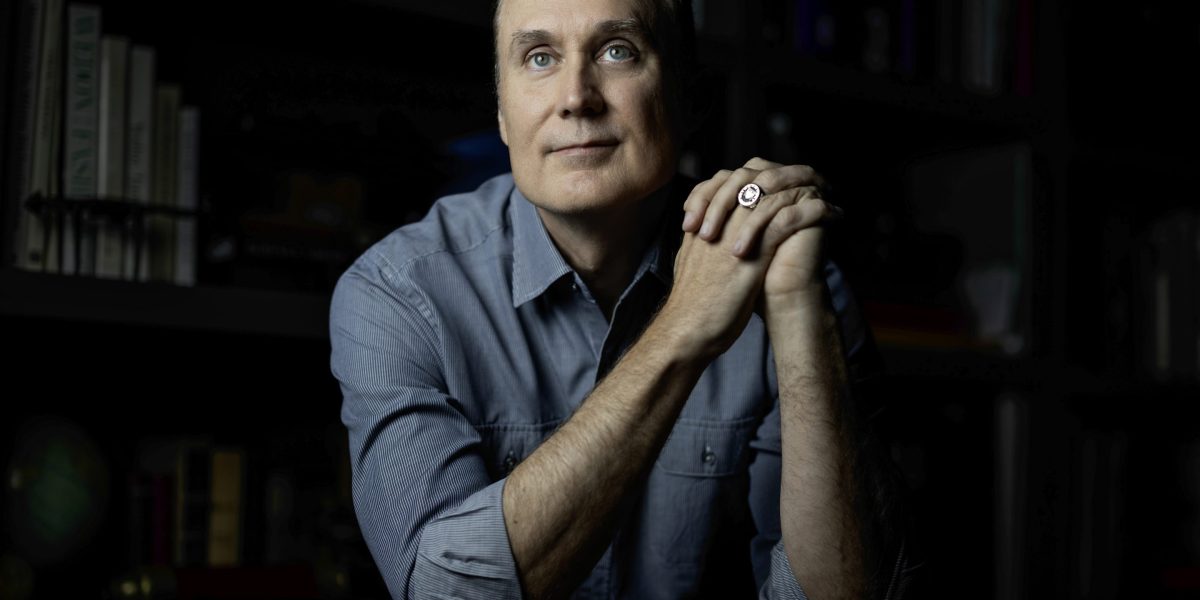
Brett Hurt, CEO of Love Conquers Fear, argues that artificial intelligence is reshaping middle management rather than wiping it out. The shift matters because companies are already cutting management layers while asking remaining leaders to supervise both people and autonomous AI systems.
In a Fortune commentary published Tuesday, Hurt wrote that the traditional corporate hierarchy was built for an era when information moved slowly and needed people to relay it through layers of authority. AI, he argued, removes that information bottleneck and weakens the case for the pyramid-shaped organization.
Hurt cited Gartner’s projection that by 2026, one in five organizations would remove more than half of their middle management. He said that timetable has moved, but pointed to Amazon, Walmart and Microsoft as companies already reducing the distance between senior executives and front-line workers.
The debate has also been shaped by business transformation specialist George Pesansky, who wrote in Fortune about what he called the “Great Flattening” of management, and by a Harvard Business Review study on “agent managers,” Hurt wrote. That study, according to Hurt, examines Salesforce’s Agentforce platform and the emerging task of overseeing autonomous AI agents.
A different role for managers
Hurt’s argument is that the management role survives after the old structure changes. He wrote that AI can take on coordination and relay work, giving managers more room for judgment, context and human connection.
Hurt also cited LinkedIn co-founder Reid Hoffman’s view that “orchestration” will become a defining skill in the AI era. Hurt described that skill as directing multiple AI agents at once so work that once took days can be compressed into hours.
Hurt connected the change to a broader set of technologies he calls the “Superfecta”: AI, robotics, quantum computing and brain-computer interfaces. He argued that those technologies will push companies away from structures designed for scarcity and toward models built around broader access to intelligence and capacity.
To describe the old system, Hurt used the term “linearalism,” which he defined as an industrial-age model in which authority flows downward and work moves in sequence toward standardized outputs. He contrasted that with “sphericism,” a model in which organizational purpose sits at the center and teams operate around it rather than above or below one another.
The 'Meridian Manager'
Hurt called the new management role the “Meridian Manager.” In his framing, the manager connects a company’s central purpose with its work at the edge, while also linking machine intelligence with human judgment.
He wrote that the manager’s authority in that model would come less from rank and more from understanding teams, customers and specific moments. Hurt said the Salesforce Agentforce example points to managers who translate organizational purpose into the behavior of autonomous systems while preserving human values.
Hurt’s commentary reflects his broader interest in conscious capitalism, a movement he said he has long supported and associated with Whole Foods co-founder John Mackey. Hurt previously co-founded data.world, Bazaarvoice and Coremetrics, according to his author biography.
The central claim is that the corporate pyramid, rather than the manager, is under pressure. Hurt’s view is that companies will still need people who can connect purpose, people and AI systems as automation takes over more routine coordination work.
This story draws on original reporting from Fortune.