
ACA marketplace enrollment fell 12% after enhanced subsidies ended
Federal data show 2.6 million fewer people had ACA marketplace coverage in February 2026 than a year earlier, amid higher premiums and fraud concerns.
By Daniel Okafor · Business Editor
3 min read
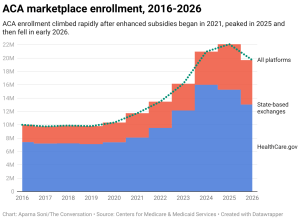
Enrollment in Affordable Care Act marketplace plans dropped by about 2.6 million people over the past year, according to federal data released June 26, 2026. The decline matters because research cited by Indiana University health economist Aparna Soni links insurance losses to delayed care, higher medical bills and worse health.
The Centers for Medicare & Medicaid Services data show 19.2 million people had active marketplace coverage in February 2026, down from 21.8 million in February 2025. Soni wrote in The Conversation that the 12% fall was the largest one-year drop since the exchanges began operating in 2014.
The American Medical Association describes ACA marketplaces as regulated exchanges where individuals and small businesses can buy private health insurance that meets federal standards.
Higher costs drove many decisions
Soni attributed much of the enrollment drop to the expiration of enhanced premium tax credits that had reduced monthly costs from 2021 through 2025. The subsidies were created during the COVID-19 pandemic and, according to KFF research cited by Soni, helped marketplace enrollment more than double between 2020 and 2024.
After the extra subsidies lapsed at the end of 2025, KFF estimated that the average subsidized enrollee would have had to pay about 114% more to keep the same plan. Soni cited reporting and analysis showing many consumers shifted to lower-premium plans with higher deductibles, but average premium payments still rose 58%, while deductibles increased 37%, or more than $1,000 per person.
The Center on Budget and Policy Priorities reported that 83% of people who selected a marketplace plan had paid their premiums and kept coverage by February 2026, down from 91% a year earlier.
Fraud claims are part of the debate
The Trump administration has pointed to improper enrollments as another reason for the decline. A June 2026 federal brief said very low-cost or free plans made it easier for brokers to enroll people without proper authorization, including some consumers who did not know they had been signed up.
The same brief said CMS canceled 250,000 unauthorized enrollments and identified 200,000 unauthorized plan switches in 2025. Soni wrote that those actions likely accounted for part of the drop, while independent analysts pointed to higher costs as the larger explanation.
The decline varied by state, according to Soni’s summary of the data. Enrollment fell an average of 18.7% in states using HealthCare.gov, compared with 6.3% in states that operate their own exchanges. Soni wrote that state-run marketplaces may have had more ways to contact consumers, help them compare coverage or provide additional financial help.
Health policy experts cited by Soni expect enrollment could fall further, possibly to between 16.5 million and 17.5 million by the end of 2026. KFF has reported that ACA insurers are seeking a typical 14% premium increase for 2027, which would make 2027 the second straight year of double-digit premium growth if regulators approve the requests.
Coverage losses can affect health
Soni cited decades of research showing that people who gain insurance use more preventive care, receive more medical services, face less financial stress and report better health. She also pointed to the Oregon Health Insurance Experiment, which found that Medicaid coverage improved access to care, reduced depression and nearly eliminated catastrophic medical bills among low-income adults selected through a 2008 lottery.
Studies of coverage losses show the reverse problem, according to Soni. After Tennessee removed 170,000 adults from Medicaid in 2005, researchers found that people who lost coverage were more likely to delay or skip care because of cost and reported worse health.
The June federal data do not show how many people who left ACA marketplace plans found insurance elsewhere or became uninsured. Soni wrote that the health effects of the 2026 enrollment drop will take longer to measure, but earlier research suggests gaps in coverage can show up later in medical care and household finances.
This story draws on original reporting from Fortune.